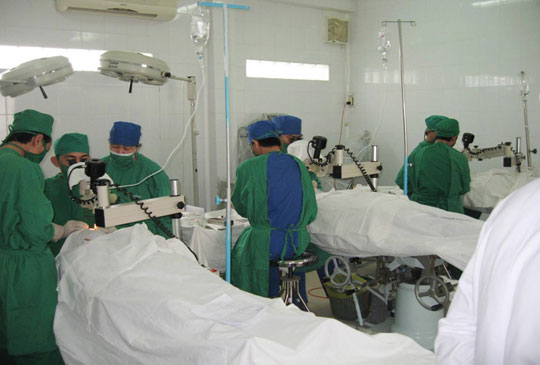
Medicine - Health
The breakthrough in blindness
For the first time in medical history, scientists have restored part of their vision to blind patients by implanting tiny microchips into the retina.
Browse ScienceInfo articles and explainers related to Vision.
302 published items.
For the first time in medical history, scientists have restored part of their vision to blind patients by implanting tiny microchips into the retina.
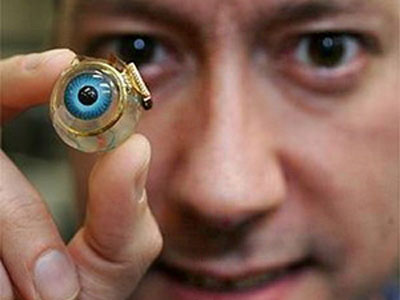
Scientists at the University of London (UK) have successfully implanted retinal stem cells in experimental mice.
Canadian scientists have used artificial corneas to successfully restore sight to some patients, thereby helping them avoid the risk of blindness.

Trendy contact lenses can lead to blindness, which is a warning from ophthalmologists.

A blind boy in England has the ability to identify objects after being taught the dolphin method to help locate echoes.

Vision loss due to age and often seeing black spots are the main cause of blindness in the elderly, but the disease does not show symptoms.

The Russian ophthalmologist warns, people who are addicted to 3D movies should not go to the theater to watch movies floating more than three times a week.

American experts have come up with four principles to keep your eyes fast, even if you have to focus on looking for a long time.

Technology experts and doctors warn that if you don't use eyeglasses to watch 3D stereos correctly, it will affect your eyes.

British scientists have successfully used stem cell therapy to heal people with severe vision damage.

According to ophthalmologists, if there is a sudden feeling of flies or flashes, it can signal serious eye problems, if not treated promptly, can lead to blindness.

Some of the first patients in the UK have just received a new type of artificial lens - which gives them a very good vision, even more than the ideal 20/20.
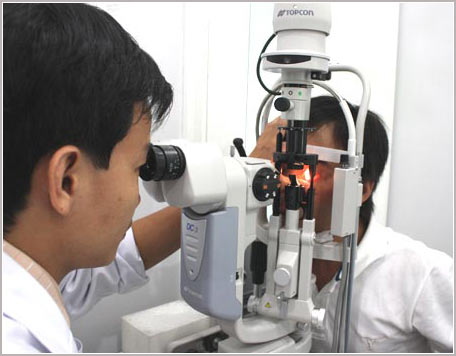
A recent survey by the Vietnam Institute of Educational Sciences shows that nearly 25% of students are nearsighted. Approximately 15% of primary school students (grades…

Scientists use contact lenses with stem cells to maintain vision for the blind. The first surgery significantly improved vision for patients.

Elderly people who have a diet rich in fruits such as citrus, leafy green vegetables are less likely to develop symptoms of age-related macular degeneration.