Nowadays, going to the toilet and using it in private seems normal. However, this was unthinkable before the 19th century. You may not know it, but bathrooms and toilets with running water appeared in Europe in the late 1800s, and before that people used public toilets.
1. Public places only
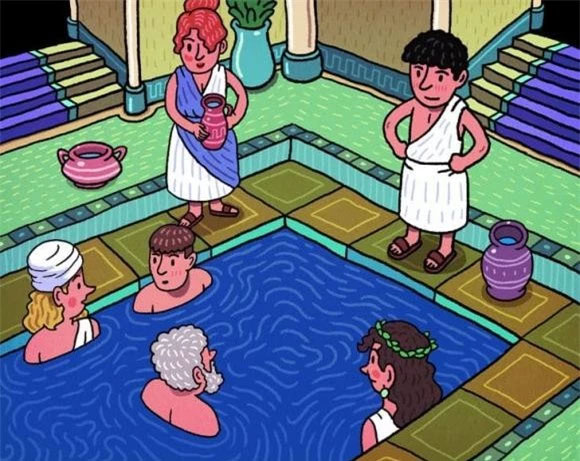
From the time of the Roman Empire through the Middle Ages, men and women bathed in public baths. Built and maintained by the government, they were a popular daily destination for bathing and socializing.
These multi-purpose buildings include hot and cold pools, storage, gyms, and libraries. Some bathhouses can accommodate up to 1,600 people at a time.
2. No privacy
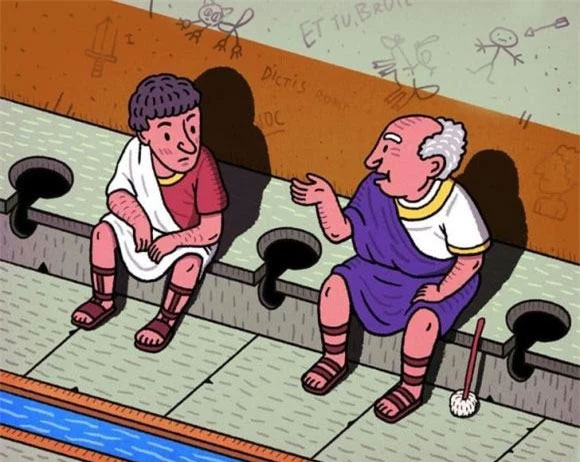
Toilets in urban centers were often located near city parks and could accommodate many people at once. By the first century BC, sanitation was no longer a personal matter, as the Romans saw it as a social activity.
3. A place to eat and meet people

The ancient Romans used the bath to eat, play, and even brush their teeth. It was a habit for them, and they didn't think it was necessary to do their physical duties while spending time with others.
In Roman times, the bathhouse was a great place to meet new people and socialize. They also enjoyed beef, lamb, goat, chicken, etc. at the bathhouse. They played with dice and coins and even did some needlework while they were there.
4. Sharing cleaning tools

In ancient Rome, toilet paper was not available, so people used a sponge tied to a wooden stick to wipe themselves. Perhaps surprisingly, Roman public toilets did not have separate compartments, so the sponge was returned to a bucket filled with salt water and vinegar after use to be cleaned and used for the next person.
5. Feel free to wear revealing clothes on the street
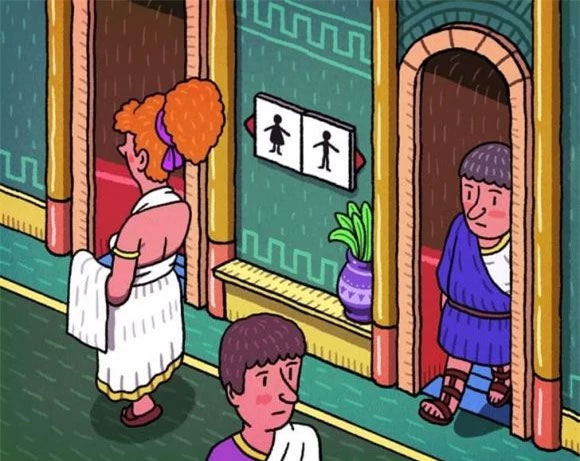
Bath preparation is usually done at home, before going to the bathroom. Therefore, the sight of a man walking around naked or wearing only his underwear is quite normal in this era.
6. Outdoor toilet
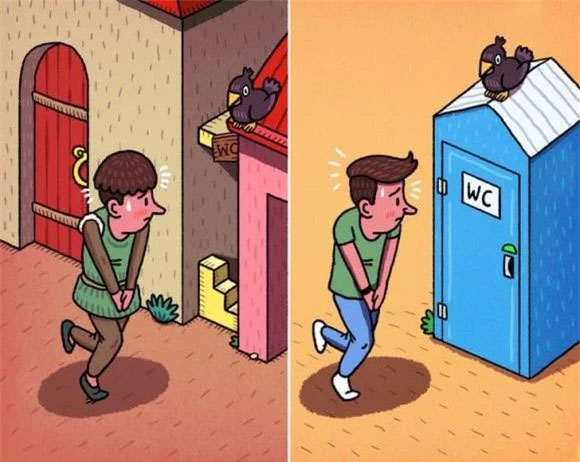
If you needed to go to the toilet in the Middle Ages, all you had to do was find a stairwell, under a bridge, or some other public place. During this period, the streets served to meet a person's natural needs.
Historian Carol Rawcliffe explains that people became more concerned about health and hygiene in the late Middle Ages. So the government funded public toilets to keep their cities clean. There were many facilities where people could 'relieve themselves' through holes in bridges, with the aim of flushing their excrement straight into the river below.
7. The toilet smells very bad, especially in the summer.
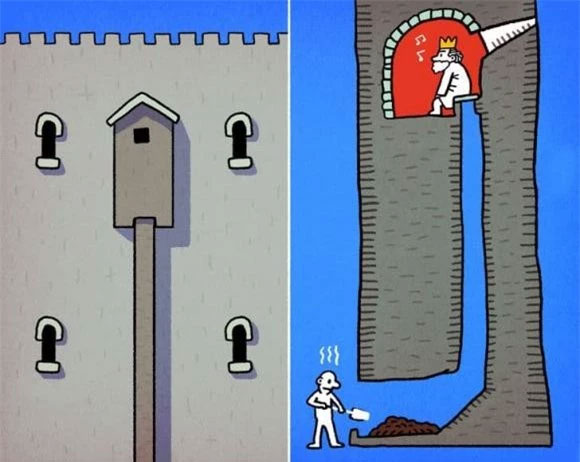
In addition, the design of bathrooms during this period was based on social class. Castles would have a special place with a hole placed right on the floor. That hole connected to the ground outside the castle, so that people of high status could relieve themselves directly into it.
This type of toilet has the disadvantage of smelling many times worse than today's toilets, especially in the summer.
8. Must clean by hand
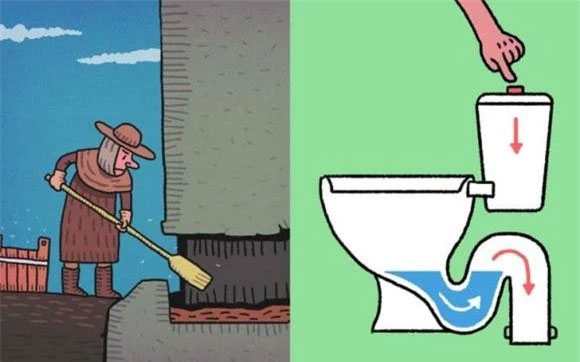
The toilet was systematically adopted by 18th-century society, and even by the middle of the century, its use had become widespread, and its fixtures were cleared away by 'night guards'.
They are responsible for collecting rubbish when the streets are empty. Night Watch teams are available 24 hours a day in the wealthiest districts. However, poorer areas have less frequent clean-up.
9. Defecating all over the streets
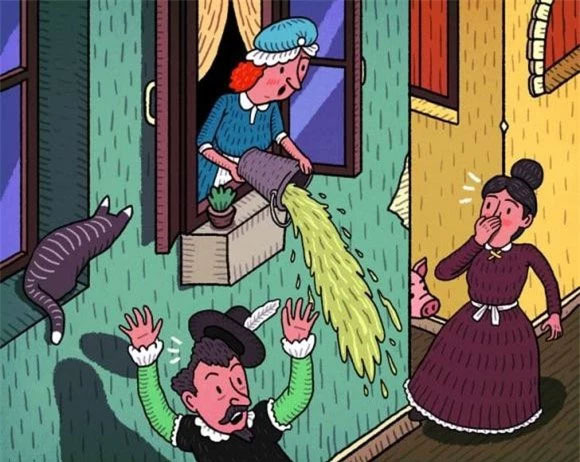
In ancient times, access to waste management was a privilege of the upper class. So when there was no toilet in the house, the people of Edinburgh shouted, 'Gardyloo' – this was the warning sound before people dumped faeces or urine out the window.
10. The epicenter of infection
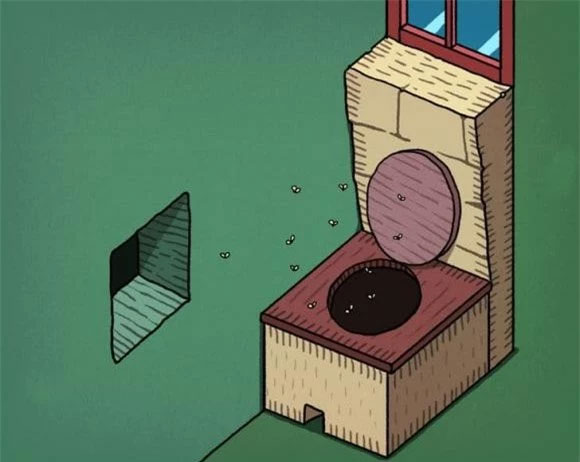
Since the first sewer systems were installed in European cities, deaths from cholera and typhoid have dropped dramatically. The first of these diseases appears to have been spread through dirty water.
This is obvious today, but it took researchers years to figure it out. And the first to do so was Dr. John Snow. He then used maps to identify the source of the London infection: a sewage tank near a residential area that was leaking into a drinking well.