As expected, the Expose Pallet 9 (EP9) battery pack from the ISS entered Earth's atmosphere over the weekend .
The 2,630kg EP9 was released from the International Space Station (ISS) in 2021 and has been orbiting our planet ever since. It is likely to have burned up completely in the atmosphere, but individual elements could have reached the planet's surface.
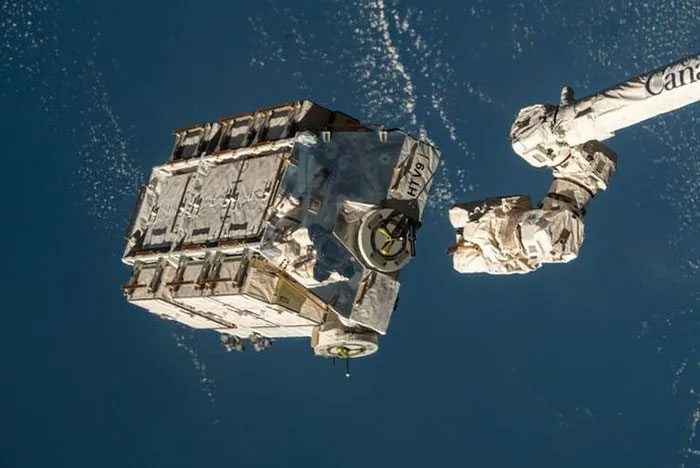
EP9 appears to have burned up completely before hitting the Earth's surface.
NASA spokeswoman Sandra Jones said the agency had 'conducted a thorough analysis' of the debris from EP9 and concluded that it re-entered Earth's atmosphere safely. It should be noted that this was the heaviest object ever released from the ISS , which entered the atmosphere while flying between Mexico and Cuba. According to Sandra Jones, NASA believes that no part survived re-entry.
The European Space Agency (ESA) also tracked EP9's flight path. In a statement released earlier this week, the ESA said the chances of some of the space debris burning up in the atmosphere were 'very low', but that it would hit people . At the same time, the ESA admitted that 'some parts could fall to Earth'. According to estimates by astrophysicist Jonathan McDowell, about 500kg of debris fell to the Earth's surface.
According to the ESA, the risk of some space debris hitting a person is about 65,000 times lower than the risk of being struck by lightning. In all likelihood, the odds of such an outcome are actually extremely small, which is why the ISS released the 2.6-ton battery into space on March 11, 2021. Since then, the spent battery has remained in Earth orbit, circling the planet every 90 minutes. Exposure to the thin atmosphere in low Earth orbit gradually slowed the mass until gravity finally pulled it back into the atmosphere this past week.
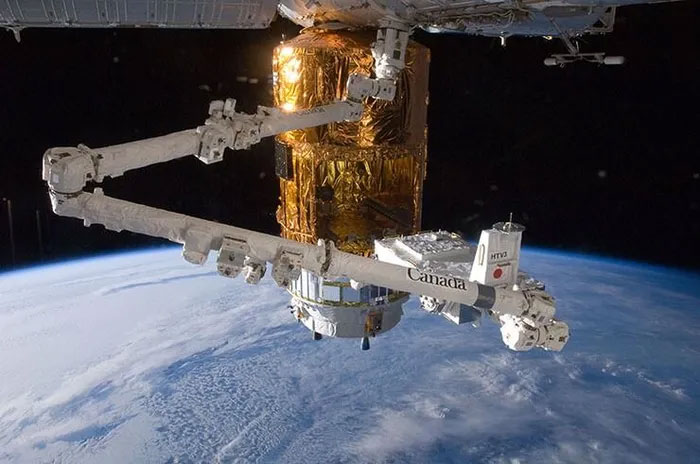
However, there were still "pieces" of the battery pack that remained after the fire.
The EP9 battery pack, which consisted of six new lithium-ion batteries, was delivered to the ISS by a Japanese HTV spacecraft. Astronauts then used a robotic arm to replace the outdated nickel-hydrogen batteries. After some time, the battery pack had to be disposed of. The problem was that the HTV spacecraft was canceled in 2020, and there was no other cargo ship designed to retrieve the battery pack from the station. So the ISS decided to release the battery pack into uncontrolled space — meaning it would re-enter Earth's atmosphere.