From thousands of years old "tennis balls" to mysterious shapes, many artifacts still leave archaeologists "stunned" after decades and centuries of exposure.
Ancient Origins magazine has reviewed the artifacts that have given British scientists the biggest headache over the past few centuries.
1. 5,000-year-old "tennis ball" in Scotland
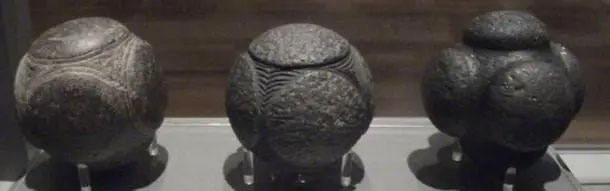
Three of the strange ball-shaped artifacts - (Photo: Ancient Origins).
More than 425 intricately carved stone balls have been found across Scotland - England and some surrounding areas, dating from around 3200-2500 BC.
They were made from different types of stone, each carved differently but in the same style. One looked exactly like a modern tennis ball.
Although the first balls were discovered in the 19th century, archaeologists are still stumped as to what purpose they were used by ancient people.
2. Roman Dodecahedron
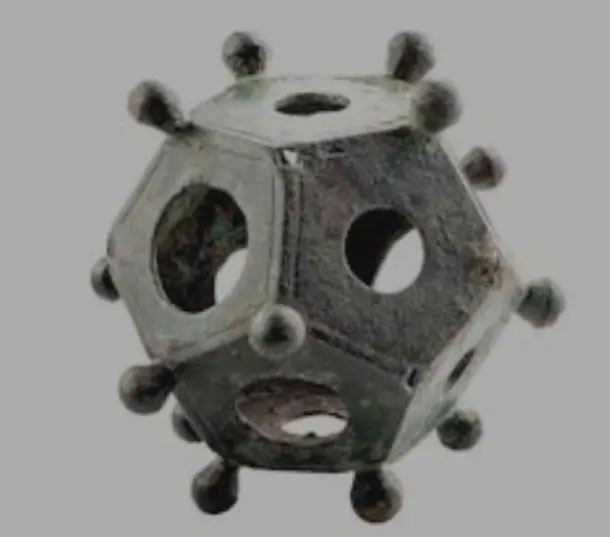
Strange artifacts from the Roman Empire - (Photo: Ancient Origins).
About 130 have been found in what were once the northwestern provinces of the ancient Roman Empire, each exquisitely crafted from a bronze alloy, dating back some 1,600-2,000 years.
Each cube has 12 faces, each face has a round hole and at each corner where 3 faces intersect there is a round knob. No one can explain what it is.
3. The mysterious drums
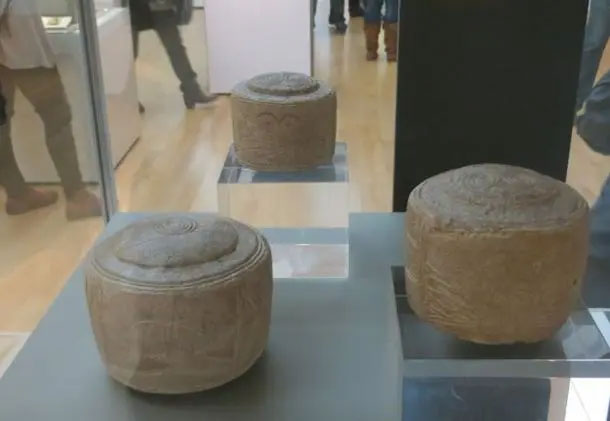
Three of the mysterious drums - (Photo: Ancient Origins)
In 1889, three drum-like objects made of soft, chalky white coastal limestone, intricately carved, were discovered in a child's grave in Folkton, North Yorkshire, England.
A fourth, undecorated drum was found at Lavant in west Sussex in 1993. Another, ornately decorated, was excavated at Burton Agnes in east Yorkshire in 2015.
Among them, the Burton Agnes drum was buried with a piece of chalk, a bone pin and the remains of three children, one of whom dated from 3005-2890 BC.
4. Rutland gold earrings
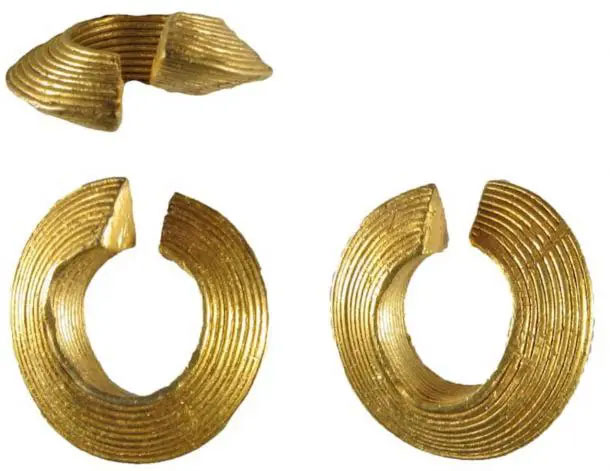
Gold hoop jewelry in England - (Photo: Ancient Origins).
These small, open ring-shaped rings date from the late Bronze Age (circa 1000-800 BC) and have been found in Ireland, Britain, and parts of France.
Often found in matching pairs, they can be plain or feature delicate geometric carvings. Whether they are rings, earrings, or what is anyone's guess.
5. Tools for making cosmetics or potions?
It is a small copper alloy instrument made in two parts. One half is a long, curved, grooved container and the other half is a pointed or curved rod.
They often have rings for hanging and are decorated with human or animal figures, dating to around 100-200 AD.
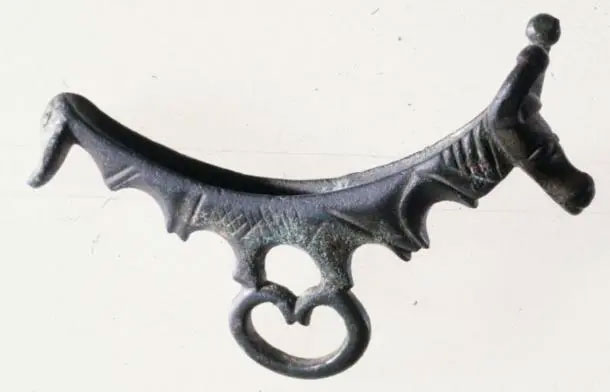
Part of a strange tool believed to be used to make cosmetics or potions - (Photo: Ancient Origins).
Analysis showed that something had been ground into a container, then mixed with a stick.
The mystery here is not the function but the substance being prepared. Suggestions include medicines, aphrodisiacs, cosmetics and potions.