Some places in China are off-limits to foreigners, open only to locals.
China has a culture of thousands of years, captivating many foreign tourists. Moreover, this country of billions of people also has scenic spots with heart-touching beauty, rich in cultural imprints, in harmony with nature. For example, Jiuzhaigou, the Great Wall and a series of famous ancient towns.
Although China's tourism industry is becoming more open, international visitors can visit many scenic spots. However, there are some places in China that are still off-limits to foreigners, open only to locals.
Below are 5 places that China does not want to 'share' with the international community. Do they contain many mysteries?
1. Nam Y Cau
Nam Y Cau is known as "Little Jiangnan" on the plateau, where you can feel the beauty of "the green world at the highest place on Earth".
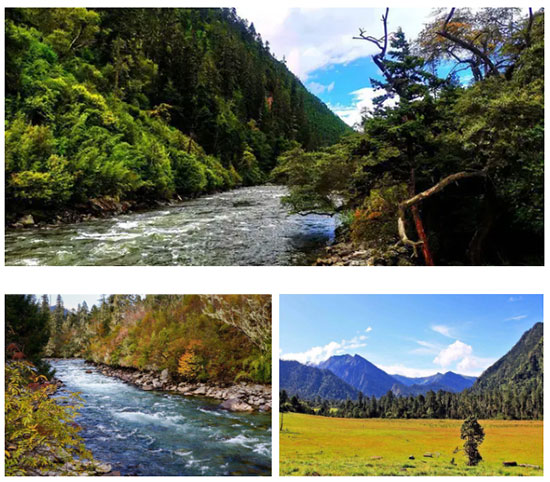
This is the birthplace of the most poets and talented people in China.
You know the Jiangnan region of China! This area has beautiful ancient towns, both ancient and poetic. Through the ancient towns are peaceful and lyrical rivers. This is the birthplace of the most poets and talented people in China.
Nam Y Cau is likened to a miniature Jiangnan, so the scenery here is certainly not ordinary.
Nam Y Cau is located at an average altitude of 2,500 meters, is one of the countless beautiful valleys in the Himalayas, also known as the King of Medicine of Tibet.
Legend has it that the founder of Tibetan medicine, Yutog Yontan Gonpo, practiced medicine and taught here, which is the origin of the mystical Tibetan medical culture.
Nanyue County has the most completely preserved primeval forest to date, and is also home to the Lhoba people (a mixed group of Tibeto-Burman tribes). The Lhoba are an ancient ethnic minority with the smallest population in China. They have no written language, only a language, and live a simple and happy life mainly by farming.
Because it is located on the China-India border, foreigners are banned from entering, and even Chinese people's access to this place must be reconsidered.
2. Laojun Mountain
'Travel around the world to enjoy delicious food and see the world'.
Sunrise, sunset, sea of clouds, starry sky and white snow scene. This is a visual feast that can only be found in Laojun Mountain.
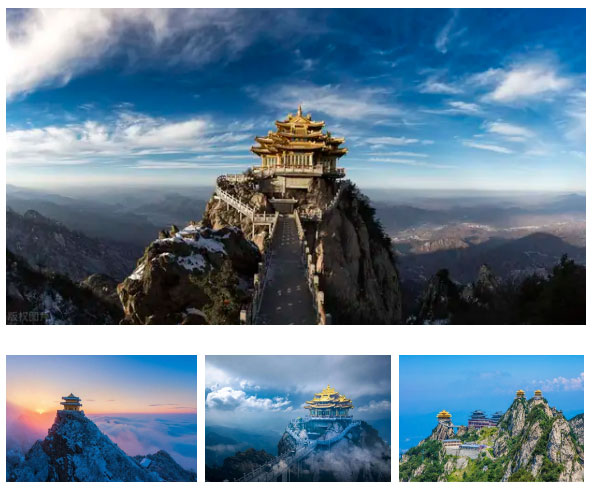
This is the mountain with the oldest history in Taoism.
Located in Luoyang City, on Laojun Mountain, there really exists a 'Palace in the Clouds' that makes people marvel. The Palace on Laojun Mountain has a history of more than 2,000 years, making it the oldest mountain in Taoism.
According to legend, the founder of Taoism, Lao Tzu, once practiced here. Riding a green buffalo, passing through Ham Quan, Lao Tzu attained enlightenment on Lao Jun Mountain, and wrote the Tao Te Ching, a text of 5,000 words.
Laojun Mountain used to offer free admission to people with the surnames Zhang and Li. Because Laozi and his close disciples practiced here, they implemented a free admission policy for the descendants of these two surnames. However, this policy is no longer in effect.
Jade Emperor Peak on Lao Jun Mountain is called by tourists as 'Heavenly Palace in the Clouds', 2217m high.
Visitors to Lao Jun Mountain all praise it, saying that this is a paradise, and if lucky, they can also admire the Buddha's light (the phenomenon of the rising sun shining its first rays on the Buddha statue in the Jade Emperor Peak).
So why are foreigners banned here?
In fact, the main reason is that Laojun Mountain is located in Luanchuan County, where there is a military base, so foreigners are prohibited from entering.
3. Dadu River Grand Canyon
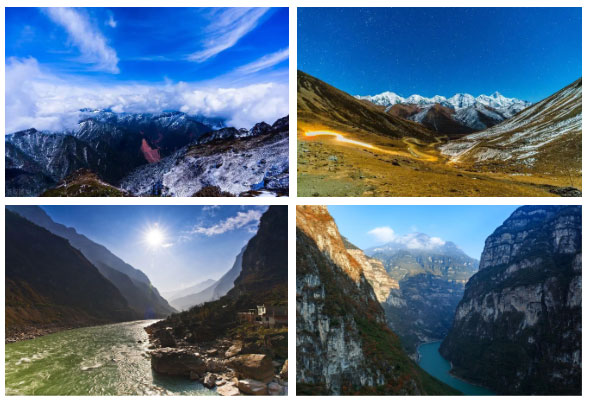
The total length of the canyon is 26km and the depth is up to 2,600m.
Daduhe Gorge (also known as Jinkou) is the most beautiful 'scar' on mainland China, one of the 10 most beautiful gorges voted by "China National Geographic" .
It is located in Jinkouhe District, Leshan City (Sichuan, China). The total length of the canyon is 26km and the depth is up to 2,600m.
Strange mountain peaks jut out on both sides of the gorge, undulating continuously throughout the length of the Dai Do River.
Today, the Dadu River Grand Canyon is a 4A-level tourist attraction in China, attracting countless tourists every year. However, this attraction is only open to locals and is completely free of charge.
On a stretch of road before entering the scenic area, there is a large sign prohibiting foreigners. Because this place used to be an important military base of China, foreigners are not allowed to enter.
4. Sac Dat
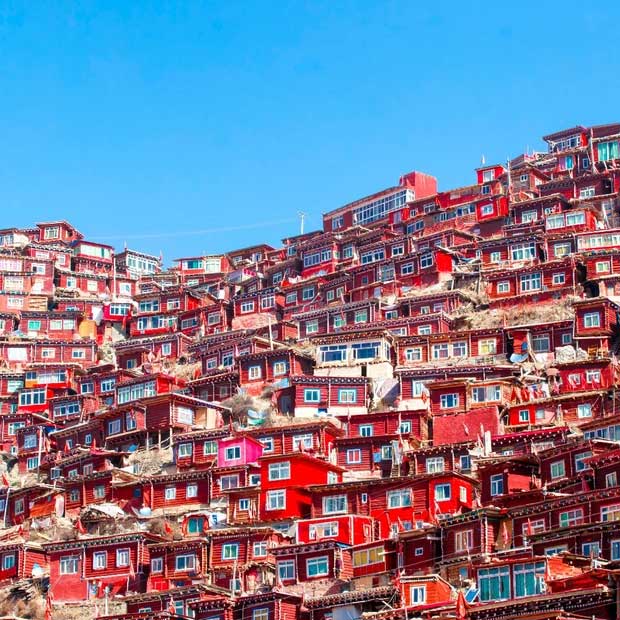
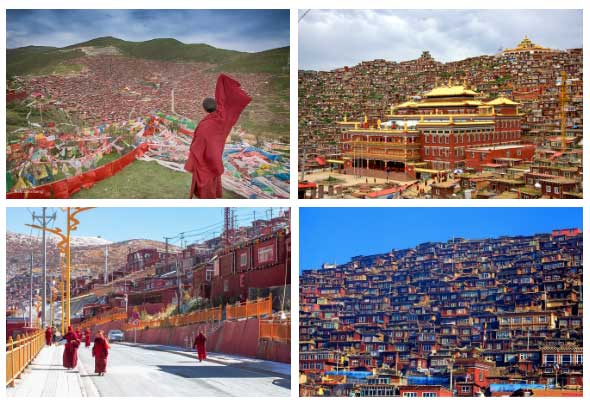
Tibetan Buddhist temples are relatively concentrated here.
Seda County is located in the northwest of Ganzi Tibetan Autonomous Prefecture (Sichuan), in the southeast of the Qinghai-Tibet Plateau. It is the residential area of the Ganzi Tibetan ethnic group , with the highest altitude, coldest climate, and worst natural conditions in the region.
The plateau has beautiful scenery. There are quite a few Tibetan Buddhist temples, all of which belong to the Hongmen sect. Standing on high ground, you can admire the endless red houses, as if entering a fantasy red world.
This is the place where the most monks in China gather, especially female monks.
However, this place does not allow foreigners to enter because of its special geographical location and Buddhist culture.
5. Shennong Jia
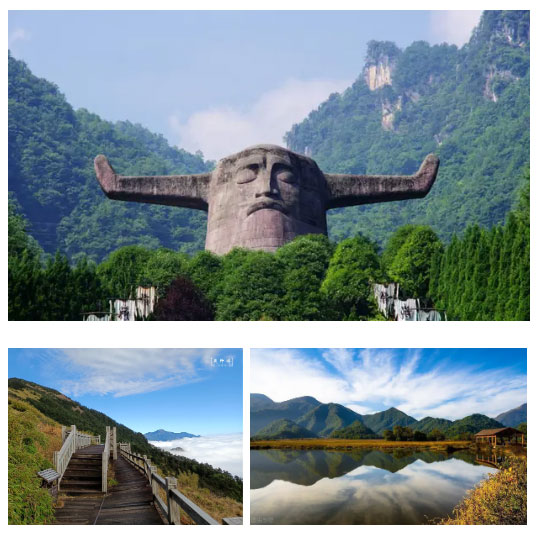
This is the paradise of Chinese national treasures.
Shennongjia is the only ecological county (both an administrative county and an ecological zone) in China, located in the northwest of Hubei Province.
Shennongjia has an extraordinary charm. The magical latitude of 30° North hides the Chinese version of "Noah's Ark" , also known as the "Roof of China".
This place has intertwined mountains and rivers, undulating mountain peaks, vast forests, and scattered lakes, as if it contained 80% of China's beautiful scenery.
Shennong Peak, Guanmen Mountain, Dajiu Lake, Nongdan, Tiansheng Bridge. It seems that if you randomly pick a name from Shennongjia, it will all be in China's National Geographic magazine.
This is the paradise of China's national treasure - the snub-nosed monkey, and also the homeland of the panda. In order to protect rare animals and plants, Shennongjia has become a place where international visitors can never set foot .