Detected two 'super Earths' in habitable zones
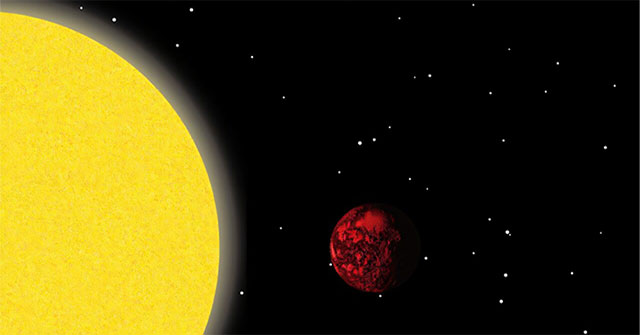
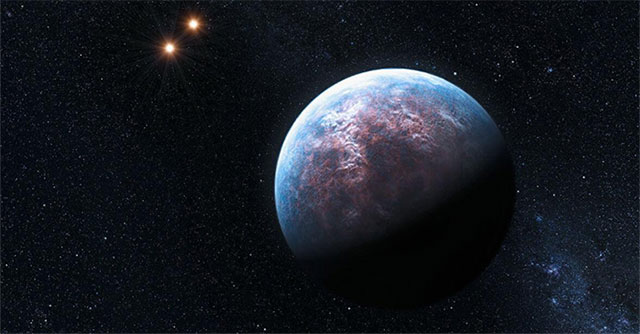
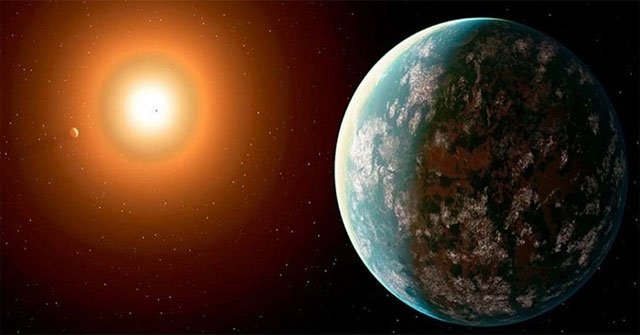
The researchers found that two exoplanets that are nearly eight times the size of the Earth could have liquid water, orbiting stars close to the sun.
Discover worlds orbiting other stars, how astronomers find them and what exoplanets can tell us about habitability and planetary systems.
Begin with clear explanations of the key ideas, discoveries and questions in this subject.
The researchers found that two exoplanets that are nearly eight times the size of the Earth could have liquid water, orbiting stars close to the sun.
Planet KIC-7340288 b has the right conditions for life to exist, among the 17 newly discovered exoplanets.
An exoplanet at 111 light-years away could be a large version of the Earth with conditions suitable for life.
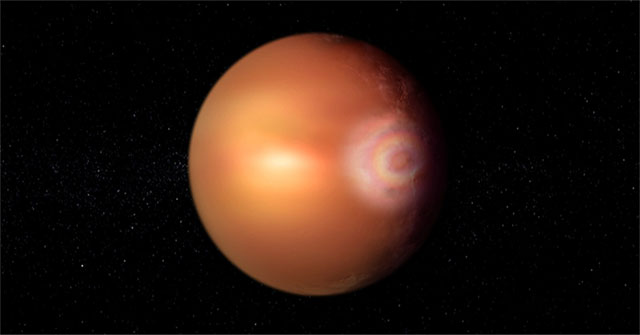
A special phenomenon seemingly unique to Earth was suddenly discovered on a distant planet in the constellation Pisces.
CHEOPS satellite is like a telescope, designed to measure the thickness, structure and size of many planets outside the solar system.
We may have discovered thousands of exoplanets, but the system is only 73 light-years away, making scientists extremely excited.
Read recent ScienceInfo stories and explainers about Exoplanets.
An exoplanet the size of Neptune and denser than steel has been discovered by an international team of astronomers.
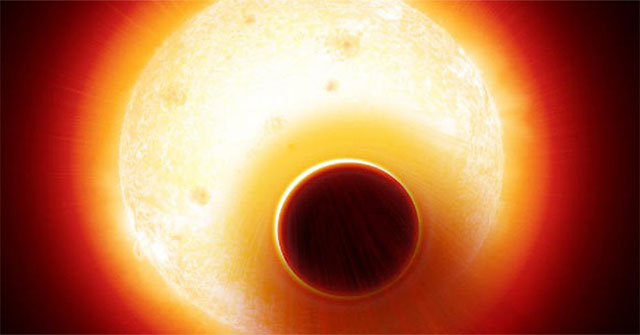
A lead-heavy exoplanet, possibly the leftover core of a giant sphere that flew too close to its sun, has just been discovered.
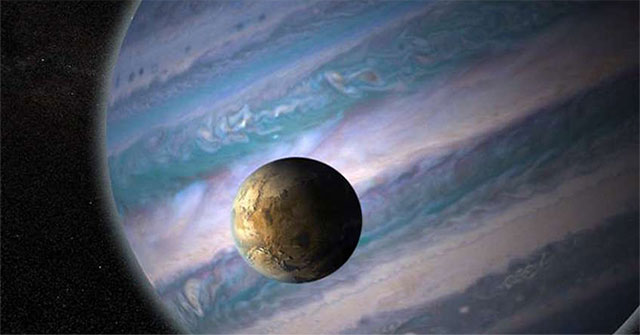
According to SciTech Daily, that's a Moon just as big as Earth's Moon.
A published image from NASA of a multi-layered land mixed with beautiful white and blue colors on Mars may contain an interesting aquifer.
US scientists have discovered the first direct indication of the magnetosphere of an exoplanet, or planet outside the Solar System.
Scientists found exoplanets the size of Neptune orbiting the star AU Mic, 32 light-years from Earth.
A team of astronomers from Cornell University in the US has proposed a new way to find out if an exoplanet is habitable.
The newly discovered exoplanet has four times the mass of the Earth, orbiting the star as small as 1/10 of the Sun.
Continue with more articles, discoveries and explanations from this subject.
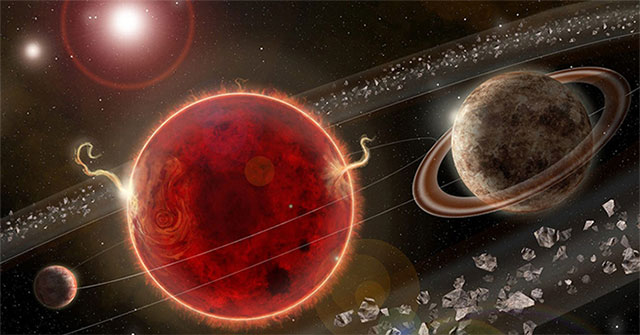
Astronomers found the exoplanet Proxima c orbiting the red dwarf Proxima Centauri, only 4.2 light-years from Earth.
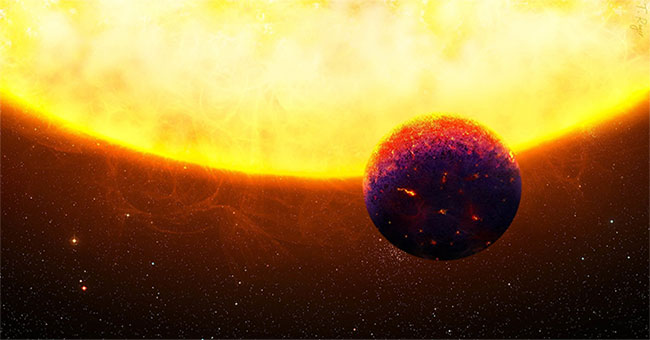
Researchers have discovered a unique shimmering planet in the universe with surfaces covered with sapphire and ruby.
NASA's Kepler planet-hunting telescope has discovered more than 2,300 extrasolar planets in the universe ever.
Astronomers on April 10 announced they first found evidence of the existence of water on an outer planet of the Solar System - planet HD 209458b.
NASA astronomers found a planet with an unusual atmosphere, called WASP-79b, about 800 light-years from Earth.
Researchers from the University of California, Riverside have developed a new technique that will use NASA's James Webb Space Telescope (JWST), scheduled to launch in 20…
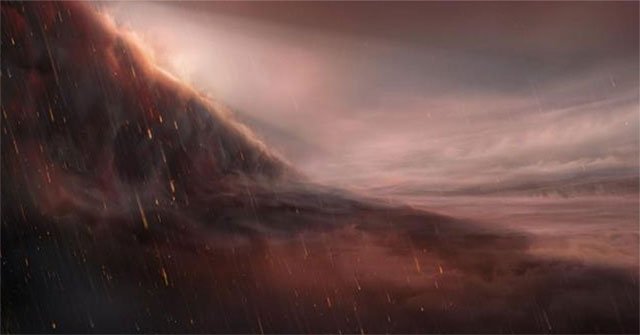
An international team of astronomers has discovered an exoplanet far away from the Earth where strange 'iron rain' often takes place.
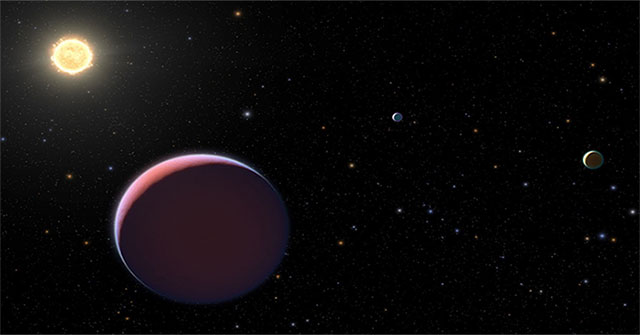
Astronomers found nearly 15 exoplanets in the Kepler 51 star system with a density of less than 0.1 grams of matter per cubic centimeter.
The Swedish Academy of Sciences on October 8 announced the 2019 Physics Prize for scientists James Peebles, Michel Mayor and Didier Queloz.
A group of astronomers is looking for strange signals from distant exoplanets, or so
Researchers from Canada, the US and Germany have discovered a new planet named Wolf 503b, which is twice as big as Earth, reported IBTimes on September 6.
Usually Earth-like exoplanets are quite close to the host star and their photography is extremely difficult because the host star is several times brighter than these pl…