
Biology
Tobacco is completely free of nicotine
Scientists at Kyoto University (Japan) have made a breakthrough in the way of creating tobacco that does not contain nicotine toxins.
Explore biology, plants, fungi, insects and living systems through research, species profiles, natural adaptations and surprising life-science facts.
3,879 published items in this category and its subcategories.
Scientists at Kyoto University (Japan) have made a breakthrough in the way of creating tobacco that does not contain nicotine toxins.
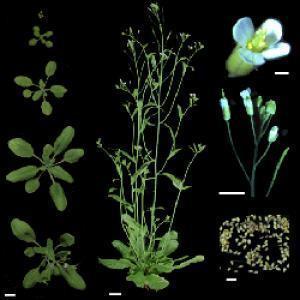
Conventional cells are able to replace lost organs in plants discovered by researchers at New York University's Center for Genomics and Biological Systems and Utrecht Un…

Quang Tri authorities have just discovered a rare orchid species at the top of Elephant Mountain (1,700 m high), Huong Son commune of Bac Huong Hoa Nature Reserve.

Butterflies hover around and seem to be very carefree with life. But scientists have discovered a butterfly that knows how to trick ants into feeding their babies.

Australia's iconic animal has a lot of genetic similarities. According to scientists, kangaroos and we used to have common ancestors.

An international team of researchers extracted large amounts of DNA from the feathers of two permanently preserved mammoths in Siberia.

A group of American and Belgian experts found that lactic acid is an important source of energy for cancer cells.

Korean scientists have just developed corn seeds that contain substances that have anti-cancer potential 10 times higher than conventional corn varieties.

American biologists believe that flies possess two special genes that help them reverse the biological clock and prolong life.

US scientists have just recreated mammalian retinal cells. Tests on mice can open new avenues for treating human eye diseases.

Experts of the Ho Chi Minh City Institute of Tropical Biology and Edinburgh and Scotland Botanical Garden experts discovered and published a new species of Ornithoboea p…

If one finds a new harmful insect, people often deal with it by finding a species that likes to eat them.

An ant species originating from the Black Sea region has invaded more than 100 areas in Europe and is heading north.

While harvesting sweet potato fields on December 6, a farmer in Lebanon saw a very big bulb.

For the first time in the history of science, American biochemists have learned how to utilize intestinal bacteria to produce energy.