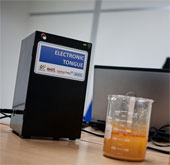
New technology
Thailand uses robots to authenticate authentic Thai food
The Thai government is launching a robot-based project to determine whether the dish is truly authentic Thai.
Track emerging technologies, autonomous vehicles, advanced materials, clean energy, robotics and engineering breakthroughs changing the future.
7,777 published items in this category and its subcategories.
The Thai government is launching a robot-based project to determine whether the dish is truly authentic Thai.

The University of Adelaide group of students has successfully designed a simple, inexpensive clean water treatment system from snack bags, plywood and glass tubes.
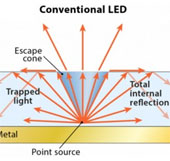
Researchers at Princeton University have made a significant breakthrough in improving the brightness and efficiency of LEDs.
Scientists still study new and more effective solutions and the following 5 improvements are expected to change photovoltaic technology in the coming time.

At Aviation 2014 - an annual exhibition organized by the US Aeronautics and Space Institute, NASA demonstrated new technologies being studied by the agency to revive the…

A special chair can bring joy or safety to older people introduced at the show in Tokyo, Japan.
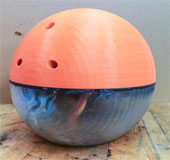
Scientists at the Massachusetts Institute of Technology (MIT) have introduced a water-based oval robot.
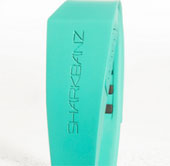
Two American dads in South Carolina have found a solution to shark off a shark with a special Sharkbanz.

Fever Smart is as compact as a stamp. To use it, parents just need to fix it in their children's hands with the sticker.

Researchers at the Massachusetts Institute of Technology (MIT) have developed a new cement formula that uses a reasonable ratio of material composition.

In the context of tension on the border with North Korea as a slow-blowing bomb, the South Korean military has deployed a team of advanced military robots in the borderi…

The system was developed for the Defense Advanced Defense Projects Agency (DARPA) and AFRL to provide 360-degree coverage of high-powered laser weapons operating on mili…
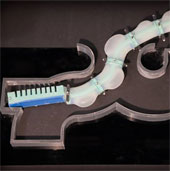
MIT's artificial science and computer lab (CSAIL) has introduced a soft robot with an octopus-like design with the ability to crawl flexibly in narrow environments.
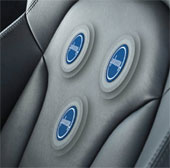
Researchers at the University of Hiroshima in Japan have developed a new sensor system that detects the heart rate by amplifying the heart rate from the skin's back…