Oceanography
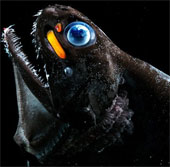
How did arowanas evolve to emit red light?
Arowanas are frightening creatures, living in dark waters of the bottom of the variable. Their habitats discourage the use of eyes to see or the ability to see colors.
Dive into ocean science, marine life, deep-sea discoveries, polar ecosystems, underwater geology and mysteries hidden beneath the world's oceans.
2,285 published items in this category and its subcategories.
Arowanas are frightening creatures, living in dark waters of the bottom of the variable. Their habitats discourage the use of eyes to see or the ability to see colors.
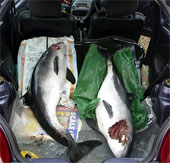
The recorded image shows the big dolphins constantly juggling, attacking the same type. Two harmed animals were then taken ashore with terrible wounds at the beginning.

What is the maximum depth a fish can live? The answer was answered by scientists from the US, UK and New Zealand in the Journal of Proceedings of the National Academy of…
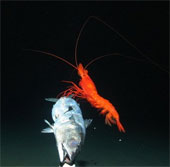
Researchers at the University of Aberdeen (Scotland) have found unusual marine creatures while exploring New Hebrides in the South Pacific in 2013.
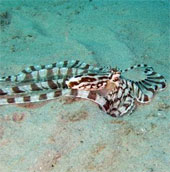
After catching a metamorphic octopus in the Gulf of Thailand, scientists have the opportunity to carefully observe body movements and characteristics that allow this spe…
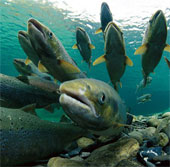
Before the record drought, wildlife conservationists are planning to transport 30 million salmon to the Pacific by trucks instead of letting them thrive.
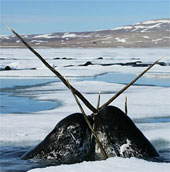
Scientists have finally deciphered the mystery of an abnormally long, spiraling tooth sticking out of the mouth of narwhal, a Arctic whale.
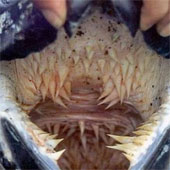
Inverted sharp spines in the throat in both the upper jaw and lower jaw are characteristics that help the leather turtle hold food in its mouth.
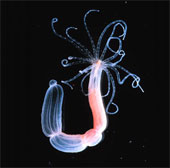
Anemone is an extremely bizarre creature, half a plant, half animal, at least considering its genetic code.
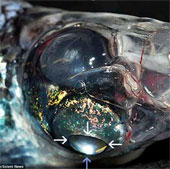
Recently, scientists have discovered the eyes of four-eyed fish named Rhynchohyalus natalensis with a view of up to 360 degrees, making it easy to detect prey or partner…

Recently, Dr. Denise Herzing, founder of the Wild Dolphin project in Florida (USA), said he finally understood a part of the language of this creature.
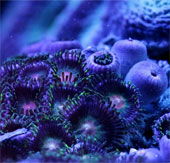
Graduate student Daniel Stoupin from the University of Queensland, Australia captured the corals and put the pictures together to see their beautiful movement.
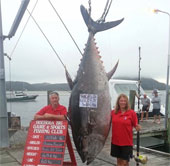
Donna Pascoe (56 years old, New Zealand) was extremely lucky to catch a Pacific bluefin tuna weighing 411.6kg.
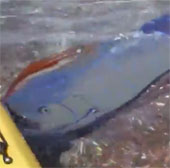
Two paddle fish, the longest bone fish in the world, are 4.5 meters long and were discovered in Mexico.
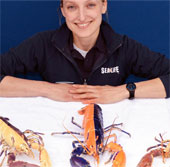
A lobster with a two-color shell discovered in the UK 4 years ago has a new color-changing shell.