Oil production in the world may begin to run out in the next 20 years, making people use both forms of fossil fuels more polluting than oil, a British study predicts.
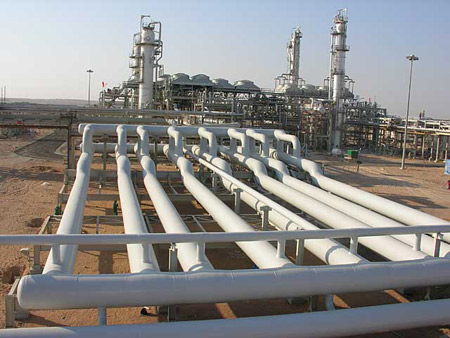
The crude oil pipeline in Saudi Arabia.Photo: alibaba.com.
For decades, experts have been arguing about whether the world oil production has reached its maximum level. Many oil companies say there are still many unexplored oil fields, so oil production has not peaked. Their prediction received support from the International Energy Agency (IEA). The agency said that oil production only reached the highest level after 2030.
To check the accuracy of the IEA's prediction, the British government decided to fund a study of the British Energy Research Council's oil reserves. Scientists in the agency reviewed 500 oil studies around the world to assess difficulties in accessing new oil fields and human oil needs in the future. The results show that oil will begin to run out before 2030. Even the output may decline sooner (before 2020) if demand increases and access to oil fields is not as easy as expected.
' In our view, predictions of the possibility that oil will begin to deplete after 2030 represent some of the optimistic optimism of some people. In the context of the world is too dependent on oil today, the time of depletion will come sooner. Even if oil production starts to decline after 2030, countries still have not enough time to develop alternative forms of oil , 'said Steve Sorrell, the lead researcher.
Dr. Robert Gross, director of the British Council for Energy Research and Policy Review, said that as soon as oil production begins to decline, its price will skyrocket. That situation has a big impact on industries and economies around the globe.
' The age of oil is cheap and easy to exploit. Of course the time of termination will come slowly, not suddenly. Humans need to understand that we are about to enter an era in which oil is becoming more expensive and more difficult to exploit , 'Gross stated.
Gross predicts a drop in oil production will prompt governments to invest in energy efficient vehicles (such as electric cars) and other forms of renewable energy (wind and light). Sun). People will also find ways to save energy at home and work.
However, the doctor warned that another risk could occur.
' Instead of developing clean forms of energy, some countries may look for more polluting fossil fuels, such as oil shale. That situation will increase carbon emissions, increase financial costs and accelerate the pace of climate change , 'he said.
Oil companies around the world produce about 85 million barrels of crude oil a day. Experts estimate that oil production will rise beyond 100 million barrels a day before falling.