
Space science
Russia shows off space robots superior to the US and China
Russia's FedOR robot is about to be put up in space for the space race with the US and China, unexpectedly disparaged only for a photo.
Explore astronomy, NASA missions, planets, galaxies, the Moon, the Solar System and discoveries that expand our understanding of the universe.
8,698 published items in this category and its subcategories.
Russia's FedOR robot is about to be put up in space for the space race with the US and China, unexpectedly disparaged only for a photo.
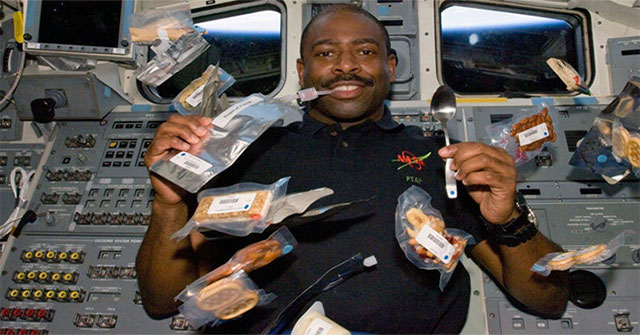
Most foods when deposited into space will be dried, then undergo a process called re-hydration rehydration.
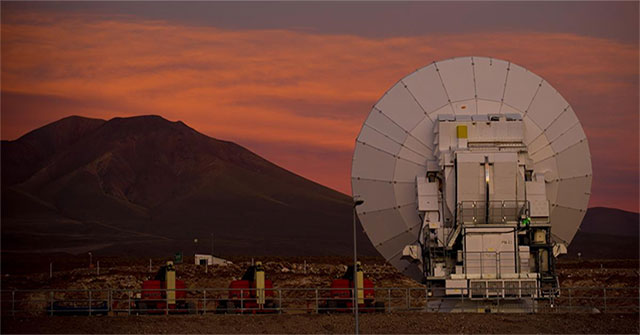
A team of scientific researchers have announced for the first time the aluminum-containing molecule around a young star thanks to the antennas of the ALMA telescope.
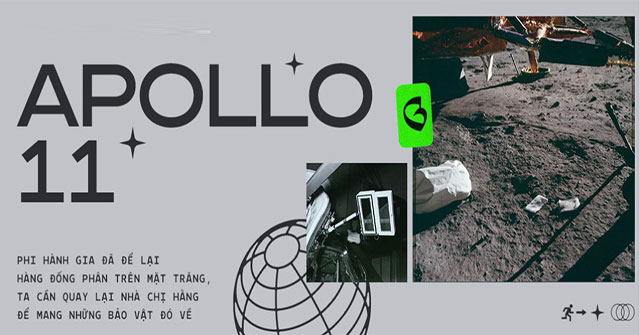
Inside the stool bags, a whole sky of knowledge awaits humanity's discovery. The next mission of the Moon mission will MUST be

The base will create a perfect self-sufficient environment. The climate will always be stable: no rain, no storm, not too hot or too cold. And certainly, they all want t…

The Yutu self-propelled car (Jade Rabbit), has made a breakthrough discovery when proving what scientists have predicted for decades, that the Moon has an Earth-like coa…

Scientists propose to preserve more than 85% of the solar system due to concerns that people will clean up gold and other resources in the system in just 400 years.

Tsutomu Seki astronomer living in Kochi, Japan decided to name an asteroid that he found three decades ago as 'Reiwa' - coinciding with the country's new era.
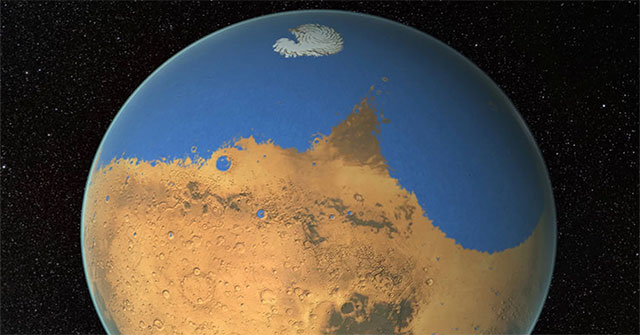
A giant hole may have appeared every two years on the Martian atmosphere, sucking its entire ocean into space.
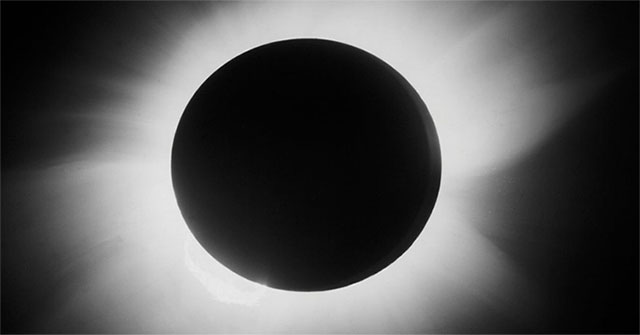
In this May, the world celebrates 100 years of historical photos that created a turning point for humanity's physics and astronomy.
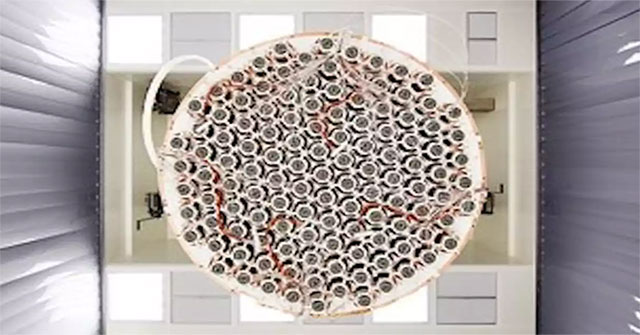
How can you observe a process that takes a billion times longer than the universe?
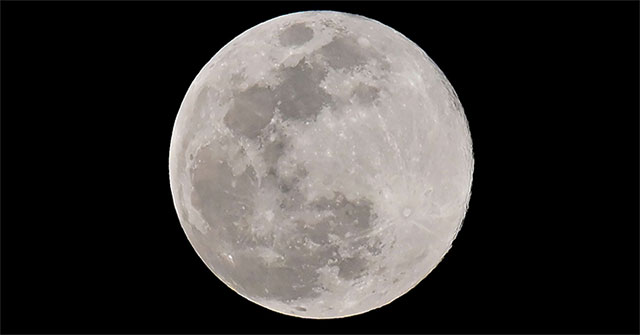
The moon is shrinking, creating surface folds and earthquakes - that is the conclusion published by the scientific community in the journal Nature Geoscience on May 13.
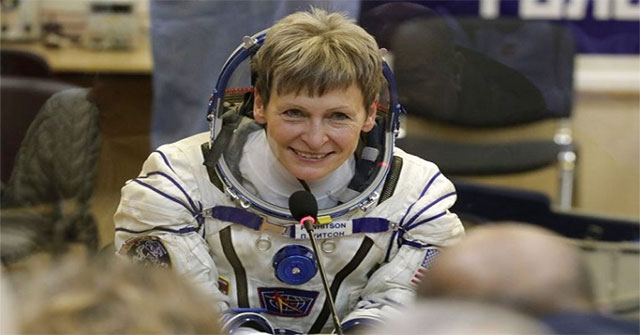
NASA plans to bring the first woman to the Moon by 2024 and this project is named Artemis.
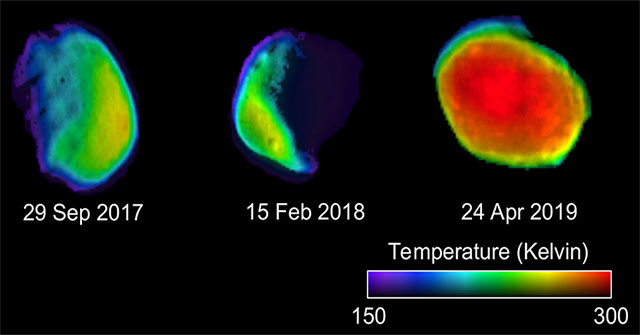
For the first time, the spacecraft orbits the Mars Odyssey orbit of the US Aerospace Agency (NASA) that captured the full moon image from Mars's Phobos Moon.

SpaceX's goal with these satellites is to bring high-speed internet connection anywhere in the world.