Space science
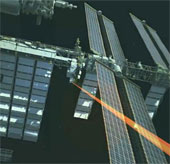
Use lasers to transmit video from ISS to the ground
NASA succeeded in performing experiments that transferred high-resolution video data compression information into lasers and transferred from the International Space Sta…
Explore astronomy, NASA missions, planets, galaxies, the Moon, the Solar System and discoveries that expand our understanding of the universe.
8,698 published items in this category and its subcategories.
NASA succeeded in performing experiments that transferred high-resolution video data compression information into lasers and transferred from the International Space Sta…

Scientists are slowly discovering that life can withstand and survive in tougher environmental conditions than previously thought.
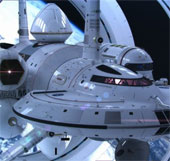
American theoretical physicist Michio Kaku calls Alcubierre's model
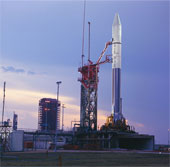
31 years ago, on June 13, 1983, Pioneer 10 - the pioneer - overcame Mars's orbit, becoming the first artificial object to leave the solar system, traveling in space. imm…

According to researchers' calculations, it must be 35 years before we see the full moon phenomenon on Friday 13th.

NASA's infrared telescope discovered 7 light-years away from the Sun has a cold, small brown star that does not shine.
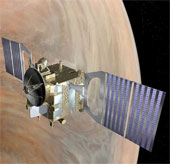
The European Space Research Agency's (ESA) Venus Express probe is about to plunge directly into the Venusian atmosphere within the next two months.
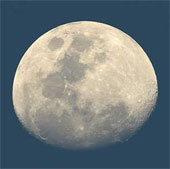
Sky News website (UK) reported that Japan's Otsuka Pharmaceutical company announced that its new drinking water product will spin the Moon ad in 2015.
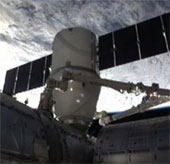
On May 18, SpaceX Space Dragon's unmanned cargo spacecraft returned to Earth safely after completing its resupply mission for the International Space Station (ISS).
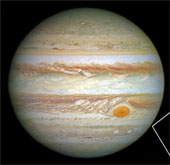
On May 15, the United States announced a Hubble telescope photo of Jupiter, showing a huge storm in Jupiter whose diameter at the end of the 19th century was about 40,00…
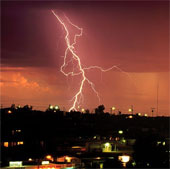
British scientists have shown that the Sun's activity affects the lightning frequency that hits Earth.

Beginning later this month, scientists at NASA's Ames Research Center will deploy Kepler's next mission.
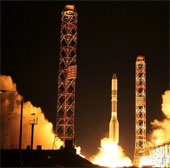
According to information from Voice of Russia, ITAR-TASS leads the Russian space industry, saying it intends to use Proton-M boosters until 2025.
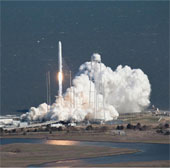
Rising sea levels are threatening most of NASA's launchers and multi-billion dollar infrastructure to train future astronauts.