Space science
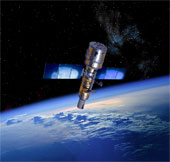
Russian satellites caught fire before falling to Earth
A Russian military spy satellite on February 16 caught fire in the process of friction with the atmosphere.
Explore astronomy, NASA missions, planets, galaxies, the Moon, the Solar System and discoveries that expand our understanding of the universe.
8,681 published items in this category and its subcategories.
A Russian military spy satellite on February 16 caught fire in the process of friction with the atmosphere.
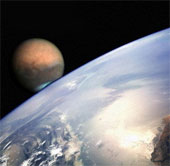
An invention by Russian scientists is participating in the design competition of future Mars self-propelled vehicles, organized by NASA space agency.
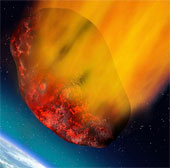
An asteroid the size of three football fields that just flew over Earth on the morning of February 18, The Gurdian reported.
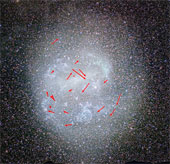
American astronomers used the Hubble space telescope to see for the first time the speed of rotation of a galaxy.
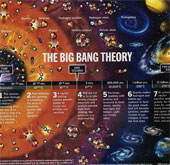
Physicists in Russia and Italy have created processes similar to the process of producing life on meteorites in the universe, thanks to the accelerators of the Unified N…
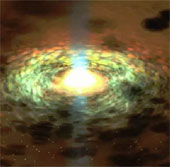
A team of astronomers uses data from Rossi X-ray Timing Explorer (RXTE) of the US Aerospace Agency (NASA) to detect giant gas clouds surrounding the black supersonic hol…

A new type of satellite is designed to gather real-time information to measure rainfall, snowfall and storm forecasting on a global scale (GPM).
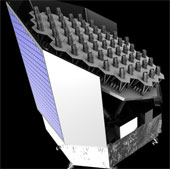
The European Space Agency has chosen a telescope to launch into space and detect unknown planets.
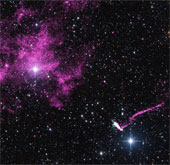
On Feb. 20, researchers working at NASA's Chandra X-ray observatory announced they had taken a picture of the longest stream of particle jets ever discovered in the Milk…
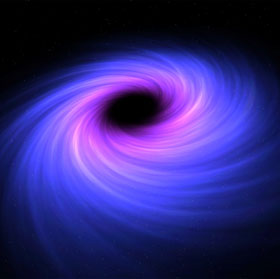
Some physicists believe that our humanity lives in a black hole that cannot be escaped.
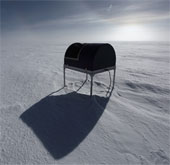
Telescope in Antarctica has just announced a new discovery, showing a giant gas cloud containing star embryos in the pictorial phase.
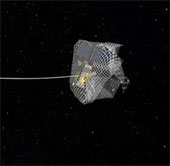
The European Space Agency (ESA) said it is deploying future missions to
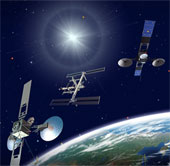
The United States is focusing on creating micro satellites that act as cosmic police, like traffic police on the universe.
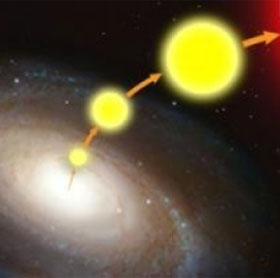
American students find a group of stars that move so quickly that they can escape the Milky Way in the future.
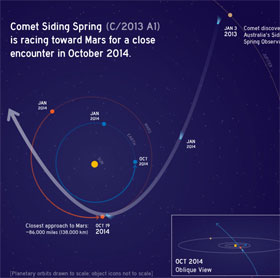
The US Aeronautics and Space Administration (NASA) has deployed a plan to observe a comet as it passes by Mars in October this year, about 10 times closer than any comet…