Space science
Detecting inclined planetary system
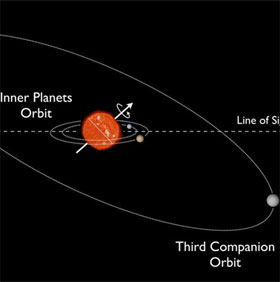
The Kepler telescope of the US Space and Aeronautics Agency (NASA) has transmitted an unusual planetary system, with
Explore astronomy, NASA missions, planets, galaxies, the Moon, the Solar System and discoveries that expand our understanding of the universe.
8,698 published items in this category and its subcategories.
The Kepler telescope of the US Space and Aeronautics Agency (NASA) has transmitted an unusual planetary system, with

A group of Canadian students are working hard to finance the creation of satellites to test new materials that can heal themselves.

Mercury can unravel the long-standing mysteries of the moon's formation, after scientists found unexpected similarities between these two bodies.
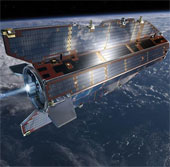
The European Aeronautics Agency (ESA) announces the satellite Current and Gravity Explorer (GOCE) operation, which has been running out of fuel since 2009 and will fall…

All images of Cygnus's activities were broadcast live on NASA television.

According to public figures in 2011, China reached a 3-billion-dollar export of high-tech goods, including aerospace technology. Meanwhile Russia only has 1.1 billion US…
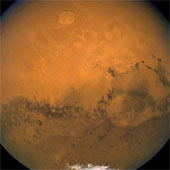
India on October 22 decided to postpone the launch of its first Mars probe until November 5, due to problems with the marine tracking system, according to AFP.

Although known as the space force, the soldiers of the Russian space corps cannot cope with the invasion of alien civilizations, if any.

Facing a difficult economic situation, the US Aeronautics Agency (NASA) decided to promote the use of 3D technology in space research with the aim of minimizing costs.
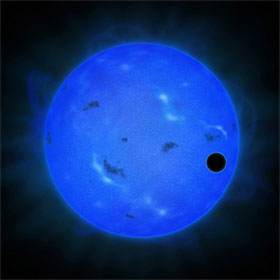
Scientists have discovered an extrasolar planet, not far from us, covered by a water-filled atmosphere.

The meteorite that exploded in the sky of Russia in February was determined to be about 4.56 billion years old, equivalent to the age of the Solar System.

Switzerland plans to launch a satellite
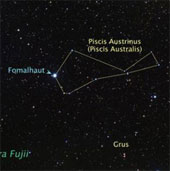
After identifying Fomalhaut as a binary star system, experts continue to gather enough evidence to recognize a new member of the neighboring solar system.
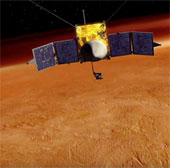
According to NASA, the Maven probe, the last mission mission on Mars, will be launched on November 18 this year.