Space science
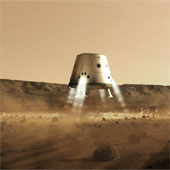
More than 200,000 people want to settle in Mars
Citizens of 140 countries around the world want to go to Mars, hoping to create the first human settlements on the planet.
Explore astronomy, NASA missions, planets, galaxies, the Moon, the Solar System and discoveries that expand our understanding of the universe.
8,681 published items in this category and its subcategories.
Citizens of 140 countries around the world want to go to Mars, hoping to create the first human settlements on the planet.
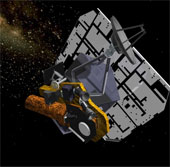
Experts of the US Aerospace Agency were confused after a ship suddenly stopped contacting the control center.
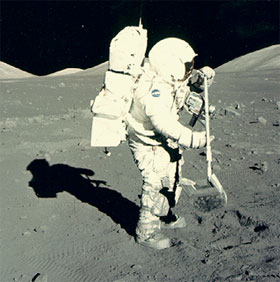
Barnes expert presented a new discovery during the European Planetary Science Conference in London earlier this week, according to Science World Report.
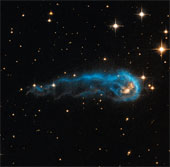
With a length of nearly 10 trillion km, a giant cloud of gas in the universe has the same shape as the flying blue worm.
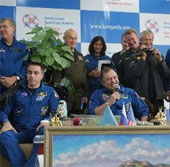
According to the Russian Flight Control Center, the ship
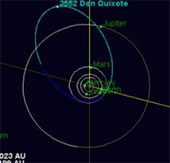
A large celestial object close to Earth for more than 30 years is mistaken for an asteroid but in fact it is a false comet.

The US Aerospace Agency (NASA) has announced that it has identified three suitable asteroids to implement an ambitious 'arrest and research' project.
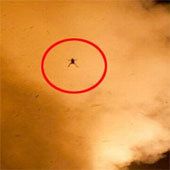
The frog is said to live in a water tank at the Wallops / Central Atlantic Regional Airport in Virginia state, USA.
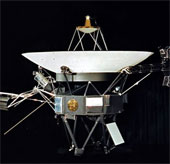
US scientists on September 12 confirmed NASA's Voyager 1 probe was out of the solar system, marking the first time a human spacecraft has gone so far.

Three architects Dmitry Zhuikov, Arina Ageeva and Krassimir Krastev proposed by German architectural firm ZA, buildings must be built underground and made by robots.
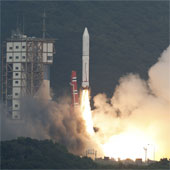
On September 14, the Japan Aerospace Exploration Agency (JAXA) said it successfully launched the new Epsilon missile using solid fuel, carrying a telescope to observe sp…
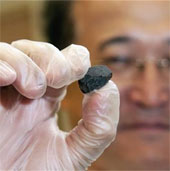
Five American science organizations together shared rare meteorites that exploded in a fireball event in California's sky last year.
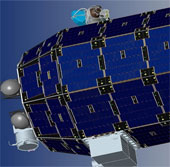
Next September, the US Aerospace Agency (NASA) will launch a spacecraft to the moon to study the
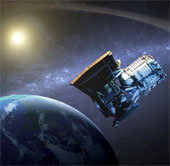
Wide-field Infrared Survey Explorer (WISE) is an infrared probe spacecraft launched by NASA on December 14, 2009.
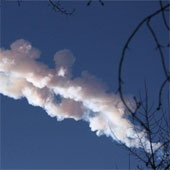
The meteorite block that injured more than 1,500 people in the country on February 15 may have almost touched the Sun before falling to Earth and exploding.