Space science
America wants to launch ships on meteors
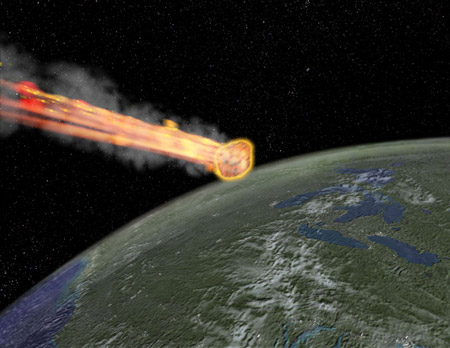
A meteorite can plunge the earth in 2182 and the US Aerospace Agency (NASA) wants to sample rocks on meteorites to accurately calculate its path.
Explore astronomy, NASA missions, planets, galaxies, the Moon, the Solar System and discoveries that expand our understanding of the universe.
8,698 published items in this category and its subcategories.
A meteorite can plunge the earth in 2182 and the US Aerospace Agency (NASA) wants to sample rocks on meteorites to accurately calculate its path.
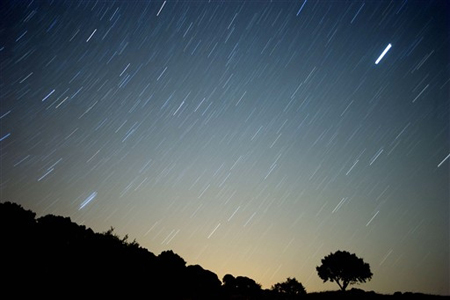
British Fairy Meteor (Perseid) rushes into the earth's atmosphere at a speed of 60 km / sec and is heated to thousands of degrees Celsius.
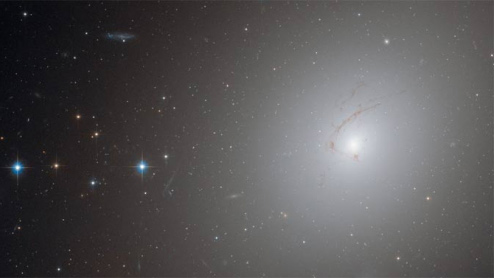
Recently, based on the images taken by the Huble space telescope, scientists have discovered a galaxy with a rather strange hook shape.
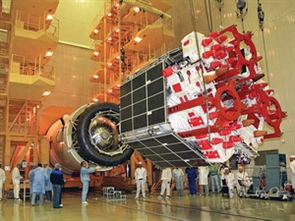
Russia's GLONASS satellite navigation system, equivalent to the US GPS system, will cover the whole world later this year.

In order to discover signs of life on Mars, Canadian scientists will measure the proportion of atmospheric components on the planet.

Еurоpа is not the only place in the solar system that has favorable conditions for extraterrestrial life.

Russia's unmanned Progress transport ship failed in an attempt to connect to the International Space Station (ISS) yesterday due to an incident.

After a failed attempt on July 2, Russia's unmanned Progress transport ship will make a connection with the International Space Station (ISS) tonight.

Although they are bright stars, supernova cannot create the heaviest elements.


US sources say the US Air Force plans to launch a new satellite into space to monitor hundreds of satellites and thousands of debris ...

Recently, cosmologists have gradually lifted the veil of mystery about the formation of the early pink universe through the theory of cosmic bubbles after the Big Bang.

Compared to previous research on Earth's age, scientists from Cambridge University (UK) have confirmed the green planet is younger than 70 million years ...

Because a planet moves so close to its own star, its atmosphere is sucked out and forms a trail like a comet.

Scientists say they have just identified the location of some recently active volcanoes on Mercury.