Space science
NASA spacecraft is on its way to Pluto
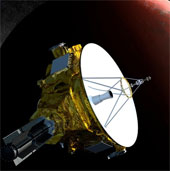
NASA's New Horizons spacecraft has passed Hai Vuong Tinh's orbit, is on its way to the distant Pluto and is expected to orbit the planet next July.
Browse ScienceInfo articles and explainers related to Discovery.
1,278 published items.
NASA's New Horizons spacecraft has passed Hai Vuong Tinh's orbit, is on its way to the distant Pluto and is expected to orbit the planet next July.

According to experts, it is the friction effect that appears together with the phenomenon of tidal deformation caused by the Earth, which causes the Moon to be enlarged…
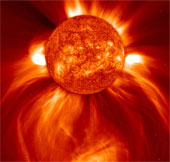
Japanese rays, ie the atmosphere contains the solar particles of the sun, larger than expected, exceeding 8 million kilometers from the sun's surface.

The ocean on Titan, Saturn's largest moon, may have salt concentrations equivalent to the Dead Sea on Earth.
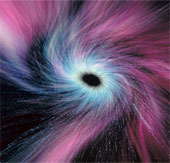
XMM-Newton X-ray Observatory of the European Space Agency (ESA) has discovered two black superholes in a normal galaxy.
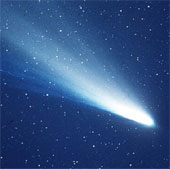
The appearance of Halley's comet has
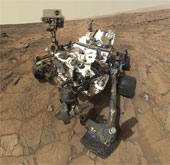
NASA's Mars discovery self-propelled ship, Curiosity, did not find methane on Mars after more than a year of research and conducted tests in the red planet's atmosphere.
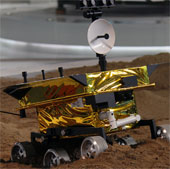
China will integrate unprecedented advanced technologies into the explorer ship preparing to land on the Moon.
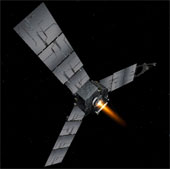
The Juno Airship of the US Space and Aeronautics Agency (NASA) has reached a milestone in the solar system's five-year journey to the largest planet.
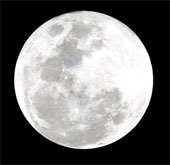
Responding to an interview with the Itar-Tass news agency on July 15, the head of the radiation safety department of the Vladislav Petrov Institute of Biomedical Science…

The fact that asteroids explode in the Russian sky has emitted shock waves so strong that it travels the Earth to two rounds before completely dissipating.
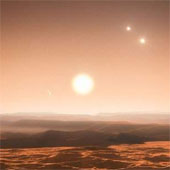
The Glise 667 C solar system near us has 7 planets, 3 of which are
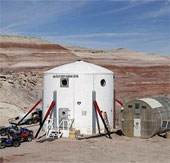
A group of scientists came to live and work in the desert in Utah (USA) - where there are similarities with Mars, to study the possibility of human survival when set foo…
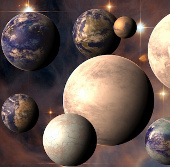
According to lead researcher Abel Mendez, scientists have achieved much progress in the way of searching for exoplanets.
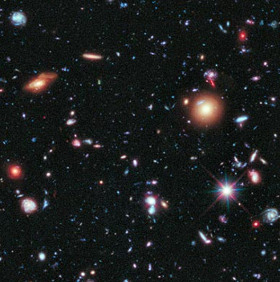
The Hubble telescope has recently discovered primitive galaxies formed during the early days of the universe, including the oldest galaxy ever discovered.