New technology
Produces power transmission cables and energy storage
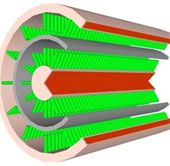
Recently, two researchers from the University of Central Florida (UCF) have found a way to use nanotechnology to create wires with gigantic capacitances.
Browse ScienceInfo articles and explainers related to Energy.
2,753 published items.
Recently, two researchers from the University of Central Florida (UCF) have found a way to use nanotechnology to create wires with gigantic capacitances.
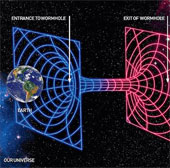
Last weekend, physicist Luke Butcher at Cambridge University published a report on several types of wormholes that could last long enough for a photon to pass through.
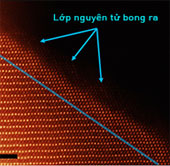
Every time you charge lithium-ion batteries, its energy storage capacity decreases little by little.

The era of unmanned aerial vehicles (UAVs) to return to the starting point for charging may pass very quickly and never return.
A large amount of excess heat arises from industrial processes and power generation projects, researchers around the world have spent decades searching for ways to explo…

Climate change, traffic jams, poverty crisis: the problem posed in this century is probably how to secure human survival.
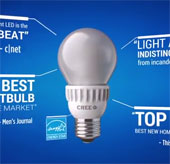
Despite being very popular nowadays, fluorescent lamps are still unpopular with cold, bluish, often blinking and emit sound over time.

Engineers at some of the world's largest technology companies are facing a problem: supercomputers are becoming so powerful that they can overcome our energy supply.
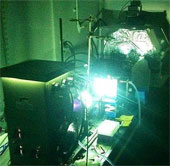
The energy emitted from the Sun in an hour can meet the Earth's energy needs for a year, but the expropriation of this energy is a challenge, especially when it is dark.
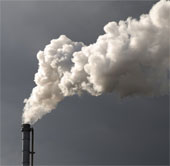
For years, the collection and storage of carbon (CCS) has been seen as a costly but essential step to reduce emissions and protect the environment.
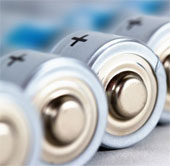
A battery is basically a negative electrode, negative electrode and electrolyte, which have a distinct and independent role.

The combination of wearable technology and clean energy promises many applications, and most recently, the appearance of a shirt capable of charging smartphones.
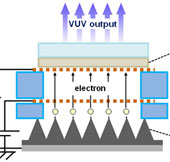
Japanese scientists have created ultraviolet light vacuum tubes in the shortwave range of 140 to 220 nanomics.
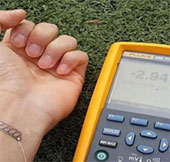
One day, the human body will become the ultimate source of energy for wearable devices thanks to new technology from Korea.
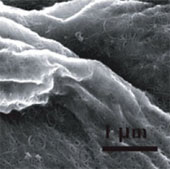
A transformation based on the discovery of scientists at the University of Oregon (USA) shows that it can turn trees into high-tech devices that contain energy.