New technology
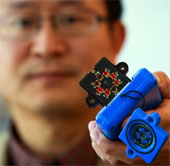
Manufacturing explosive detectors from carbon nanotubes
Recent carbon nanotubes have also been used to detect explosives and toxic chemicals.
Browse ScienceInfo articles and explainers related to Explosive.
178 published items.
Recent carbon nanotubes have also been used to detect explosives and toxic chemicals.
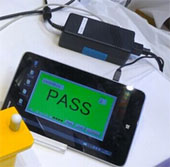
The device can identify the liquid inside as an explosive or flammable form, helping to speed up the speed and accuracy of checked baggage at airports.

After the war, the review of remaining minefields is a very dangerous and time-consuming task.

Scientists at Israel's Tracense Company have successfully researched an electronic chip with microscopic chemical sensors that can detect explosives in the air at ex…
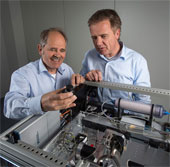
The new scanning device uses terahertz technology to detect drugs and explosives in goods sent by post without opening suspicious parcels or mail envelopes.

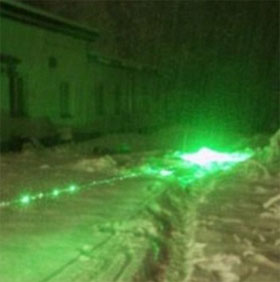
A team of specialists from the Siberian National Geographic Institute (SSGA) in Novosibirsk, Russia, has developed a method of using laser radiation (infrared) to detect…
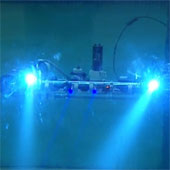
Unmanned equipment is responsible for detecting explosive materials under the sea, helping to reduce the risk of explosion and ensure the safety of human life.
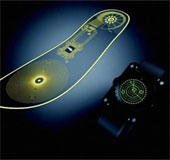
A Colombian designer has developed a shoe solver capable of detecting mines and sending dangerous warnings to shoe makers from a distance of two meters.
Swedish scientists have developed a device that can be attached inside a waste pipe to detect explosive materials that help track down terrorist bombs.
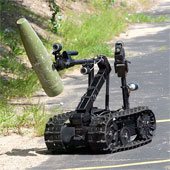
Iraq has armed more than 4,000 Talon robots. This is a great robot, with a fast and accurate mine and explosive speed.

Destroying a large building is not easy when engineers may have to use explosives to break up huge blocks of concrete.

It is now easier to detect bombs in public places such as airports or stations thanks to a new type of luminescent polymer by chemist William Dichtel and graduate studen…
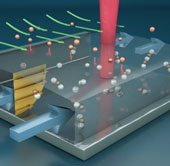
The new bio-based design of odor receptors in dogs is capable of rapidly detecting hazardous chemicals.

The explosive grenades emitting powerful electromagnetic pulse bursts are the favors of fictional writers and computer game designers.

UK researchers have successfully developed a system capable of rapidly detecting chemicals in small quantities, whether it be contaminants, explosives or drugs.