Space science
Japan launches satellite tracking global rainfall
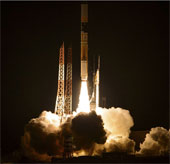
Japan on February 28 successfully launched high-tech satellite-carrying missiles to monitor global rainfall and support weather forecasts.
Browse ScienceInfo articles and explainers related to JAXA.
78 published items.
Japan on February 28 successfully launched high-tech satellite-carrying missiles to monitor global rainfall and support weather forecasts.

The Japan Space Exploration Agency (JAXA) cooperates with a fishing equipment manufacturing company to create a kind of net from school, dedicated to clearing space.
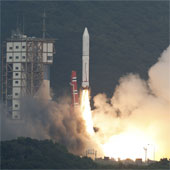
On September 14, the Japan Aerospace Exploration Agency (JAXA) said it successfully launched the new Epsilon missile using solid fuel, carrying a telescope to observe sp…
The Japan Space Exploration Agency (JAXA) on July 23 said the country's No. 4 transporter Konotori, scheduled to be launched on August 4, will bring a micro-satellite of…
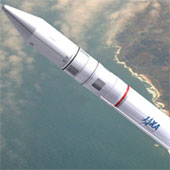
Epsilon, Japan's new generation rocket, will fly to space in August. The launch will take place at Uchinoura Space Center, Kagoshima Prefecture, Japan on August 22, NHK…
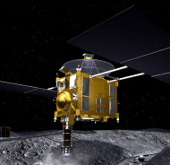
The Japan Space Exploration Agency (JAXA) will launch a spacecraft to a meteorite next year to sample soil and rock.
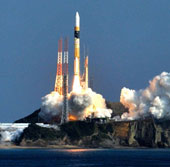
The Japan Space Exploration Agency (JAXA) and Mitsubishi Heavy Industries (MHI) have said that they will launch H-IIA missiles carrying a spy satellite early next year,…
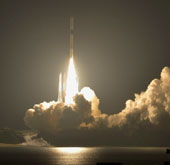
The Japan Aerospace Research, Development Agency (JAXA) and Mitsubishi Heavy Industries Company on November 27 said they will launch a fourth intelligence radar with an…
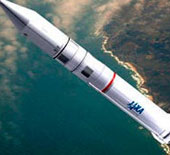
Japan is planning to launch Epsilon light boosters in the summer of 2013, RIA Novosti reports from Japan Space Exploration Agency (JAXA) today October 30.

JAXA and Roscosmos announced their ambition to build a moon base during the Global Space Exploration conference - an event that took place from May 22 to 24 in the US ca…
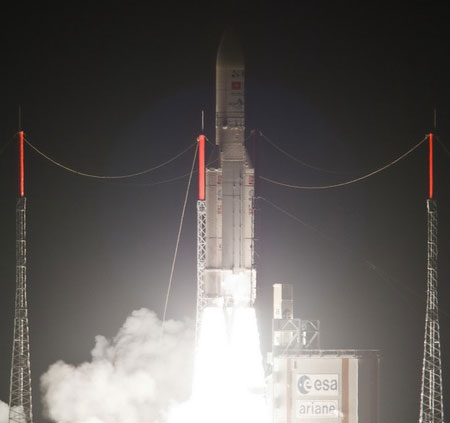
Japan will launch a satellite from South Korea into the space on May 18, a country official said. This is the first time Japan has participated in the field that Europe…
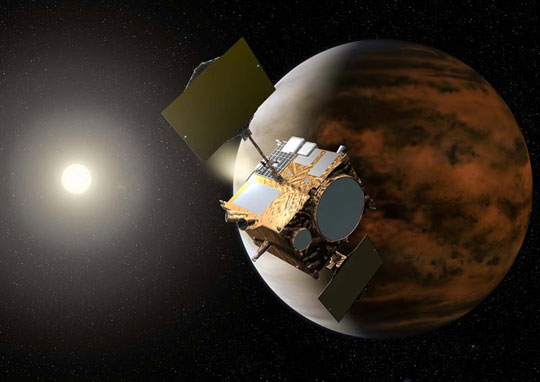
JAXA revealed the reason that the Akatsuki probe did not enter Venus's orbit was the pressure of the ship's fuel chamber abruptly reduced.
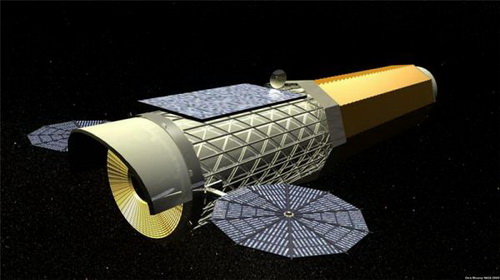
A cooperative project between the US Aerospace Agency (NASA), the European Space Agency (ESA) and the Aerospace Exploration Agency

Japan Space Exploration Agency (JAXA) yesterday announced that its unused fuel yacht will take off next month.
At 2 am September 11 (local time), Japan successfully launched the H-2B missile from Tanegashima Space Center in Kagoshima Prefecture, carrying the country's first unman…