New technology
Slow charging does not help extend battery life
A new study published by California scientists (USA), can change the way lithium-ion batteries clean in consumer electronics products and electric cars, help extend batt…
Browse ScienceInfo articles and explainers related to Lithium.
155 published items.
A new study published by California scientists (USA), can change the way lithium-ion batteries clean in consumer electronics products and electric cars, help extend batt…
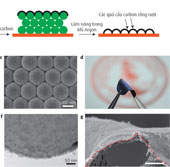
Until now, the creation of a small, high-performance, low-cost, and low-cost battery generation has always been a target of research for scientists around the world.
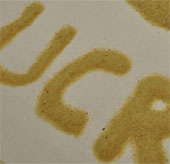
The anode of Lithium-ion (Li-ion) batteries is usually made of graphite (graphite) but many believe that the performance of this material has reached its limit.
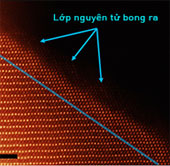
Every time you charge lithium-ion batteries, its energy storage capacity decreases little by little.
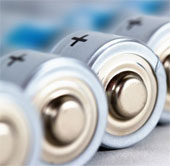
A battery is basically a negative electrode, negative electrode and electrolyte, which have a distinct and independent role.

Airbus has announced plans to build a smaller aircraft powered by hybrid electric motors, similar to the current approach by automakers.
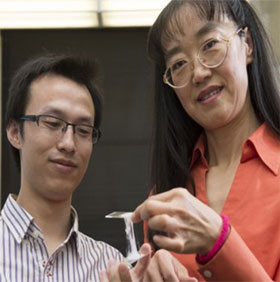
Washington State University researchers develop gum electrolytes to make lithium batteries safer, reduce inflammation.

Researchers have discovered a component called fluoride polymer (also known as PFPE), which can be used to produce non-flammable, flammable batteries such as lithium bat…
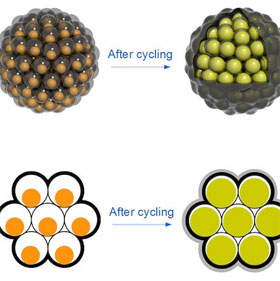
Scientists at Stanford University have discovered the miracle of pomegranate fruit in maintaining high-tech connectivity for humans.

Lithium-Air (Li-Air) is one of the most advanced battery technology in the world.

Russian chemists together with their Singapore and Israeli colleagues have created new materials to produce anode for sodium-ion batteries.

TobyRich (Germany) specializes in controlled smartphone applications and launched SmartPlane.
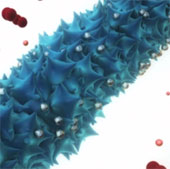
In recent years, Lithium-air - battery technology promises to improve the energy density of lithium-ion batteries.
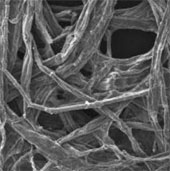
Today, there are many new battery technologies that scientists are turning to, such as small, lightweight Li-S batteries, or fast rechargeable batteries.
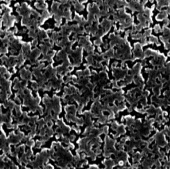
Researchers at Oak Ridge National Laboratory - ORNL (Tennessee, USA) developed a solid electrolyte to replace flammable substances used in lithium-ion batteries.