
Oceanography
Discover strange strange jellyfish of seven colors
Australian scientist Lisa Gershwin has discovered a strange jellyfish of 7 colors. The most interesting thing for this jellyfish does not cause itching.
Browse ScienceInfo articles and explainers related to Ocean.
1,955 published items.
Australian scientist Lisa Gershwin has discovered a strange jellyfish of 7 colors. The most interesting thing for this jellyfish does not cause itching.

A German scientist insists that fish are also seasick as humans and some animals.

One study showed that dolphins may not sleep for many days continuously and remain alert. In fact, only half of their brains were active, while the other half rested.

For the first time the BBC has filmed what happened below a giant wave of the ocean. These are images that have never been recorded by the camera.

Scientists identify the deepest place in the Pacific with a distance of 11,000 meters, and are not easy to study at such depths.

A fisherman discovered an oyster with a width of 18 cm and weighed nearly 1.4 kg at the port of Plymouth, England.

Two scientists in South America have witnessed male dolphins attack a young animal of the same species, in order to force its mother to exercise early.
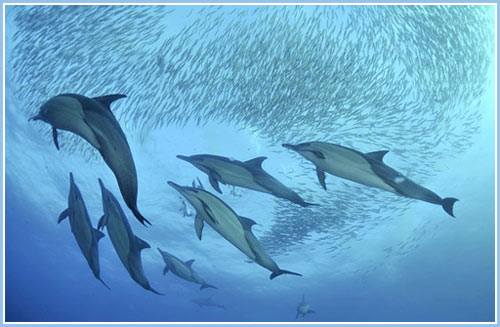
In the waters of South Africa, millions of sardines rush through the ocean's cold currents, they rush to the surface when surrounded by sharks, dolphins and seabirds.

Although living in oceans, sea snakes do not drink saltwater even if they are very thirsty.

Ronnie Dabal is fishing outside Puerto Princesa Bay (Philippines) on the afternoon of December 17 when a strong wind overturned his boat.

The scientific community is recording the rapid recovery of some of the coral reefs that had been destroyed during the Indian Ocean tsunami, four years ago.

Coral development in Australia's famous Great Barrier Reef underground is the biggest decline in the last four centuries.
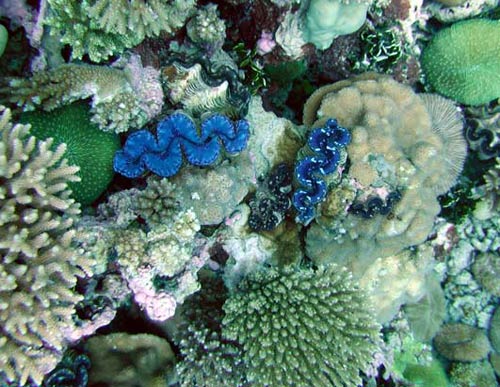
In one of the largest conservation efforts in history, President Bush yesterday announced the planning of a large-scale biodiversity conservation area in the Pacific.

Researchers at the University of Tampa (USA) found that sharks actually have very weak jaws compared to their size.