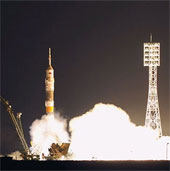
Space science
Russia successfully launched a positioning satellite
Russia successfully launched a satellite belonging to the Glonass Global Positioning System from the northern Plesetsk Cosmodrome in the north on April 26, RIA Novosti s…
Browse ScienceInfo articles and explainers related to Russia.
1,190 published items.
Russia successfully launched a satellite belonging to the Glonass Global Positioning System from the northern Plesetsk Cosmodrome in the north on April 26, RIA Novosti s…

French scientists succeeded in using lasers to find the former Soviet Union's Lunokhod 1 self-propelled ship on the Moon. 42 years ago, Lunokhod 1 became the first explo…
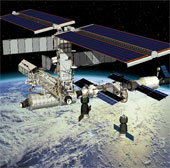
US Agency for Aeronautics and Space (NASA) said on April 30, it will sign a new contract worth US $ 424 million to hire Russia to bring US astronauts to the Internationa…
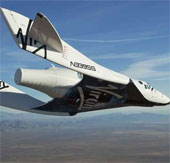
More and more private companies in Western countries are inviting tourists to become astronauts and present in Earth orbit, but in fact Russia still occupies the number…
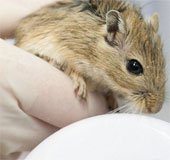
Satellites carry many mice, snails, fish and some microorganisms, of which the main object of the study is mice. This is the first time mice fly into space on biological…
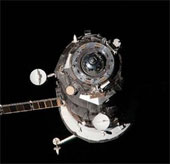
The Progress M-19M transport spacecraft, mounted on the Soyuz-U rocket on April 22, was moved and installed on a launch pad at Russia's Baikonur space airport in Kazakhs…
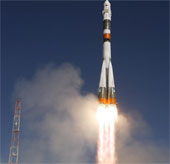
President Vladimir Putin has announced plans to spend $ 50 billion to uphold Russia's leading position in aerospace.
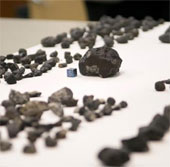
The Field Museum in Chicago (USA) said it had collected 234 meteorite pieces of the terrorist that exploded in the sky of Russia's Urals region in February.
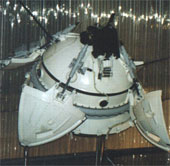
Some amateur scientists in Russia say they found the resting place of a Soviet ship that had been missing nearly 42 years ago.
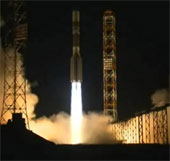
On the evening of April 15, Russia carried out the successful launch of Canada's Anik G1 telecommunications satellite from Baikonur Cosmodrome, Kazakhstan.
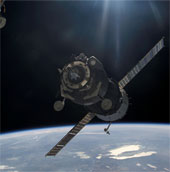
The flight to the International Space Station (ISS) on March 28 of the Soyuz spacecraft only lasted nearly 6 hours, while other flights usually took place over two days.
The Russian Federal Space Agency (Roscosmos) may join the US Aerospace Agency (NASA) in an effort to kidnap a meteorite.
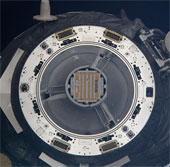
'Russian space agency (Roskosmos) prepares to free the students' satellites, Roskosmos general director Vladimir Pokopkin said.
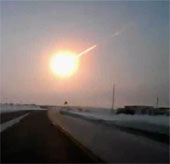
Officials from the US Aeronautics Agency (NASA) concede there is nothing to be done if the meteorite on the collision with the Earth within 3 weeks.
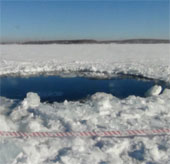
Thanks to radar technology, an asteroid crater has been exposed at the bottom of Lake Chebarkul, after experts attempted to find a meteorite collision point in Russia wi…