Space science
Solar storm hit Earth on Friday 13th
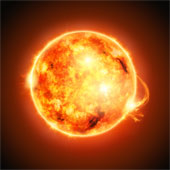
Some sun-level X flares erupted on our central star surface this week, and now their radiation is striking the Earth.
Browse ScienceInfo articles and explainers related to Solar.
2,143 published items.
Some sun-level X flares erupted on our central star surface this week, and now their radiation is striking the Earth.
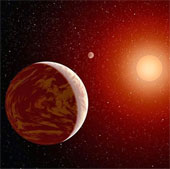
Just 13 light-years from the solar system, a red dwarf is accelerating away from Earth, taking a planet that could be a giant version of the planet.
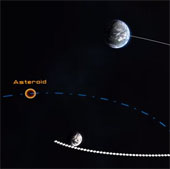
Recently, the US space agency (NASA) has revealed more information about the mission of hunting and exploiting meteorites (ARM).
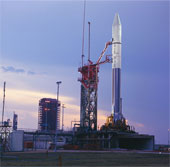
31 years ago, on June 13, 1983, Pioneer 10 - the pioneer - overcame Mars's orbit, becoming the first artificial object to leave the solar system, traveling in space. imm…
NASA's infrared telescope discovered 7 light-years away from the Sun has a cold, small brown star that does not shine.
British scientists have shown that the Sun's activity affects the lightning frequency that hits Earth.
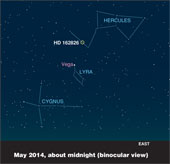
In the center of the solar system, the giant star warming the Earth is not the only child born more than 4 billion years ago.
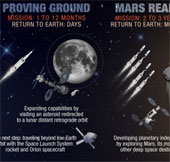
The US Aerospace Agency (NASA) has announced details of plans to send people to asteroids in 2025 and to Mars in the 2030s.
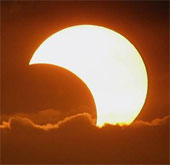
If you stand in Australia or Indonesia today, you will see the sun is like a fat banana because the eclipse is extremely rare, only occurs on average 73 years.

New research shows that the gravity of Jupiter may have affected the climate on Earth and thus created the necessary conditions for life to proliferate.
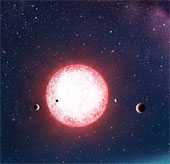
For the first time, scientists discovered planets that exist in liquid form similar in size to the earth.
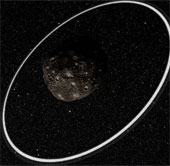
This is the first time astronomers have discovered two rings surrounding an asteroid in the solar system.
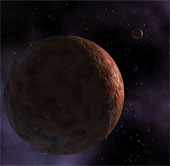
After a decade of searching, astronomers have discovered the second dwarf planet with orbit far above Pluto, but has yet to explain why the planet is there.
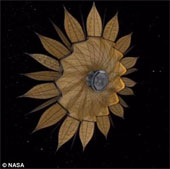
It looked like a blooming sunflower, but it was actually a space device of the US Aerospace Agency (NASA), developed to collect a clear picture of planets outside the So…
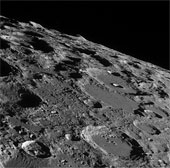
The moon appears about 95 million years after the Solar System was formed from a planetary collision.