Space science
Detecting a planet with life
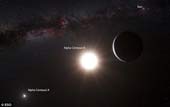
Recently, astronomers have found the planet capable of creating living conditions for extraterrestrial organisms. These two planets are about 4.3 light years from Earth,…
Browse ScienceInfo articles and explainers related to Star.
2,098 published items.
Recently, astronomers have found the planet capable of creating living conditions for extraterrestrial organisms. These two planets are about 4.3 light years from Earth,…
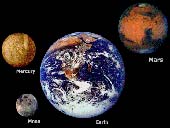
Earth is the only planet with water, the universe is in a static state ... the myths about the universe that many people still believe.

Two astronomers Ben Bromley and Scott Kenyonn discovered the possibility of a Tatooine-like planet in the Star Wars science fiction movie.
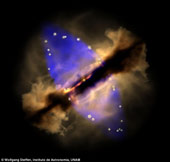
Astronomers have never seen such a strong stream of light come from the formation of a star in the universe.
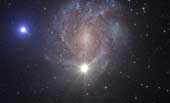
The fastest star in the Milky Way is moving at 1,200 km / s, possibly escaping from the Milky Way in about 25 million years.
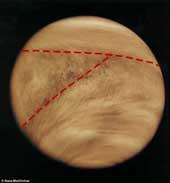
Study information in the Daily Mail updates the latest images of 'twins
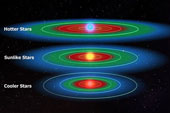
Astronomers have come to this conclusion after calculating the number of planets located at a distance away from the star just enough to have warm temperatures and water…
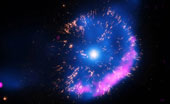
The US Aeronautics and Space Administration (NASA) has published a picture of an explosion in the universe that has the same color and shape as a brilliant firework disp…

Research by American scientists shows that a red dwarf once glided through the solar system 70,000 years ago at close range.
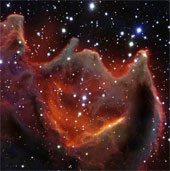
Very large telescope (VLT) captures an image of a giant hand reaching towards the stars.
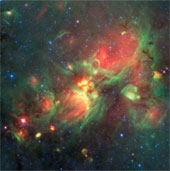
A yellow ball-shaped block appeared in some images taken by NASA's Spitzer space telescope.
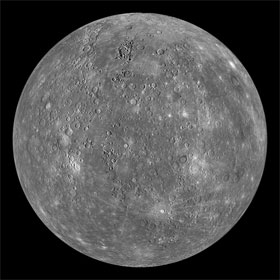
Mercury is the sun closest to the sun in the solar system, it has been studied quite well by scientists over time.
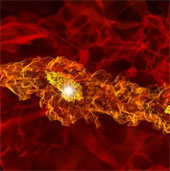
The first stars appeared in the sky 560 million years after the big bang (Big Bang), a time considered the birthplace of the universe, 140 million years later than the i…
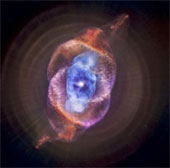
Two white dwarfs rotate very quickly around each other in a mysterious nebula. The distance between them is so small that they will surely become a star and explode.
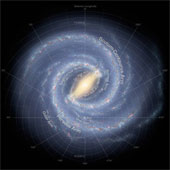
We have many unofficial names for cosmic landscapes. Sometimes they are named after the shape we see, such as the Horsehead Nebula.