
Space science
1.5 Gigapixel image to Andromeda galaxy with over 100 million stars
NASA recently published the largest and most comprehensive picture of the Andromeda galaxy, the closest spiral galaxy with approximately 1 trillion stars inside.
Browse ScienceInfo articles and explainers related to Star.
2,098 published items.
NASA recently published the largest and most comprehensive picture of the Andromeda galaxy, the closest spiral galaxy with approximately 1 trillion stars inside.
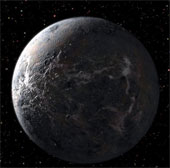
Through the Kepler telescope, American scientists have discovered Earth's trio of warm planets with at least one potentially habitable planet.
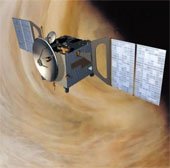
The European Space Agency (ESA) announced on December 16 that the Venus probe
The US Aeronautics and Space Administration (NASA) has detected a massive infrared light in the dark intergalactic space.
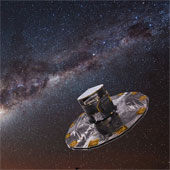
It is possible that about 70 thousand new planets were discovered during the exploration of European spacecraft that took off from the earth since 2013.
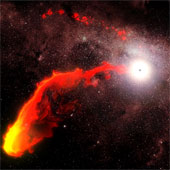
Giant star named G2, after
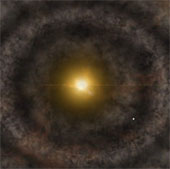
Thanks to the Alma radio telescope, scientists have for the first time captured the clearest picture of the formation of planets around a young star.
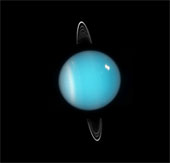
For the first time in the history of space exploration, Earth astronomers have found a planet similar to Uranus, in a binary star system about 25,000 light-years ago.
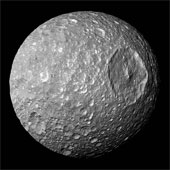
A group of astronomers discovered that the Mimas satellite's orbit around Saturn struck vibrations and this suggests that underneath the Mimas rock layer may contain an…
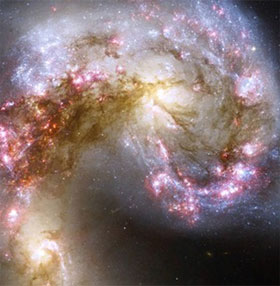
For about 4 billion years, the Milky Way galaxy will merge with the Andromeda galaxy. The result of the integration process will be an elliptical galaxy called
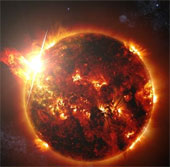
The US Aeronautics and Space Administration (NASA) has discovered a dazzling 10,000 times more intense than the most powerful dazzle ever recorded in the history of the…
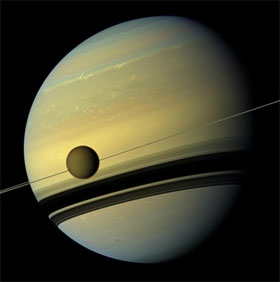
Astronomers have discovered a cyanide cloud covering Titan's southernmost region, a phenomenon similar to what happened in 2009 when Saturn, Titan's mother star, began t…
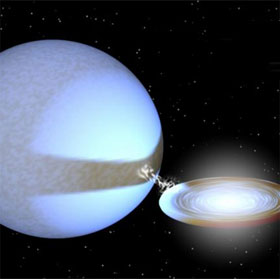
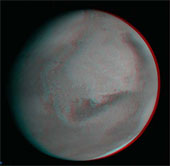
India's spacecraft has just sent back to Earth the first 3D image of Mars.
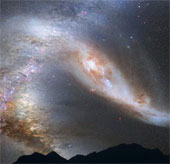
The results of a new study show that in the next 5 billion years, the Milky Way will be swallowed up by a