
New technology
The 'feather' surface has many applications
Scientists at the US Department of Energy's Argonne National Laboratory have created a new material, which is filled with ultra-fine hairs, which can be used in a va…
Browse ScienceInfo articles and explainers related to Surface.
1,629 published items.
Scientists at the US Department of Energy's Argonne National Laboratory have created a new material, which is filled with ultra-fine hairs, which can be used in a va…

Scientists at McGill University in Montreal, Canada have created a new process that increases the strength of glass and when dropped, objects made with this technology t…
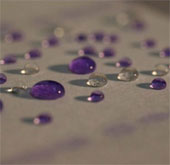
This new paper not only promises to be a reusable packaging material but can also become a viable biomedical diagnostic tool.
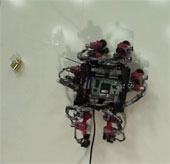
European Space Agency (ESA) said on January 2 that it has successfully built a dedicated lizard robotic model to carry out repairs in space.
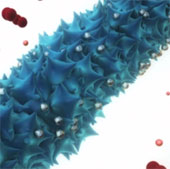
In recent years, Lithium-air - battery technology promises to improve the energy density of lithium-ion batteries.

South Korean scientists have recently developed a dual-sided, transparent touchscreen that allows multiple users to simultaneously use the device.

A woman in New York used nanotechnology to make 'non-smudged baby clothes'.

Researchers at the Disney Research Institute have found a way to allow people
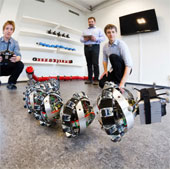
Norway's SINTEF Research Institute is working to complete a new robot design for exploring the surface of Mars. This robot looks like a snake.
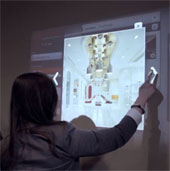
Technology turns a wall, panel, floor or any flat surface into a touch screen that Microsoft has been studying for years.
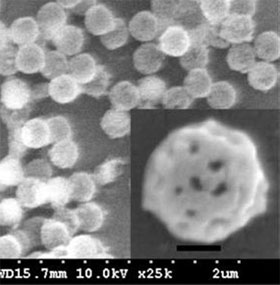
Scientists have devised a special material that can be coated on surfaces, keeping them dry or wet, making the surface never need to be cleaned.
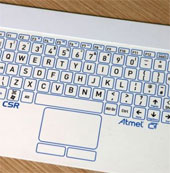
British scientists have created a flexible keyboard model that is as thin as a sheet of paper and can turn any area on the keyboard into a touch surface.
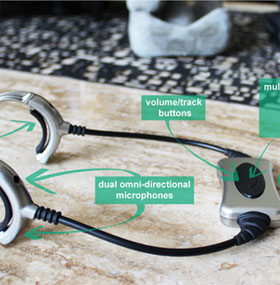
The Sound Band will be a different headset because it has no speakers. Instead, the Sound Band uses surface-to-surface technology, meaning that the listener's ear is…
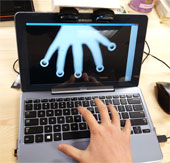
Haptix technology allows users to transform all spaces into three-dimensional, multi-faceted surfaces and interact on those surfaces.
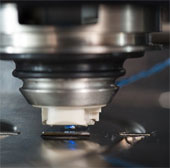
The world's most famous painting was developed by researchers from the Georgia Institute of Technology on a surface of about 30 microns, or about a third of the hair.