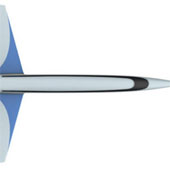
New technology
Spike S-512 - The first ultrasonic civilian engine in the world
Spike was founded by a team of experienced engineers who have worked at Gulfstream, Eclipse and Airbus
Browse ScienceInfo articles and explainers related to Aircraft.
1,304 published items.
Spike was founded by a team of experienced engineers who have worked at Gulfstream, Eclipse and Airbus

Every 12 hours, the National Oceanic and Atmospheric Administration (NOAA) releases balloons that collect weather information from about 70 different locations across th…
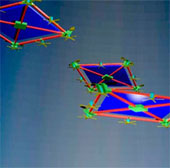
For a British company, stealth aircraft are not simply Amazon's delivery vehicles, but can also become mobile power plants in the sky.

TobyRich (Germany) specializes in controlled smartphone applications and launched SmartPlane.
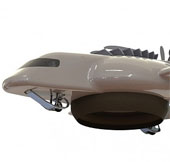
After natural disasters such as the typhoon Haiyan ravaging the Philippines, relief work on affected areas is often difficult due to the infrastructure being damaged.
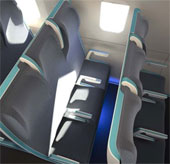
A British company has begun deploying plan to adjust aircraft seats. Passengers can choose and book tickets that match their shape and body size.
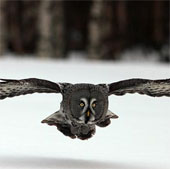
Scientists say the secret of flying almost silent in a bird's night can be used to develop less noise-producing aircraft.
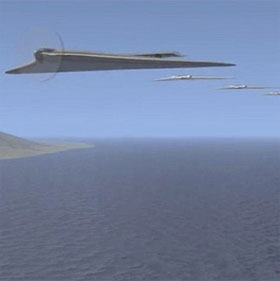
Scientists at the Sandia National Laboratory in California have created an unmanned, multi-tasking machine that can travel anywhere.
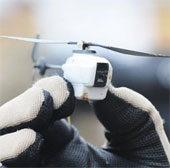
Outperforming detective hummingbird robots, the Black Hornet device is easy to use and has many advantages.
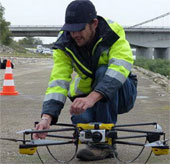
French National Railways (SNCF) has announced the launch of its first unmanned aerial vehicle system to inspect the country's rail network.

According to a reporter in Brussels, on 28 October, Belgium conducted a radar detector test of volcanic ash over the Bay of Biscay.
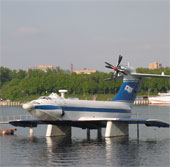
In the Petrozavodsk city, the northwestern part of the Russian Federation, has successfully completed the first screenoplan test - a unique device that can swim and fly.
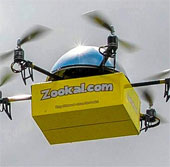
Zookal has partnered with Ozzie to launch a unique program called Flirtey, which will help deliver books to the needy through unmanned aerial vehicles (UAVs).
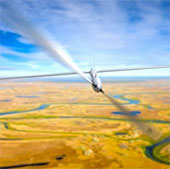
Operated by solar energy, Titan Solara version 50 weighs only 159 kg and can fly continuously for 5 years without refueling.
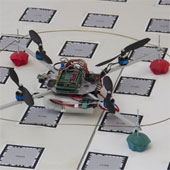
A group of Austrian students has successfully designed a model of aircraft capable of automatically flying based on smartphones.