
Space science
Research casting alloys in zero gravity environment
Most metals crystallize and their properties depend on micro structures. This structure will expand when cooled.
Browse ScienceInfo articles and explainers related to Alloy.
69 published items.
Most metals crystallize and their properties depend on micro structures. This structure will expand when cooled.

Centuries before becoming a key ingredient in salads and sauces, tomatoes were once considered by Europeans to be a deadly poison.

In the future, our refrigerators can preserve food by applying magnetic fields to cool them through magnets.
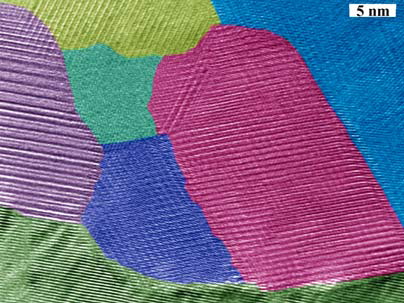
Researchers at Boston University and Massachusetts Institute of Technology (MIT) have used nanotechnology to make major improvements in the ability to increase thermal e…

Dr. Pham Dang Dich, working at Research Center for Casting and Metallurgy Technology Development (Hanoi Association of Science and Technology Associations) has completed…
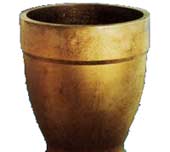
Copper though is not widely used as iron and steel. But it has many advantages that iron and steel cannot match. Pure copper has extremely good electrical conductivity a…
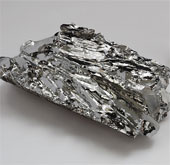
Iranian media reported on September 30, a large amount of molybdenum sediment with an estimated reserve of 21.7 million tons.

If reinforced with nickel and titanium alloy made of nickel and sugar, the bridge and road will be like a

American scientist John W. Cahn received Japan's annual Kyoto award, worth about $ 650,000, for advanced technology.
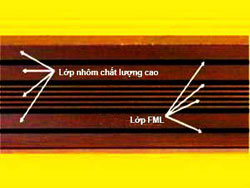
The two companies of the same university in the US and the Netherlands have jointly successfully researched a new alloy that is super durable and resistant to corrosion.…
An international team of scientists has successfully created an artificial muscle made of super-cheap plastic fibers.

The Director General of the Russian Research Institute Evgeni Kablov said the 1933 ultralight new alloy, or aluminum-lithium alloy, will reduce the weight of the aircraf…

Japanese scientists have successfully developed a new super-elastic alloy. This material can be used in high-rise buildings to reduce impact when an earthquake occurs.
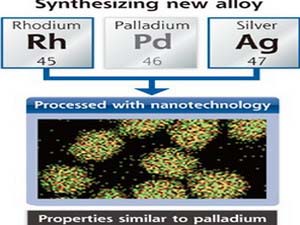
Japanese scientists have successfully fabricated new alloys similar to rare metals palladium - the world's first artificial rare metal.

A type of antenna that can change shape has been built in the United States.