New technology
NASA makes biometric sensor for bacterial detection
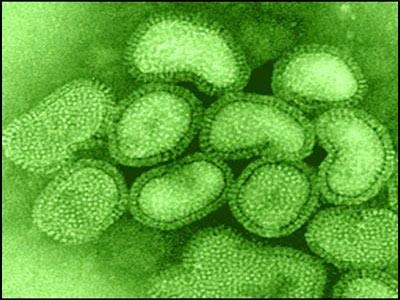
NASA has developed a new nanotechnology-based biometric sensor that detects bacteria, viruses and parasites.
Browse ScienceInfo articles and explainers related to Biological.
701 published items.
NASA has developed a new nanotechnology-based biometric sensor that detects bacteria, viruses and parasites.

It's a spider-shaped proteus, designed for a variety of purposes, from military to biological research, ocean exploration or rescue at sea.
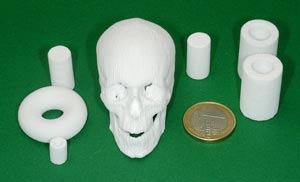
Canadian researchers at the University of Laval (Quebec) and McGill University and three German researchers have developed a system using computers and 3D printers to cr…
Recently, a company in New Zealand introduced two new products: Bio-belts and smart shoe soles. These two products automatically record every biological indicator of the…

A robot can interact with the world in a similar way to a real baby that has been created by French, Italian and Swiss scientists. It can provide researchers with the la…
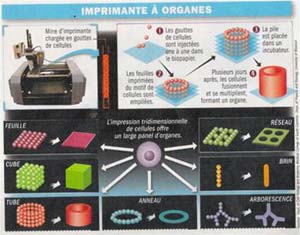
Thanks to a printer, spray ... cell on a biological paper, it is soon possible to create the kind of mechanism as desired. This US research project opens a promising pro…
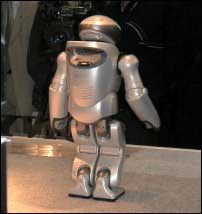
For the first time, the live robot works by Dr. Klause Peter Johner of Sauthampton University has been launched. These are fungi that grow on mold, sensitive to light, a…
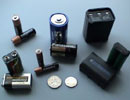
Scientists at the Massachusetts Institute of Technology (MIT) have announced the use of biological viruses to make lithium-ion batteries. These batteries can provide up…
Scientists have successfully engineered 'super healthy' muscle cells powered by hydrogen and alcohol. They can be used to make prosthetic limbs with more useful…

US scientists have developed a new device for detecting biological agents. This could be a valuable asset in the fight against bioterrorism. This device can provide earl…
In the future people can see at night as clearly as day, with unexpected visual abilities. It is not science fiction story.