New technology
Japanese computer-aided testing
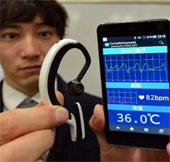
A tiny personal computer can be worn on the ear and controlled by a blink of an eye or a tongue clamp is being tested in Japan.
Browse ScienceInfo articles and explainers related to Data.
1,449 published items.
A tiny personal computer can be worn on the ear and controlled by a blink of an eye or a tongue clamp is being tested in Japan.

A new technique that allows continuous monitoring of water quality is consistent with many pollutants.
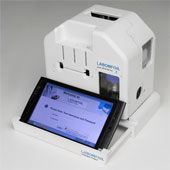
A project in Europe coordinated by Ikerlan and CIC microGUNE is developing a small and mobile laboratory format.
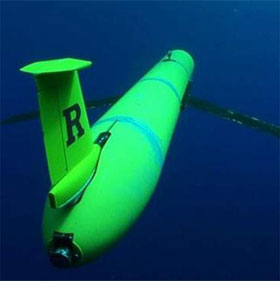
16 underwater devices will perform exploration missions and assist in mapping the world's oceans.

Ferrari has just introduced a new technology support for the driver's favorite and passionate speed, that is the system analyzer Telemetry of the supercar from Italy.
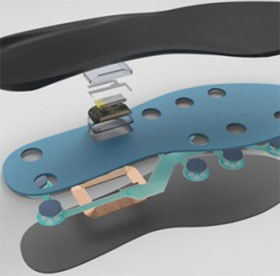
Inside each FootLogger footbed contains a 3-axis accelerometer and eight pressure sensors, but it's quite compact.
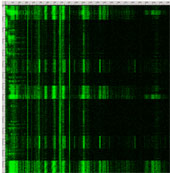
Daniel Genkin, Adi Shamir (2 co-founders of the RSA algorithm) and Eran Tromer used a technique called
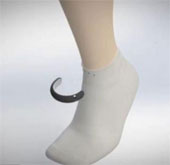
Heapsylon (USA) said that this pair of digital socks will help to jump better, increase the efficiency of golf, even help women wear high heels properly.

Scientists at the University of Glasgow, Scotland have discovered that the more we can exploit data from ... the eyes of the victim in blackmail to help investigate the…

Every 12 hours, the National Oceanic and Atmospheric Administration (NOAA) releases balloons that collect weather information from about 70 different locations across th…

A team of researchers from the Technical University of Warwick University and York University in Canada have created a molecular messaging system with the ability to tra…
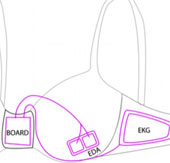
Studies have shown that many people experience eating habits in stress, in which women account for more than men.

Engineers from Moscow research firm 'Spectr' have built a mobile system to spy on radiation and chemical pollution.

They succeeded in transferring data from the Lake Erie bottom to receiving equipment and hoped to create a new industry standard for ocean-based communications.
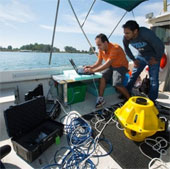
Researchers at the University of Buffalo in New York are developing one