Space science
Flying frogs with NASA spacecraft
The frog is said to live in a water tank at the Wallops / Central Atlantic Regional Airport in Virginia state, USA.
Browse ScienceInfo articles and explainers related to Explore.
823 published items.
The frog is said to live in a water tank at the Wallops / Central Atlantic Regional Airport in Virginia state, USA.
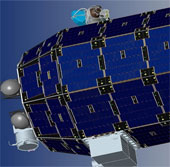
Next September, the US Aerospace Agency (NASA) will launch a spacecraft to the moon to study the
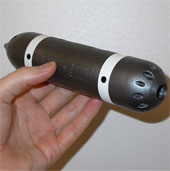
One of the first 'tourists' to Jupiter's icy satellite planet could be a small submarine about the size of only two cans of soft drinks.
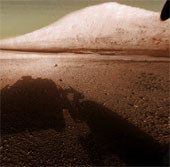
In an attempt to decipher the Red Planet's secret, the US space agency (NASA) on June 5 said that the Curiosity self-propelled probe currently on Mars will move toward d…

NASA director Charles Bolden said the US would not bring people back to the moon to concentrate resources on the program to send people to a meteorite and Mars.

While Japanese people are preparing to take humanoid robotic robots to the International Space Station (ISS), the German scientists carry out a robot design project to e…
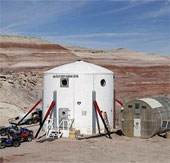
A group of scientists came to live and work in the desert in Utah (USA) - where there are similarities with Mars, to study the possibility of human survival when set foo…
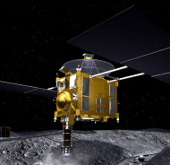
The Japan Space Exploration Agency (JAXA) will launch a spacecraft to a meteorite next year to sample soil and rock.
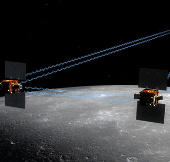
A pair of unmanned spacecraft of the US Space Agency (NASA) on the moon's orbit will self-destruct next week after completing their mission.
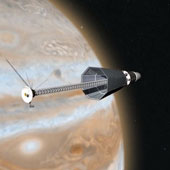
Researchers have experimented with a small version of a nuclear engine design that can help satellites explore deep into the universe.
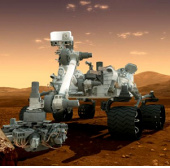
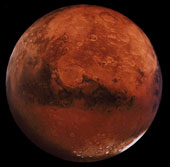
The European Space Agency (ESA) and the Russian Federal Space Agency (Roscosmos) will sign an agreement to explore Mars in the next few years.
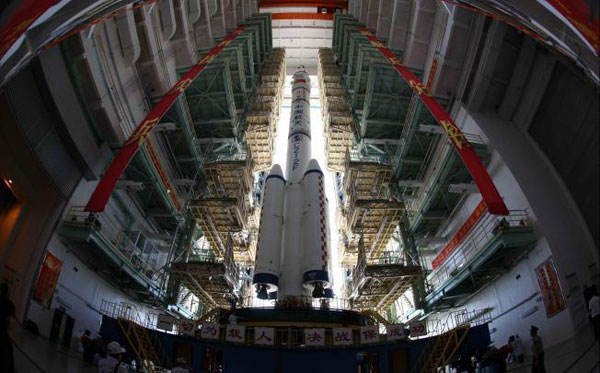
Scientific director in charge of China's Moon Exploration Project said China is now planning to ship and collect specimens on Mars by 2030.

The Curiosity probe of the US Space Agency (NASA), carrying out its mission to explore Mars, has for the first time recorded the red planet's Phobos moon moment.
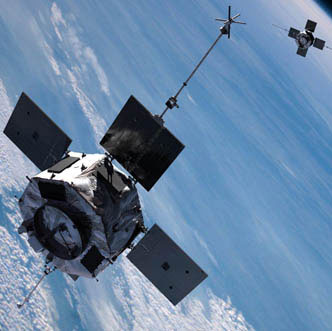
NASA is preparing to deploy two radiation storms (RBSP) for the mission to explore the harsh environments of charged particles around our planet.