Space science
The fastest star in the Milky Way
The fastest star in the Milky Way is moving at 1,200 km / s, possibly escaping from the Milky Way in about 25 million years.
Browse ScienceInfo articles and explainers related to Fastest.
277 published items.
The fastest star in the Milky Way is moving at 1,200 km / s, possibly escaping from the Milky Way in about 25 million years.

This is the result published by American researcher Matthew Huber, Purdue University, USA.

The star is a red dwarf star. It rotates around the cosmic black hole MAXI J1659-152 (which is three times the weight of our sun). This star is only one-fifth the weight…

Astronomers have discovered a special planet among known planets so far. It is named WASP-12b and the character of this object is the fastest, hottest and closest to a f…

Astronomers have found a pair of white dwarfs that take only 5.4 minutes to rotate around one another. This is the fastest pair of twirling stars that scientists have ev…

America's Pluto-probe spacecraft, New Horizons (New Horizons), flew 2.39 billion km across the solar system, completing half the distance.
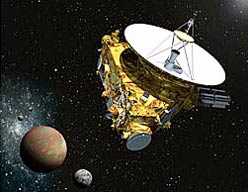
The New Horizon probe is the fastest speed ship of all the previously unmanned aerial probes and it is currently 1.5 million miles away.
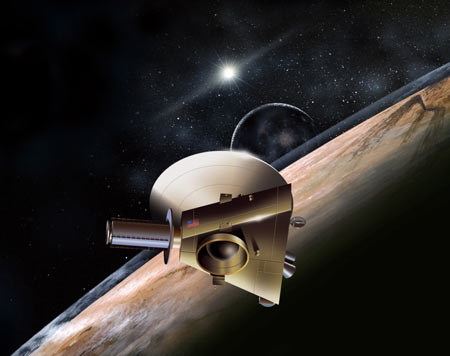
New Horizons, NASA's fastest air space probe, is also the first spacecraft to explore Pluto, which will fly through Jupiter with the closest distance on February 28.
Researchers at McGill University in Montreal (Canada), led by astronomer Jason Hessels, discovered that the asteroid turned at 716 cycles (716 hertz) in a second, breaki…

It is estimated that seaweed and ocean microalgae account for about 9/10 plants on Earth.

Effective problems are considered by fire ants as they always choose the fastest route, instead of the shortest, to move on every surface.

Life on a height of 4,900 m forces Tibetans to evolve very quickly to survive.

How to choose the fastest one right solution? An assertive person or democratic discussion? Biologists recommend that the bees be consulted.

Blink and you'll miss this scene: a trivial termite Termes panamensis claps its jaws at a rate that passes through all the movement of mechanical energy on Earth.

This story about butterflies in Samoa is an example of the fastest natural selection observed so far, and shows that evolution can accelerate when a major threat arises.