Space science
The sparkling beauty of the center
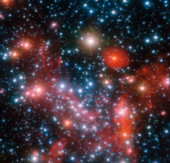
The central region of the Milky Way appears with subtle colors in a photo taken from the ground by a telescope.
Browse ScienceInfo articles and explainers related to Galaxy.
954 published items.
The central region of the Milky Way appears with subtle colors in a photo taken from the ground by a telescope.
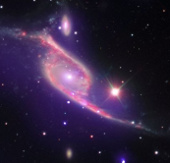
Astronomers have suddenly located the largest galaxy ever, five times larger than our Milky Way galaxy.
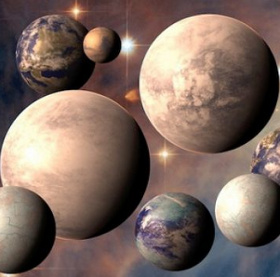
American astronomers predict the Milky Way is home to at least 100 billion stars and 100 billion planets.
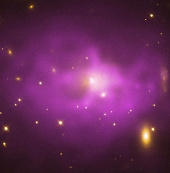
When it comes to black holes lurking at the center of galaxies, we refer to some of the true
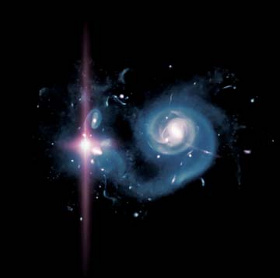
The astronomical industry welcomed the impressive discoveries in 2012, which changed the way people knew about the universe, and pushed some devices to the critical leve…
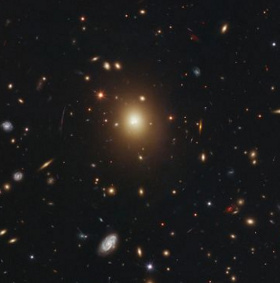
The astronomical industry welcomed the impressive discoveries in 2012, which changed the way people knew about the universe, and pushed some devices to the critical leve…
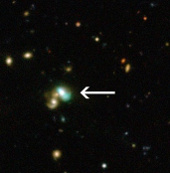
Observatories in Chile and Hawaii (USA) have identified a new type of galaxy called mung bean galaxy, due to their unusual appearance and strange light.
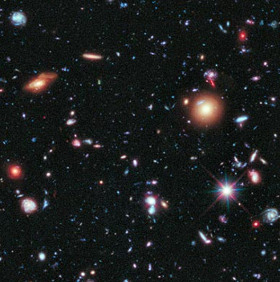
The Hubble telescope has recently discovered primitive galaxies formed during the early days of the universe, including the oldest galaxy ever discovered.
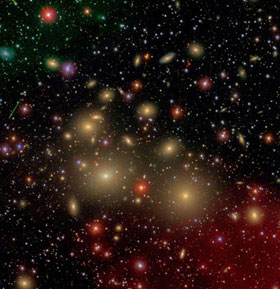
Experts at the University of Texas (USA) have found the largest black hole in the universe, up to this point, opening up new research directions on how galaxies and blac…
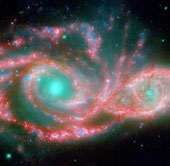
NGC 2207 and IC 2163, names of two galaxies twisted in the Canis Major constellation, are in the process of merging into a galaxy.
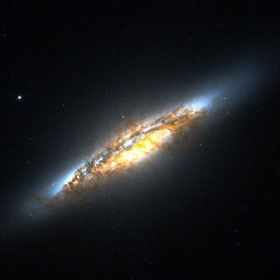
This galaxy named NGC 5010 is in transition, from a spiral galaxy to an elliptical galaxy.
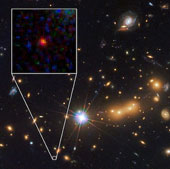
Using NASA's two space telescopes, American astronomers said they discovered the most distant galaxy ever found in the universe.
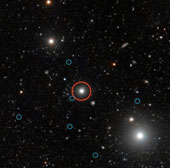
Astronomers say they have found a type of galaxy previously predicted, which is the galaxy
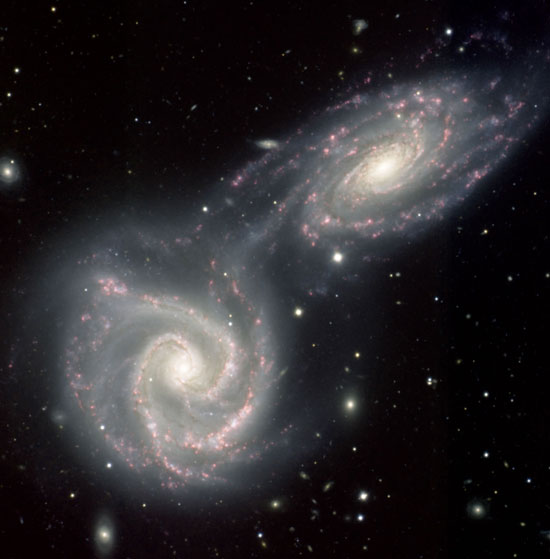
Large galaxies feed on small galaxies or bump into other large galaxies to form a more massive galaxy.
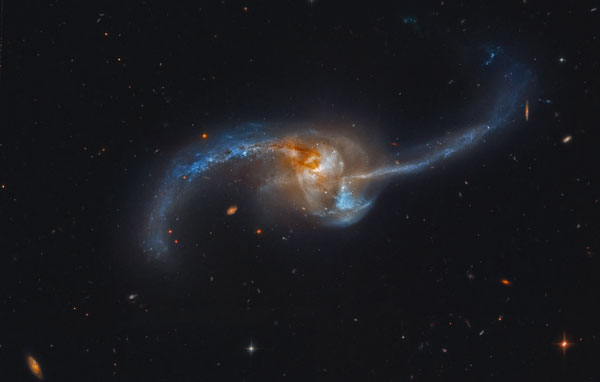
Astronomers saw a pair of galaxies rushing into each other in the distant universe, a future image of the Milky Way itself for several billion years.