New technology
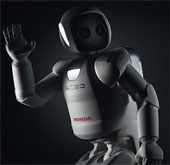
Honda robot upgrade ASIMO: faster and smarter
Honda is continuing to research and develop the ASIMO humanoid robot generation and they have started to reach milestones.
Browse ScienceInfo articles and explainers related to Generation.
642 published items.
Honda is continuing to research and develop the ASIMO humanoid robot generation and they have started to reach milestones.

A team of scientists around the world has released a number of new 'flying robot' designs, most of which are inspired by birds, bats or insects in nature.

360Cam is a unique camcorder from Giroptic, with Full HD video recording capability at 360 degree viewing angle.

The idea of producing electricity from airborne vibrations is not new, but a team at the Singapore Institute of Science and Technology has turned it into reality.
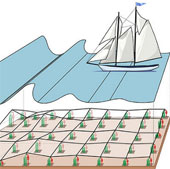
For the past five years, Professor Peza Alam and a team of scientists at the University of California, Berkeley, have successfully researched how to create a mechanical…

The US military is developing a new generation of drone aircraft operating in space and is expected to test it in 2017.

The new era of smart battery generation is approaching, as the source of the charge may be solar, TV or even home Wi-Fi.

After Qualcomm, scientists at Purdue University in Indiana are also researching a generation of intelligent chip processors (AI chips) for phones that are capable of lea…
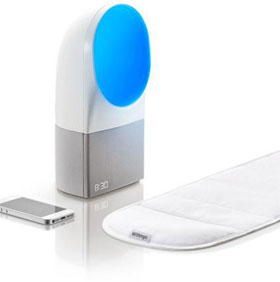
New generation alarm clock can know the exact time to wake users, by feeling their bodies.

Designer Tad Orlowski has released the design for his latest concept car with the appearance of transparent LCD panels mounted on the bus.

Russian scientists have introduced a new generation humanoid robot carrying the SAR-401. The robot will be programmed to accompany astronauts to the international space…
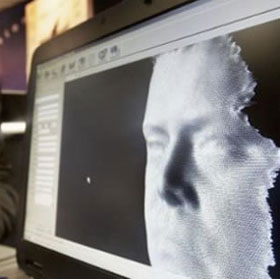
Facial recognition is a software system on the computer that automatically identifies a person based on the image, the video.

The unique shape of the rays can inspire the emergence of new generation deep-sea research submarines.
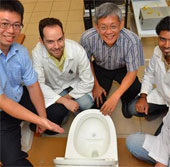
Researchers at Singapore's Nanyang Technological University (NTU) are studying how cities and towns can help themselves by turning waste into electricity.
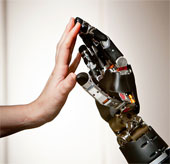
Next-generation imaging can convey sensory information that occurs in real time to the sufferer, through direct interaction with the brain.