Space science
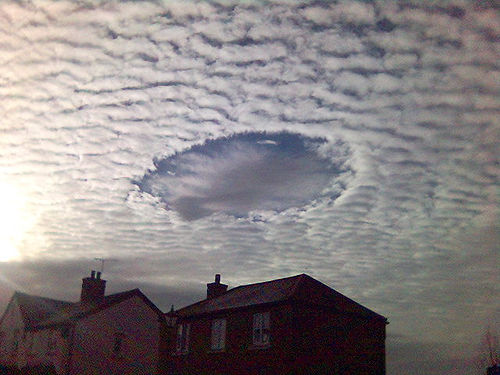
Asteroids falling into the sea will cause an ozone depletion
An asteroid falling into the Pacific Ocean stimulates a large amount of evaporated seawater, thereby creating an ozone gap.
Browse ScienceInfo articles and explainers related to Hole.
1,071 published items.
An asteroid falling into the Pacific Ocean stimulates a large amount of evaporated seawater, thereby creating an ozone gap.

Two giant bubbles spew out gamma beams that appear in the center of the Milky Way and astronomers don't know where they were born.
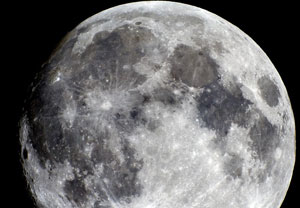
NASA published the results of the study of the data obtained from the LCROSS spacecraft launch experiment ...
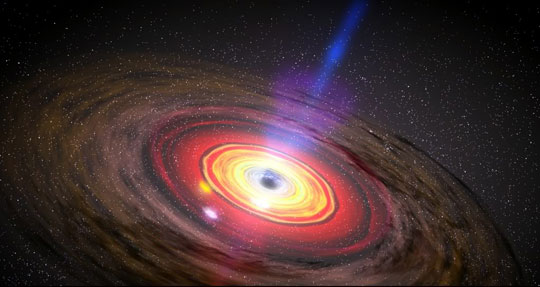
Scientists speculate that the X-ray object is most likely a neutron star or black hole tens of thousands of light years from Earth.
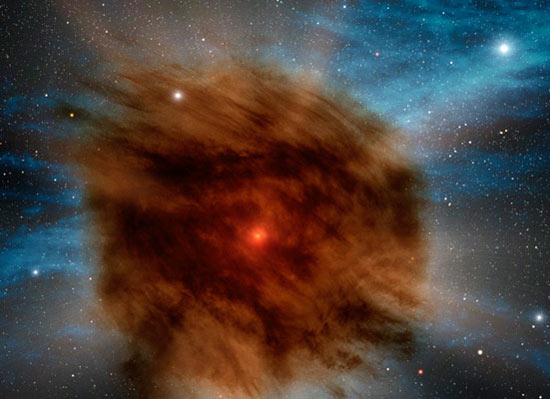
While astronomers use a Spitzer space telescope to search for a supermassive black hole in the center of a distant galaxy, the team suddenly discovers an unusually hot c…
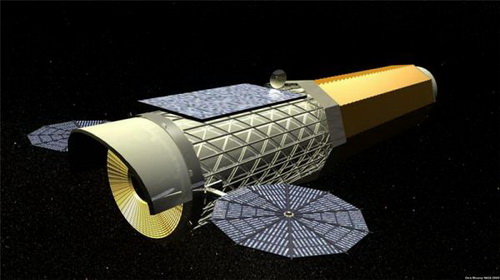
A cooperative project between the US Aerospace Agency (NASA), the European Space Agency (ESA) and the Aerospace Exploration Agency
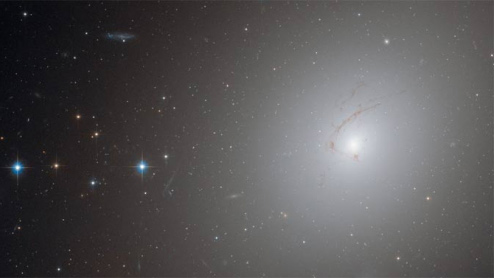
Recently, based on the images taken by the Huble space telescope, scientists have discovered a galaxy with a rather strange hook shape.

A European telescope while looking for new young stars has a surprising discovery, which is a truly empty hole in space.

Accordingly, the present universe is only one part behind black holes. Black holes are the entrance of Einstein-Rosen bridges (Einstein-Rosen bridges).

NASA's Mini-SAR radar discovered on the north pole of the moon has about 40 holes, 1.6 to 15 km in diameter, filled with ice. NASA estimates there are at least 600 milli…

The latest study by a team of scientists from the Aerospace Exploration Research Agency says the black hole's rotation speed is actually one-fifth the speed of light.

According to foreign sources, the fuel of the star clusters will eventually be exhausted, resulting in them being able to explode and become black holes.

Dutch astronomers measured the relative distance between the earth and the nearest black hole.

The US Aeronautics Agency (NASA) confirmed the moon's destruction to find water last month was successful.
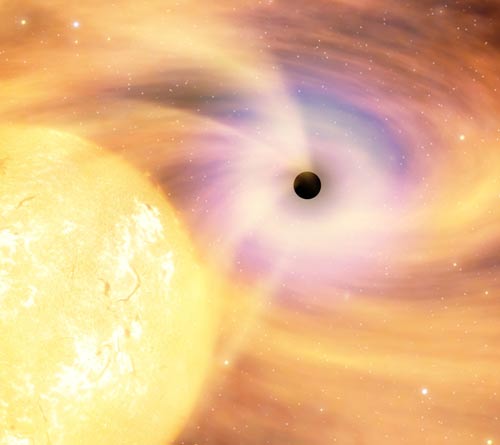
Two Chinese scientists have reported that they have created a small black hole in the laboratory, but it is only capable of absorbing light.