
Medicine - Health
Cure infertility with artificial testicles
Researchers in the United States hope to become the first scientists in the world to successfully cure male infertility with artificial testicles.
Browse ScienceInfo articles and explainers related to Infertility.
136 published items.
Researchers in the United States hope to become the first scientists in the world to successfully cure male infertility with artificial testicles.
Scientists at the Australian National University have discovered the mechanism of activating genes involved in differentiating cells. Thus, it is possible to cure infert…

British scientists have identified that the enzyme SGK1 is the cause of infertility and miscarriage in women.

Young men should limit the use of fast food if they want to be a father later, scientists warn.

A 10-year study in the US with 135,000 male participants showed that non-children were at higher risk of dying from heart disease than those with children.

Japanese biologists have created mouse sperm in the laboratory by metabolizing their stem cells. From this cell, they gave birth to a very healthy group of mice.

There are many reasons that can lead to infertility, including the causes that few people think of. Surprisingly, hot saddle is also an agent that makes sperm quality no…
Hong Kong scientists said on August 26 that they discovered a molecule that helps to attach sperm to eggs. This is a breakthrough that brings new hope for infertile coup…
Nutritionists learn, through their studies, that soybeans are likely to lead to infertility.

A recent experiment by British scientists showed that micronutrients in soybeans can increase fertility by in vitro fertilization (IVF) to 6 times.

For the first time, a study confirmed that Bisphenol A (BPA) - the familiar chemical in food and feeding plastic containers - is related to male infertility.
The head of the Vatican's bioethics consultancy, Ignacio Carrasco de Paula, sent a letter to ...
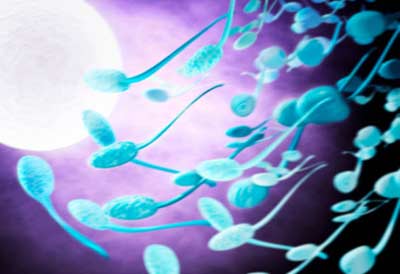
A faulty gene could be the reason why men are infertile, scientists say.
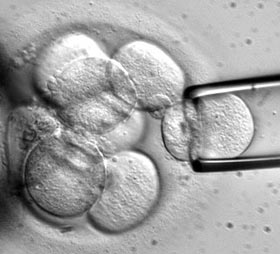
Those who could not give birth because the ovaries were broken had new hope, after the scientists raised the world's first artificial ovaries.

In a recent independent study, Russian scientists found that animals that eat genetically modified soybeans lose fertility.