Space science
The cosmic dust spraying furnace
Cosmic dust annoyed astronomers because they prevented them from observing their distant stars.
Browse ScienceInfo articles and explainers related to Rays.
477 published items.
Cosmic dust annoyed astronomers because they prevented them from observing their distant stars.
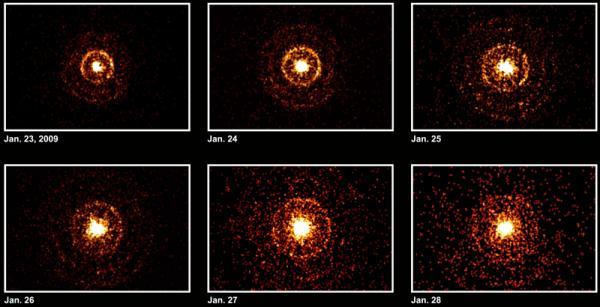
Astronomers use NASA's Swift satellite and Fermi Gamma Ray Space Telescope to observe explosions from the rest of a star 30,000 light-years away.
X-ray and gamma rays data from XMM-Newton of ESA and all orbit observations were used for the first time to check the physical processes that make up the magnetar emitti…
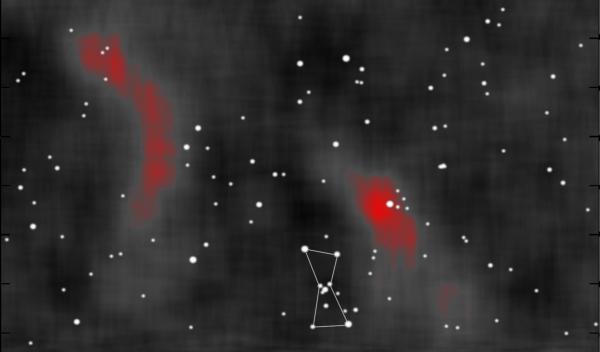
The Los Alamos National Laboratory observatory observes for the first time that two distinct hotspots seem to be bombarding the Earth with an enormous amount of cosmic r…

On October 19, the US Space Agency (NASA) successfully launched an unmanned probe into orbit to study the interstellar boundary area on the solar system.

Scientists believe that they have found a way to protect astronauts from dangerous radiation rays in space.
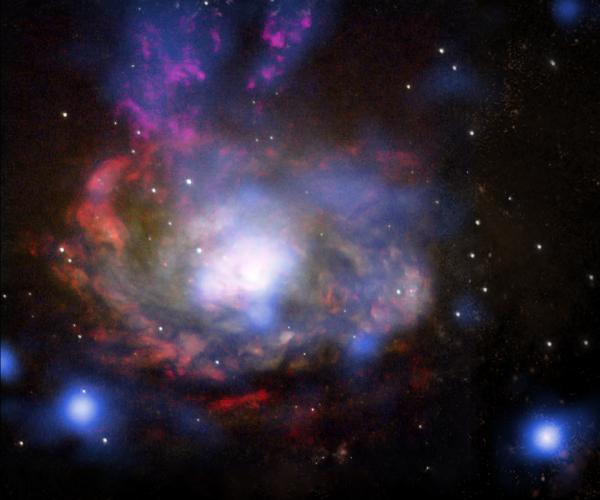
Astronomers have recently discovered that a relative of a strange exploding star was once thought to be unique in the universe. For more than two decades they have thoro…

A new picture of comet composition, with the help of 21st century technology, was present at Diamon, Britain's national Crotron light source, in Oxfordshire.
The Hubble Space Telescope has solved a puzzling problem about the giant fibers formed by the strong uterus surrounding the galaxy NGC 1275
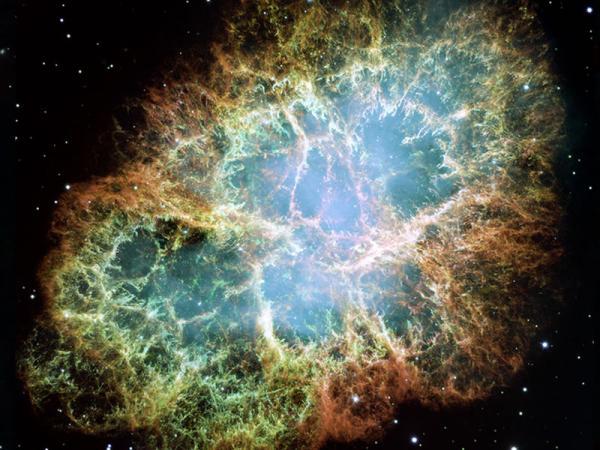
A new discovery by scientists about the origin of the high-energy ejaculatory process has opened up a new link in the problem of explaining the action of neutron stars.

A group of European astronomers provided information that recent supernovae are not as normal as we thought. Instead, the star is said to have exploded and fell into a b…

An X-ray observatory discovered a star exploding in the Milky Way, but observers have not noticed this event at all.
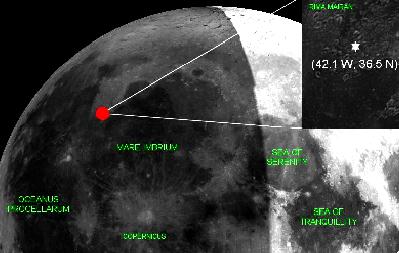
Not long ago, anyone who claimed that they witnessed the glint on the moon would be suspected by professional astronomers. Such reports are stored in L (lunatic) terms
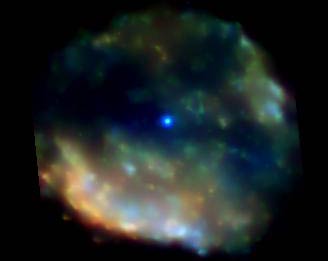
When a star is 8 times more massive than the sun, it will end its life with a spectacular explosion known as a meteor.
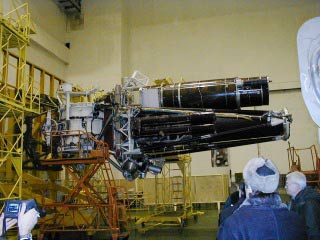
The Spectrum-RG astrophysical observatory project (scheduled to be launched in 2011) will have a target for space exploration with X-rays and gamma rays. Observing the e…