
Computer science
Supercomputer made up of 8 PS3 machines
Innovative technology toys like PS3, Xbox 360 don't just play games. At the University of North Carolina (USA), Dr. Frank Mueller used Sony's own gaming machines to crea…
Browse ScienceInfo articles and explainers related to Supercomputer.
141 published items.
Innovative technology toys like PS3, Xbox 360 don't just play games. At the University of North Carolina (USA), Dr. Frank Mueller used Sony's own gaming machines to crea…

The supercomputer, called Roadrunner, is expected to be located at Los Alamos State New Mexico State Laboratory. With a computational power of about 1 petaflop, equivale…

Big Blue, Cray have overtaken Sun Microsystems to win government contracts worth $ 494 million to design a new generation of supercomputers.
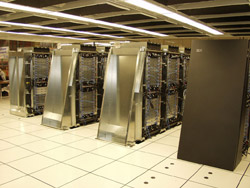
The number of supercomputers manufactured by IBM accounted for 47.8% of the world's 500 most powerful supercomputers, announced at Supercomputing 2006. Hewlett-Packard (…
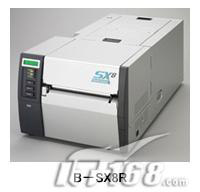
Japan's NEC Corporation has launched the world new SX-8R supercomputer with a record matrix of 144 Teraflops (trillions per second).


The two most powerful supercomputers in the world today are responsible for analyzing proteins instead of processing numbers. That's because life science, not physics, i…
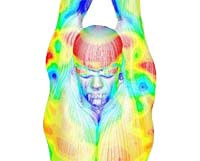
This year, important sporting events like the Winter Olympics in Turin (Italy) or the 2006 World Cup in Germany have become

IBM continues to dominate the list of the world's fastest supercomputers, accounting for 4 positions in the Top 10 supercomputers and more than half of the world's Top 5…

IBM's Blue Gene / L supercomputer has added a new record, which processes data at 207.3 trillion calculations per second (207.3 teraflops).
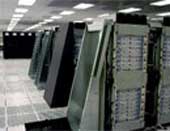
Japanese electronics firm NEC hopes the chip of light with a transmission rate of up to 25 Gb / s through fiber optics and the ability to handle a million billion calcul…

America has regained its advantage in the race that seems to have no end.

Scientists in the UK have just introduced the world's largest
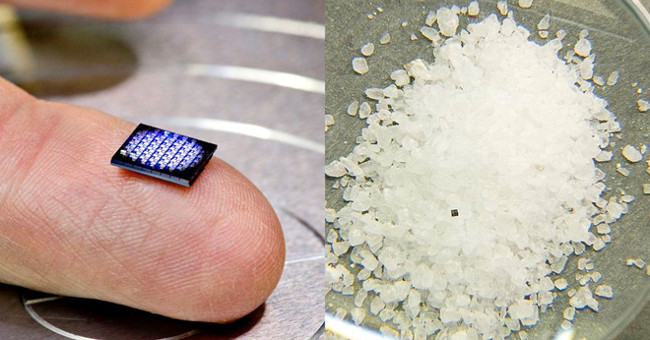
Despite its small size, this computer has the computing power of x86 chips since 1990.
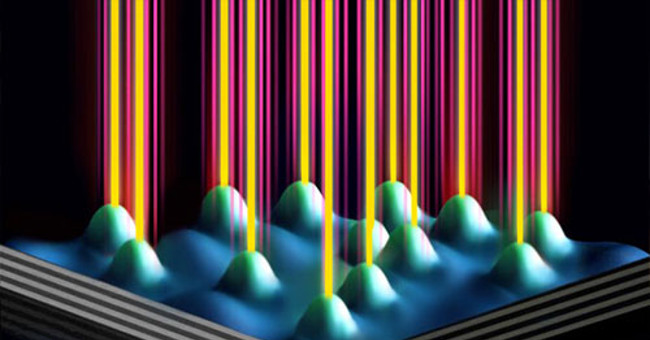
Researchers have found a new way to process large-scale data using a kind of 'magic dust' made of quantum particles called polaritons.