The Galapagos Marine Reserve is home to the largest population of sharks on Earth, so dramatic hunting scenes of these "demons" on the ocean floor often appear.
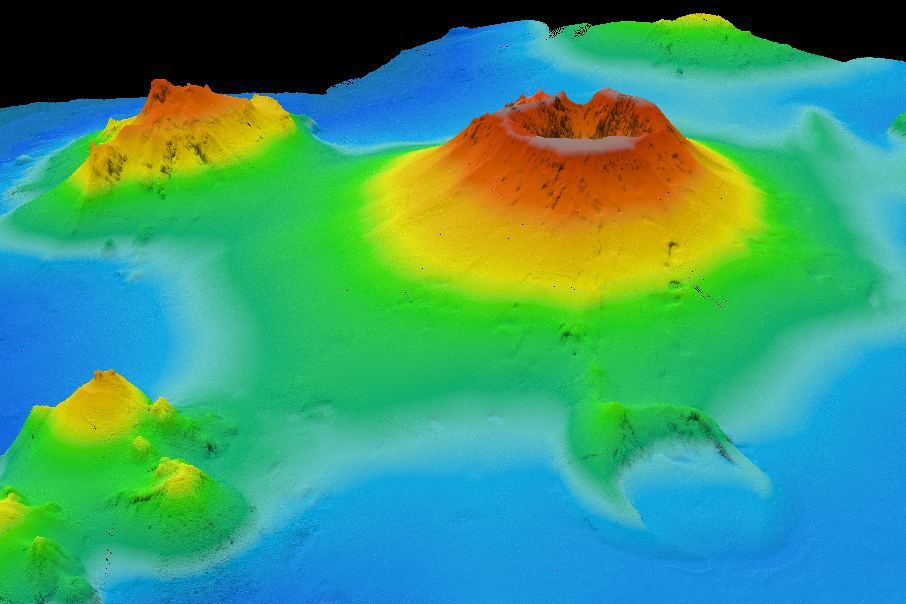
The Galapagos Islands are located in the vast eastern part of the Pacific Ocean, adjacent to the equator and 972 km from the mainland of Ecuador. The archipelago consists of 13 main islands, 6 small islands and 107 rocks located in the western part of Ecuador, Pacific Ocean. Because it is discovered that there are so many unique creatures, almost impossible to find anywhere else in the world, Ecuador named the first national park Galapagos on this archipelago.
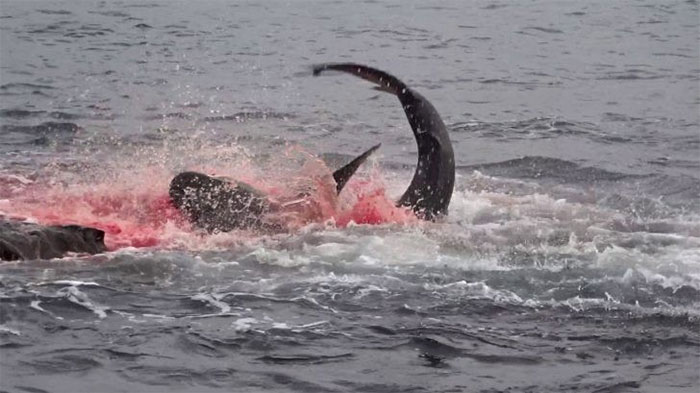
Galapagos sharks hunt seals.
The Galapagos National Park is one of the most biodiverse places in the world, with around 600 plant species, 400 fish species, 58 bird species, 22 reptile species and 6 mammal species, many of which are found nowhere else and many are endangered.
Many scientists have likened the place to a prehistoric world in the Pacific, home to exotic flowers and animals - black equatorial penguins, marine iguanas lazing on white sand beaches, and giant tortoises living in lush forests deep inside the islands.
The scenery of each island here is very different, some are covered with dense forests and towering ancient trees, some are like giant rocks, filled with smoke billowing everywhere.
However, the most prominent feature of Galapagos is the place with the largest number of sharks on the planet.
Of the 33 species of sharks found in the Galapagos Marine Reserve, the most common around Darwin and Wolf Islands are the hammerhead shark, Galapagos shark, silky shark, blacktip shark, whitetip shark, tiger shark and whale shark.
The Galapagos shark is named after the area where it was found, although it has since been found in several other warm seas around the world. It is characterized by its 14 serrated teeth, which can tear apart any creature. It feeds primarily on bony fish, but in the Galapagos region its diet may extend to seals and sea lions.
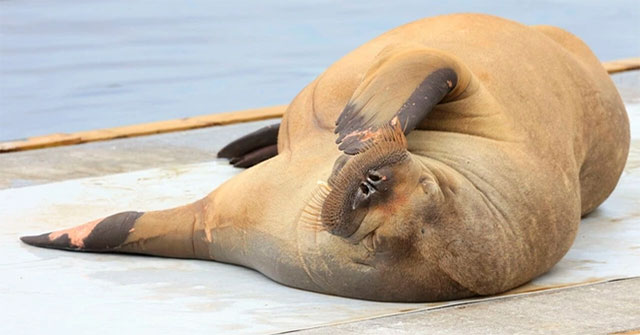
The strength and ferocity of the Galapagos shark have been partly verified through a clip filmed at an animal reserve in Ecuador. Accordingly, a group of sea lions were playing around and suddenly ran to the shore. The moment a slow-moving member of the group was caught by a Galapagos shark was recorded in an extremely majestic and realistic way. After being stabbed by the strong teeth of the ferocious predator, the sea lion's blood dyed the entire coastline red.