In fact, this is an extremely rare and difficult fish to catch, so not everyone can see them in their lifetime .
Joe Chmeleck from Alaska, USA, is a long-time fisherman. He goes fishing every day on his fishing boat. However, with the increase in fishing restrictions, he can only fish for the purpose of relieving stress and killing time.
Late last month, while fishing in the Alaskan waters, he accidentally caught a fish about 30 cm long, the color of this fish is very bright, it has a dark orange background with bright orange, red and green spots. . . Joe Chmeleck had heard of this fish before, it is called blue stone fish (Hexagrammos lagocephalus), but this was the first time he saw it in person. From the outside, this fish looks quite normal, however, when he cut the fish open, Joe Chmeleck felt extremely surprised and asked himself the following questions: Why is the meat of this fish bright blue? This color is like someone intentionally dyed its meat.
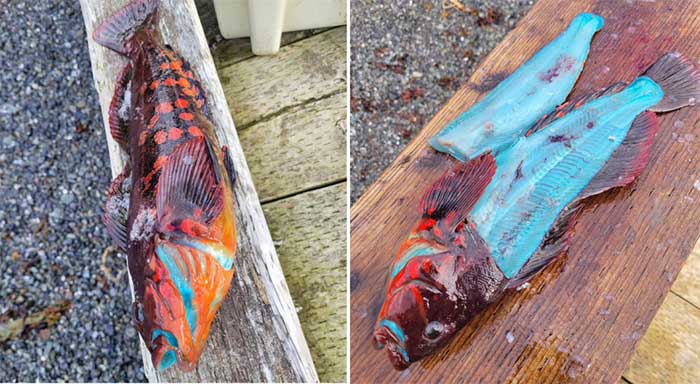
According to multiple wildlife records in the United States, the blue rockfish, also known as Hexagrammos lagocephalus, is a ray-finned marine fish commonly found along the northern Pacific coast, from Point Conception State Marine Sanctuary in California to the Bering Sea in Alaska. (Photo: Nypost)
"I've never heard that blue rockfish are inedible, but I don't know anyone who has eaten it," said Joe Chmeleck . But when Joe Chmeleck fried the fish, he was surprised to find that the blue flesh of the fish had turned white after frying! And it tasted very much like regular salmon . He then posted the entire video on his social media page, and netizens expressed their surprise.
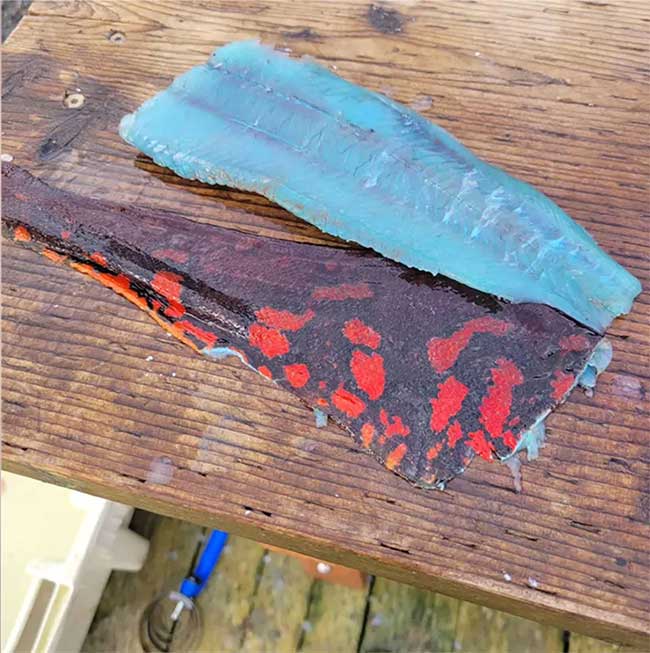
The fish has dark scales with a "speckled" pattern, which can range in color from brown, red, orange and green, so the fish can blend in with rocky environments. (Photo: Wsfa).
After learning of this, the Alaska Department of Fish and Wildlife issued a statement saying that they were temporarily unable to advise on whether the blue rockfish was edible because they had not yet successfully collected enough samples to determine the mercury content of its flesh. In other words, the fish was so rare and elusive that they had not been able to gather enough information about it.

Regarding the quality of the meat, experts say that the meat of blue fish is no different from that of normal fish of the same species. This blue color will also disappear when the fish is cooked. (Photo: Fox News Network).
In fact, blue rockfish, also known as blue tassel, sea trout, kelp trout , are found along the Pacific coast in the Bering Sea of Alaska and into southern California, United States. There are also reports of long stringers found as far north as the Sea of Japan.
According to the information we know at the present time, their lifespan can be up to 11 years and the largest individual can be up to 60cm long, weighing about 83kg. They have orange to red spots on both sides of the body, dark stripes and spots on the fins and a blue mouth. However, these colors can change according to the surrounding environment, similar to the way octopuses change their body color to blend in with the environment.
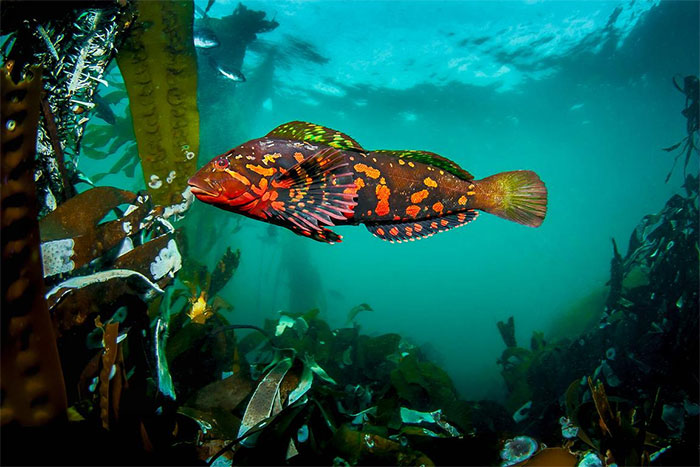
Scientists aren't sure why stonefish have blue pigment in their tissues, but they know the color happens because the fish produce biliverdin, a green bile. (Photo: Zhihu).
Scientists still cannot explain why the flesh of this fish has a blue pigment, but they know that the fish's body secretes biliverdin, a blue bile.
According to research from Oregon Sea Grant, a marine research organization, the fish has a varied diet and will eat anything it can find, including everything from invertebrates (like crabs, plankton, crustaceans) to fish, eggs, and algae.

Blue stonefish are not the only species with blue flesh. Lingcod, which usually reaches 70cm in body size, and even up to 1m, also has blue flesh. However, statistics show that about 20% of individuals of this species have blue flesh, while normally lingcod's flesh is only pale white. The reason lies in their diet - they regularly eat plants rich in chlorophyll. (Photo: Zhihu).
Blue rockfish are rare , but this is not because they are endangered, in fact, scientists cannot estimate how many of them are in the wild . In addition, the reason for their rarity is due to the excellent camouflage skills and cautious living habits of this fish.
The habitat of blue stone fish is usually in seaweed beds and offshore rocks, these areas have complex terrain, many gaps so it is difficult to find them when hiding in there. Moreover, blue stone fish will change color according to the natural environment, they do not stick to one area but will move their habitat depending on the situation. For example, when seeing large animals like humans, they will quickly run away.
This fish is not a gregarious species but lives alone, which adds to the difficulty in finding them. Therefore, they are very mysterious and elusive to researchers, divers and fishermen.