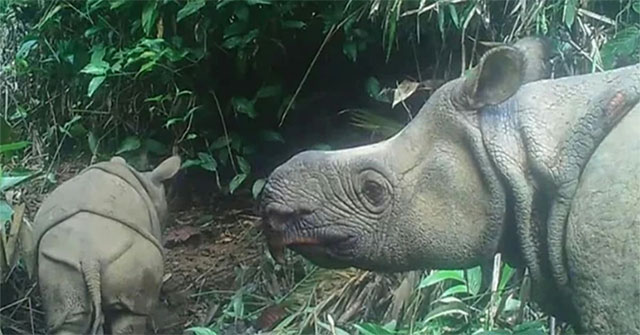
The Earth truly holds many wonders that we sometimes cannot fully explore. The following five wild animals, with their captivating scents, are proof of this. What are they? Let's find out!
1. The scent of tangerines in Aukets birds.
Don't think that only humans know how to use scent to attract attention. Aukets (Aethia cristatella) in the Shumagin Islands, Alaska, also use this trick to impress females even from a distance. The scent of Aukets is similar to citrus peel. This scent is secreted through the feathers on their necks. However, the scent of males is stronger and more distinctive than that of females.
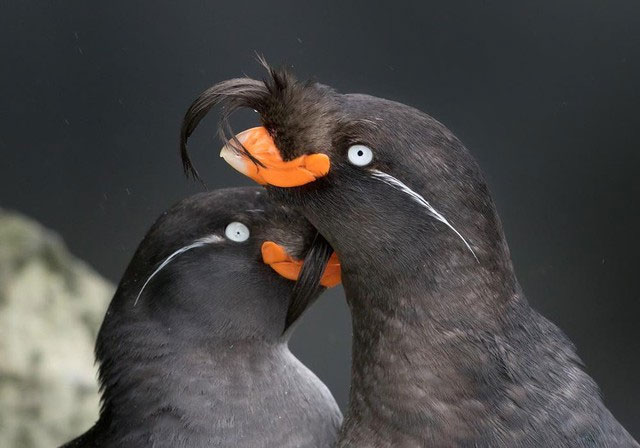
Aukets birds can emit a scent similar to citrus peel. (Image: Pixabay)
After research, marine biologist Hector Douglas concluded that the scent of Auklets is created from aldehyde compounds – substances commonly found in the peels of fragrant fruits and also used in perfume production. Auklets also "compare" scents to determine if they are compatible as a mate. Furthermore, this scent slows down or paralyzes blood-sucking insects such as lice, mosquitoes, and ticks, helping Auklets protect themselves.
Auklets are distributed throughout the northern Pacific, particularly abundant in the Bering Sea. An adult auklet measures 28-17 cm in length, has a wingspan of 34-50 cm, and weighs 195-330 g. They have a distinctive crest on their head, and females are usually slightly smaller than males. Auklets typically forage by diving into deep water, feeding on mollusks and other small marine organisms.
2. Lemon scent in yellow ants
Yellow ants (Lasius Interjectus) are a species of ant in the subfamily Formicinae. Their scientific name was first published in 1866 by Mayr. They are yellow and about 4 mm long. The queen ant is about 8 mm long. Yellow ants nest in the soil. Sometimes, they nest under logs and rocks. They also nest under floors and in mezzanines. Yellow ants often create mounds of earth when they dig their nest chambers underground. Yellow ants feed on nectar from root-eating insects.
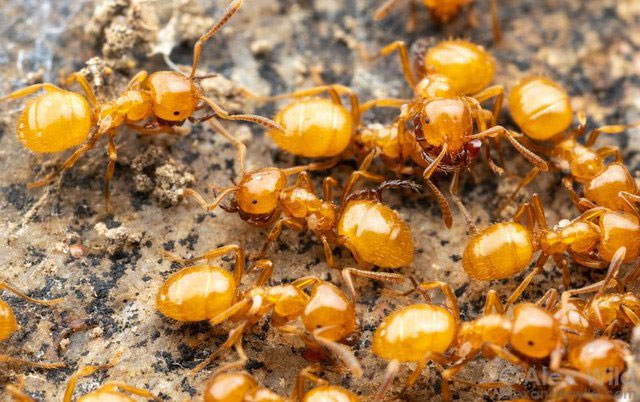
When encountering an enemy, the yellow ant will release a lemon-like scent. (Image: Pixabay)
Yellow ants are commonly found from New England to the Pacific Northwest and Florida or Mexico. In Vietnam, this species of ant can be easily encountered in many places. When disturbed, yellow ants release a lemon-like scent for defense and to deter predators.
3. The musky scent of Kashmiri musk deer
The musk deer, scientifically known as Moschus cupreus, is a mammal in the family Moschidae, order Artiodactyla. The Kashmir musk deer was last seen in Afghanistan in 1948. Kashmir musk deer are herbivores, living in hilly, forested environments. Like other deer, their diet consists mainly of leaves, flowers, grasses, and some types of moss and lichen. They are usually solitary animals living in well-defined territories. Musk deer are shy and nocturnal, being active only at dawn.
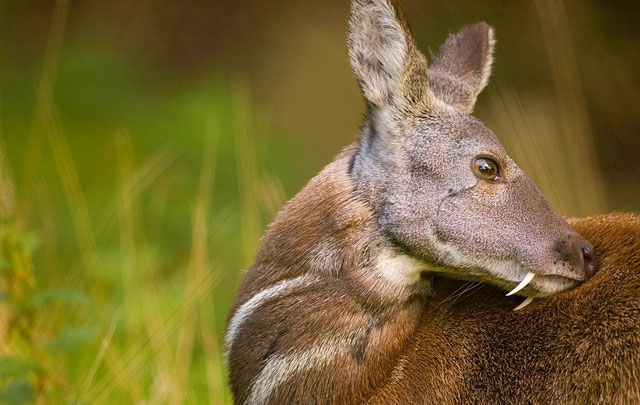
The musk glands of male Kashmiri musk deer have a very attractive and pleasant scent. (Photo: Pixabay)
Kashmir musk deer are famous for their scent glands (also known as musk glands). Only male Kashmir musk deer possess these glands, which produce a pleasant, alluring scent. Their musk glands are located between their abdomen and genitals. Male deer use this scent to attract females. The musk of male musk deer can be used to extract perfumes and fragrances, or for medicinal purposes.
4. The scent of vanilla in beavers
Beavers, scientifically known as Myocastor coypus , are mammals. They are known for their ability to build dams, dig canals, and create nests. They are the second largest rodents in the world (after capybaras). Beavers typically live in groups, and they will build one or two dams to create a deep, still body of water to protect against predators and to keep food and building materials afloat. Beavers mark their territory using scents from mud, debris, and secretions from their oil glands and urine.
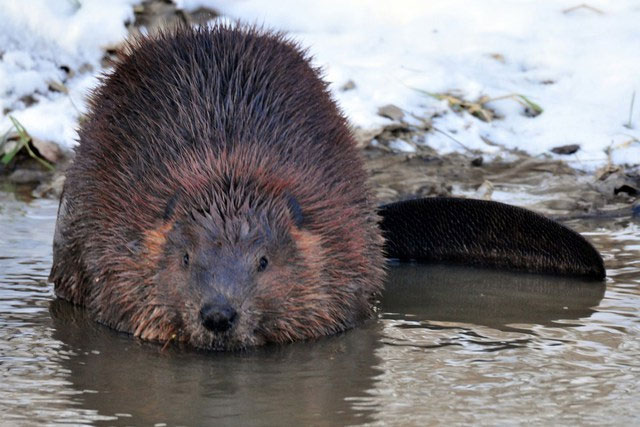
Both male and female beavers have castor oil glands that have a scent similar to vanilla. (Image: Pixabay)
Previously, the beaver population numbered over 60 million, but by 1988, it had dwindled to approximately 6-12 million. This decline was due to excessive hunting for their skins and glands used in medicine and perfumes. According to scientists, both male and female beavers possess a pair of oil glands that produce a scent similar to vanilla. These glands are located in two subcutaneous spaces between the pelvis and the base of the tail.
5. The cherry cola scent of North American giant millipedes
At first glance, you might find the creature in the picture a little scary. However, few people know that it smells like a can of cherry cola. This creature is actually a giant North American millipede. Its scientific name is Apheloria virginiensis . They are black with yellow markings and can reach a body length of up to 40 cm.
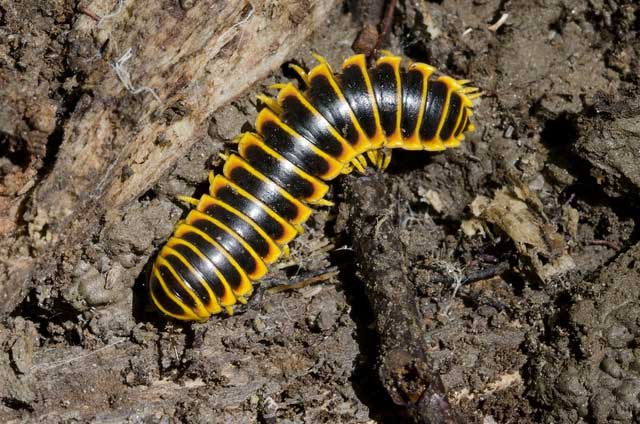
The giant North American millipede will secrete a cherry-flavored, cola-scented toxin to attack predators. (Image: Pixabay)
The giant North American millipede has a large number of legs, sometimes up to several hundred. With such a large number, they can easily burrow deep into the ground. In addition to burrowing underground, giant millipedes often curl their bodies into a spiral shape and raise the hard shell on their backs before encountering enemies.
In addition, they secrete certain toxins for defense, namely cyanide compounds, through microscopic pores in glands along both sides of their bodies. When ejected, this compound adheres to the skin and can corrode the shells of many insects, or burn the skin and eyes of larger predators. This toxin can be projected up to half a meter away. And surprisingly, the fluid secreted from the body of the giant North American millipede smells like cherry cola!
- These wild animals naturally emit a fragrance exactly like that of Ham Huong.
- The world's "strangest" house, made of 354 identical concrete cubes joined together.
- What makes the currently trending ChatGPT chatbot so special?