Yes, those are some rather "cute" compliments that humans use for the honey badger, tiny in size but incredibly bold!
In the African savannas, no animal is shocked to witness a tiny, two-colored honey badger, no bigger than a dog, brawling fiercely among lions or even fighting cobras. It's not because such scenes happen regularly, but because the animals there are so used to the honey badger's aggressive nature!
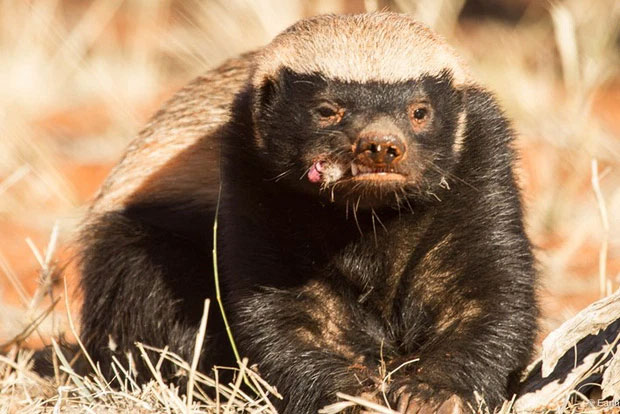
Oh, hello, I'm the honey badger.
If there were a competition for the title of "most daring" on the planet, the honey badger would probably be named with great honor. It's no exaggeration to say that when Mother Nature created this species, she probably forgot to weigh things carefully, resulting in their rather. crazy personalities. Don't be fooled by their innocent faces and cowardly gait; honey badgers are actually far more aggressive and behave in a much more bizarre way than humans imagine!
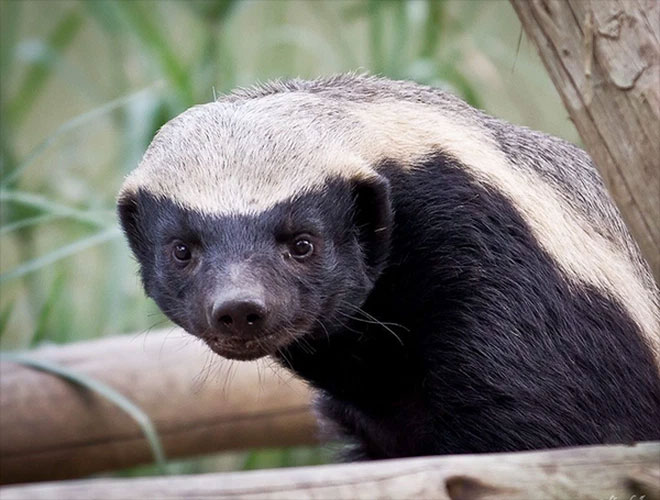
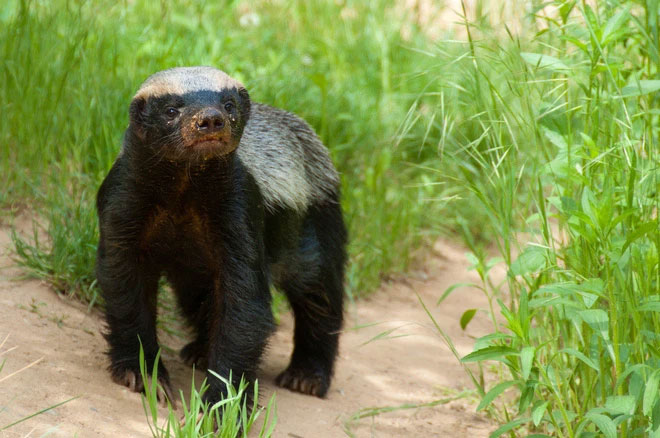

What are you looking at? Haven't you ever seen a honey badger before?
According to its natural "family tree," the honey badger is related to the weasel, but unlike its foul-smelling relatives, the honey badger possesses remarkable courage and intelligence. Which animal dares to fight lions, tigers, leopards, and venomous snakes without fear? Which animal would devise a cunning plan to climb a tree and steal prey from a leopard? Which animal knows how to locate a beehive by following a flock of nectar-hunting birds? Which animal, bitten by a venomous snake, seems dead but recovers after a short sleep?
The answer is simple: honey badger ! While the name sounds sweet and adorable, they're actually named after their favorite food, honey. Honey badgers can be found in Africa, Southwest Asia, and the Indian subcontinent. They prefer burrowing underground and live solitary lives, but they are sometimes seen hunting in pairs during the mating season.
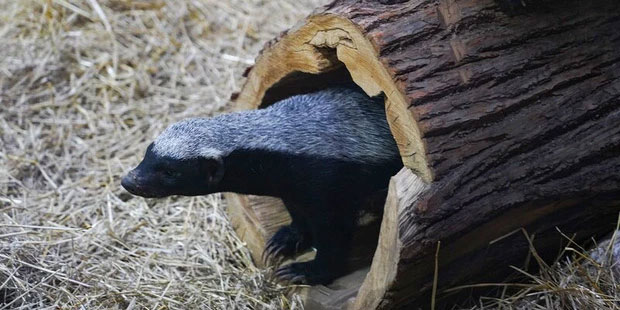
Usually, other animals have lighter fur on their bellies and darker fur on their backs for better camouflage, but I like badgers to grow their fur in that unconventional style. Is that okay?
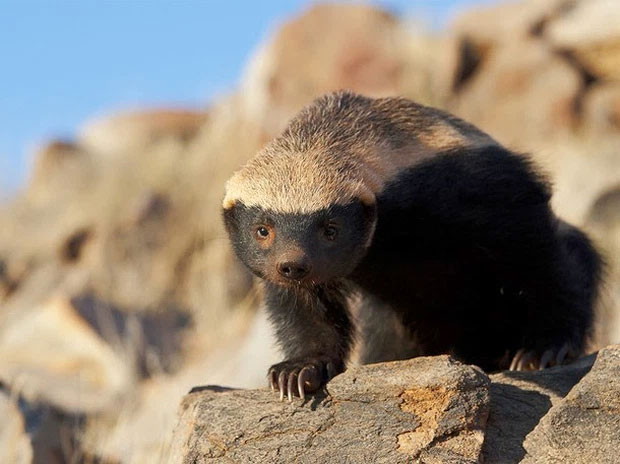
Do you think my two-colored fur is "stylish," moms? It's exclusively "Khá Lửng" (a nickname ), not "Khá Bảnh" (a name meaning handsome/flashy)!
Honey badgers are quite aggressive , so except when forced to fight large, dangerous predators, they mostly engage in fights just for fun! Although honey badgers have relatively short legs, they are very strong, with sharp claws, and are ready to fight hand-to-hand rather than fleeing as a matter of survival instinct.
In Chobe National Park in Botswana, visitors have witnessed honey badgers single-handedly turning the tables, transforming from prey into predator in an instant as they battled both a giant python and a jackal simultaneously. To survive, the honey badger had no choice but to fight back, ultimately becoming the python's meal.
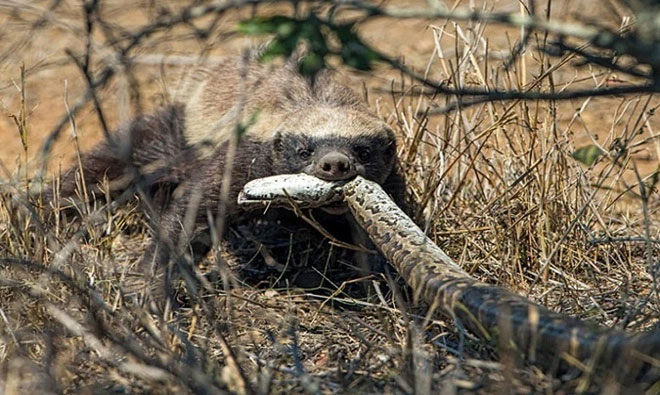
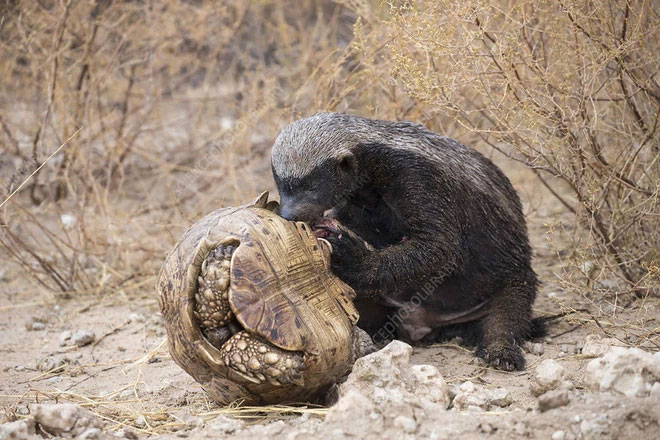
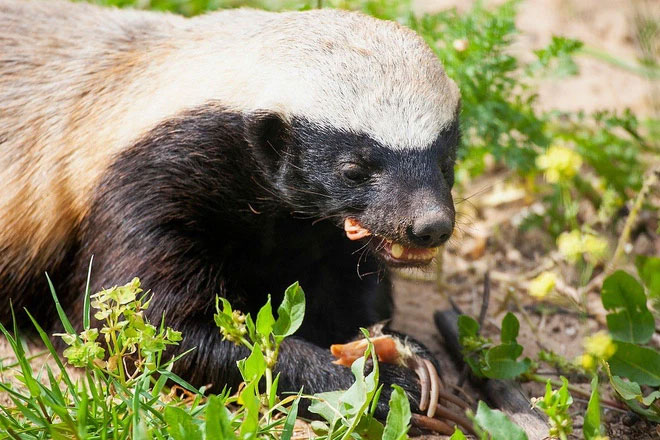
Honey badgers don't know how to spell the word "diet," so they'll eat anything that's meaty.
Honey badgers are incredibly resilient and powerful fighters ; they are rarely at a disadvantage despite their relatively small size (around a dozen kilograms). They are very agile and intelligent. There have been recorded instances of a ferocious honey badger repelling six lions without suffering even a scratch!
It seems that tigers, leopards, and lions are actually afraid of honey badgers, because those black and white furry creatures are like the "Chí Phèo" (a notorious villain in Vietnamese literature) of the animal world! No one can bully honey badgers; even humans are defeated by their stubbornness.
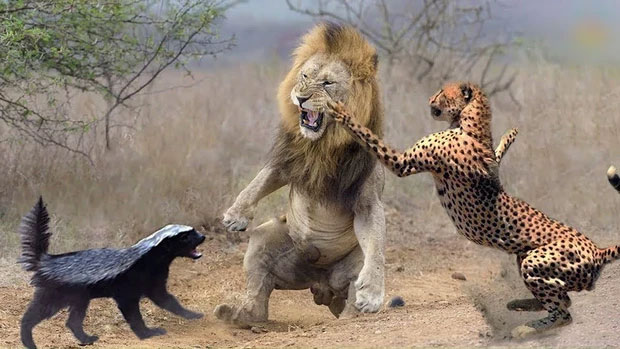
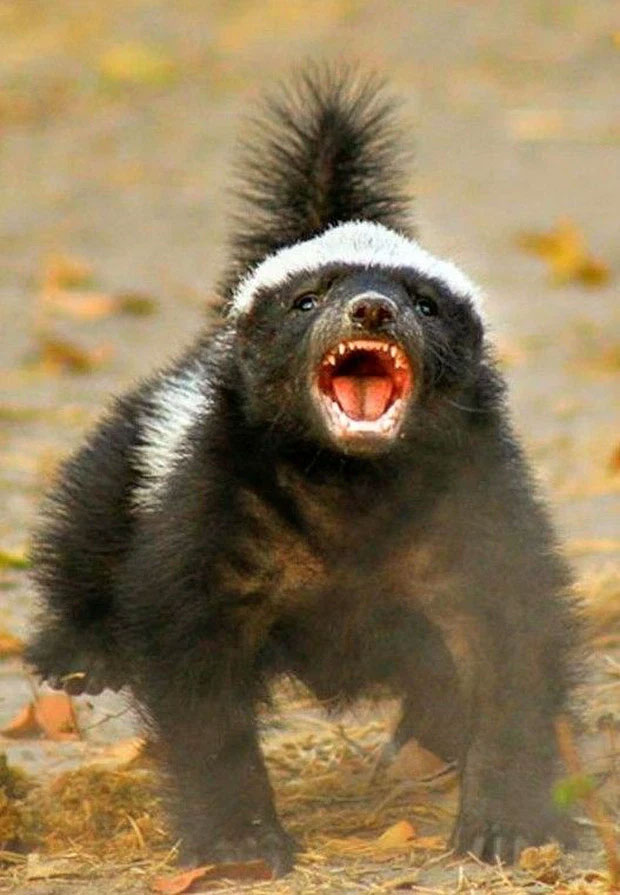
Are you guys hitting me? Why are you shouting so loudly?
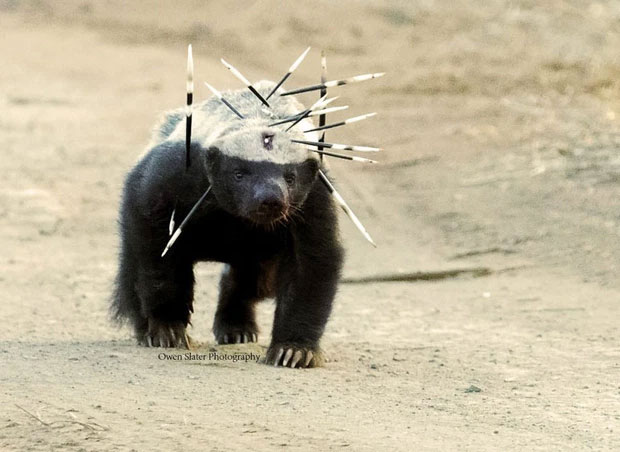
Those who are disrespectful will soon face retribution!
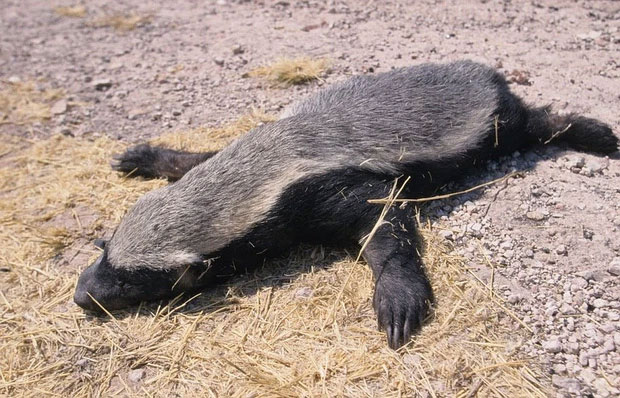
Because they dream of becoming "ruler," honey badgers need to sunbathe to get vitamin D to prevent rickets and to build strong, healthy joints!
Because of their passion for stealing honey, badgers are endowed by nature with thick, armor-like skin, with the skin around their necks reaching up to 6mm thick, so even a bee sting won't be a problem. They have rather small eyes and tiny ears hidden under thick fur; as the old saying goes, their squinting, snake-like eyes make them look like thieves and scoundrels.
Although honey badgers are harmless "roaming animals" in the wild, and are not considered endangered or in need of conservation because they are rarely preyed upon, scientists are very interested in them because of their bizarre venom resistance. Honey badgers prefer to eat insects, turtles, reptiles. and especially snakes, so they are often bitten by snakes. However, honey badgers can withstand the venom of extremely venomous species such as the viper; when bitten, they will faint but regain consciousness after about 2 hours and their bodies will be as active as if nothing had happened.
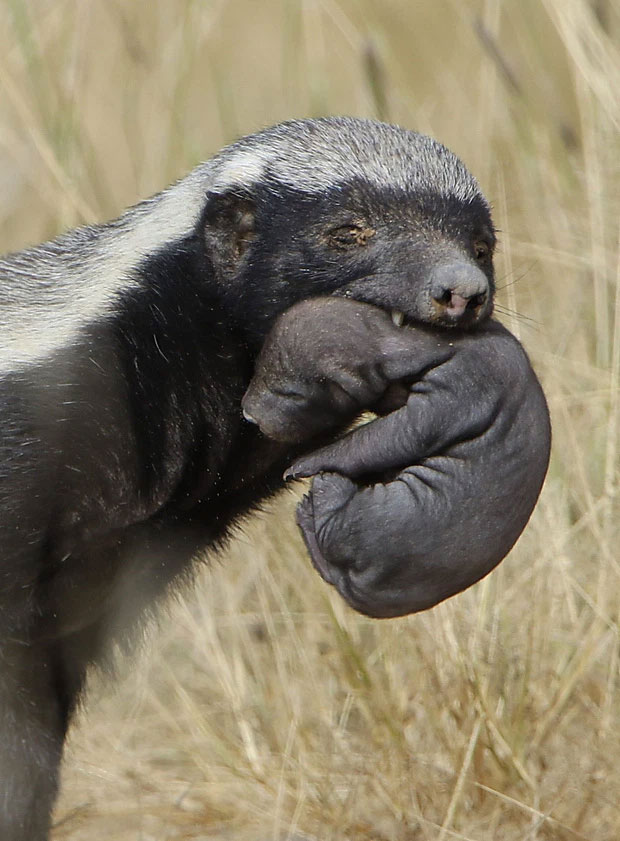
A mother honey badger carries her pup across the dry grasslands in Kgalagadi Transfrontier Park, South Africa.
Although honey badgers are mostly quite aggressive , they can be gentle at times. This is when female honey badgers are giving birth and caring for their young. Honey badgers have a relatively long lifespan in the wild, around 7 years, while in captivity they can live for over 20 years.
They are famous for being fearless and unafraid of any predator, and are even listed by Guinness as one of the most dangerous animals in the wild. It's intriguing to wonder what a home would be like if you brought a honey badger home as a pet?
- Leopard lunges and attacks male journalist, resulting in a heart-stopping encounter.
- Video: Honey badgers and their instances of "defying the whole world"
- Attacking an antelope 20 times its size, the honey badger was gored flying.