In the animal world, mating time is usually closely related to an organism's reproductive capacity. However, when scientists conducted research, they were surprised to discover that the mating time of a small and cute animal like the Madagascar civet actually lasts up to 8 hours !
Many people will wonder about the reason for this animal's unusual sexual behavior. Perhaps this extremely long mating period is a unique reproductive strategy of the Madagascar civet.
To ensure their offspring have a higher survival rate, Madagascan civets are willing to dedicate more time and energy to mating.
Don't be horrified by the mating habits of these animals; instead of focusing on sex, appreciate the wondrous beauty of nature and the unique survival strategies of each species.
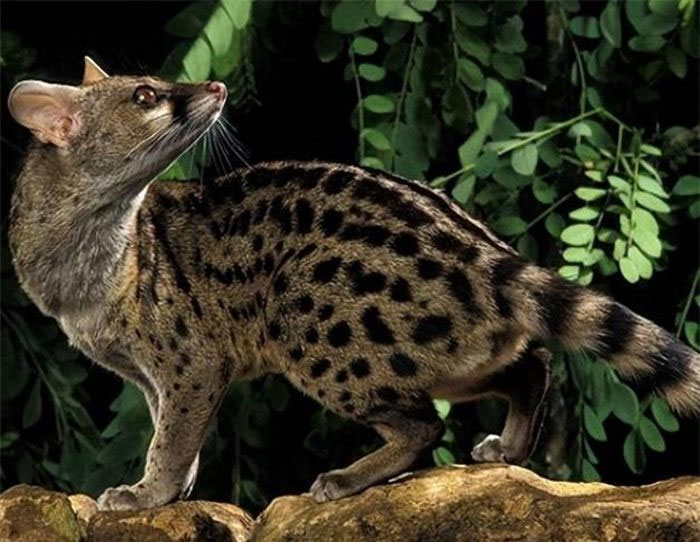
Madagascar cedar tree. (Illustrative image).
The Madagascar civet, also known as the African civet, is a small mammal that lives in the tropical rainforests of West Africa. Despite its relatively ordinary appearance, the Madagascar civet is known for its unique reproductive behavior, most notably its extremely long mating period.
Compared to other mammals, the mating behavior of the Madagascar civet can last for several hours or even longer. A normal mating process can take anywhere from 30 minutes to 4 hours. This phenomenon has puzzled researchers, prompting them to delve deeper into the mystery behind it.
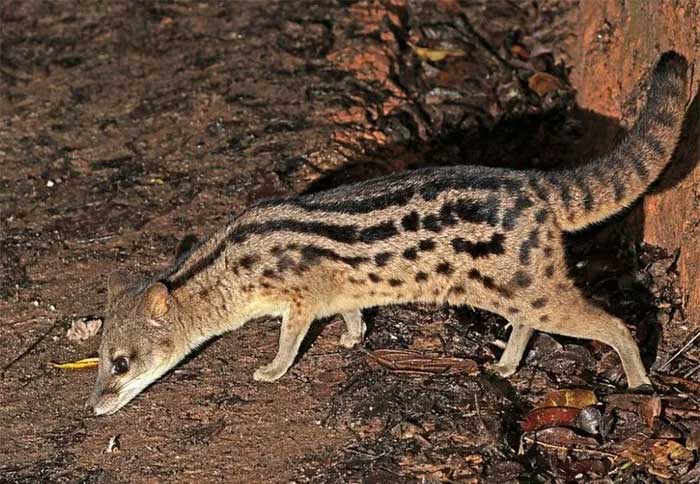
The civet cat from Madagascar is a rather shy animal.
We need to understand the environment in which the Madagascar civet lives. Accordingly, it is a rather shy animal, living in crevices or among trees in the forest, being nocturnal, and feeding on plants and insects. Due to habitat limitations and competition for space, mating behavior is even more important for the species' survival.
The mating duration of the Madagascar civet is directly related to its lifestyle . Prolonged mating ensures successful pairing and increases the fertilization rate. Shorter mating periods result in fewer opportunities for fertilization, which can reduce the likelihood of successful reproduction. Therefore, prolonged mating behavior ensures sufficient time for fertilization and increases the population size of this civet species.
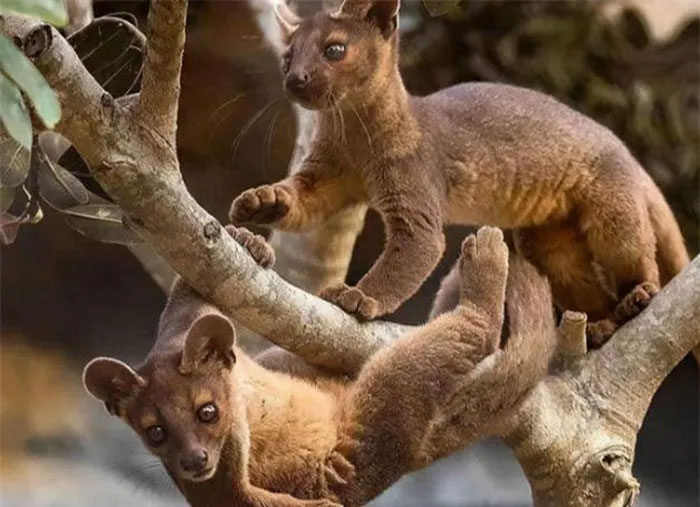
Prolonged mating may also be related to physiological mechanisms.
The mating behavior of the Madagascar civet is also influenced by competition among males. During the breeding season, males often compete for territory, and to win the right to mate, they will display their strength and assertiveness. Prolonged mating may be a way to control territory by spending more time eliminating other males and producing more offspring.
Prolonged mating may also be related to physiological mechanisms. Researchers have found that male Madagascar civets release more sperm during mating, and the longer the mating time, the greater the sperm count. This suggests that prolonged mating plays a positive role in increasing fertilization rates.
Although the mating behavior of the Madagascar civet is unusual, this does not mean they need to mate for extended periods to successfully reproduce. In fact, a successful mating session only takes a few seconds. However, prolonged mating seems to be crucial for increasing the species' population.
The prolonged mating behavior of the Falkland civet can be understood to serve several purposes: physiological mechanisms, territorial control, increased chances of fertilization, etc.
Although many mysteries remain undiscovered, it is certain that the Madagascar civet has become a unique animal thanks to its "one-of-a-kind" reproductive characteristics.
The Madagascar civet is endemic to Madagascar and is known for its prolonged mating behavior. This extended mating period plays a crucial role in ensuring the survival of its offspring.
The Madagascar civet is an omnivore, feeding primarily on fruit, insects, and small vertebrates. Due to the relatively scarce resources on the island, the Madagascar civet faces significant challenges in finding food.
The advantage of this prolonged mating is that it increases the genetic diversity of the offspring and improves their adaptability to the environment. The island's limited food resources present a significant challenge. By mating over an extended period, the Madagascar civet can increase the genetic diversity of its offspring, making them more adaptable and resilient.
Prolonged mating also ensures reproductive success . Because food is scarce, male civets may compete with each other for mating rights. By mating with multiple male civets, female civets can improve their reproductive success rate.

Prolonged mating also helps reduce the threat from predators . On the island of Madagascar, the natural enemies of the Madagascar civet include large birds and chocobos. Prolonged mating can consume more time and energy, making it harder for predators to find food, thereby minimizing offspring loss.
Prolonged mating also has several biological implications for male Madagascar civets. First, prolonged mating increases the male's competitiveness. During mating, male Madagascar civets need to maintain their dominance to win the female's favor. Through continuous mating, the males can demonstrate greater strength and endurance, thus increasing their competitiveness.
Prolonged mating also helps male civets eliminate the sperm of rivals. During mating, a female can mate with multiple males, and prolonged mating can effectively expel the sperm of other males from her body to ensure that her own sperm successfully fertilizes an egg.
The Madagascar civet is about the size of a cat, with short, small legs, a pointed, fox-like snout, and a sturdy body. They measure approximately 61–70 cm in length, with the head and body measuring 40–45 cm and the tail 21–25 cm. Adult males are generally larger than females, weighing up to 2.0 kg for males and 1.5 kg for females. The Madagascar civet is endemic to Madagascar. It is listed as threatened by the IUCN Red List in 2015, classified as near threatened (A3cde+4cde).
- The mystery of how Archimedes' death rays work has finally been solved by an eighth-grade student!
- Top 5 most terrifying species of "monster ocean" revealed in the past year.
- Smaller than even the Vietnamese Ri chicken, why is this tiny breed of chicken 10 times more expensive?