The US biotechnology company Colossal Biosciences says the first extinct creature it is trying to revive could be born in 2028.
In an interview with Live Science, Colossal Biosciences, an American biotechnology company that has become famous in recent years for its project to revive several extinct animals , shared about three ancient creatures that may soon reappear.
With the cooperation of many famous scientists, this American research group in recent years has sought to bring back to the world the dodo bird (Raphus cucullatus), the Tasmanian tiger (Thylacinus cynocephalus) and the woolly mammoth (Mammuthus primigenius).
Now, they say these species, especially mammoths, are "coming closer to reality".

The woolly mammoth is the most talked about revival target - (Graphic image: iStock).
Colossal Biosciences co-founder and chief executive Ben Lamm said they aimed to produce their first "mammoth-like" calf by 2028 and "it's very possible we could see another species before then".
Woolly mammoths lived in the Arctic from 300,000 to 10,000 years ago and individuals have been found preserved intact in the Siberian permafrost, providing valuable DNA samples.
To create baby mammoths, they will identify the genes that encode the woolly mammoth's most iconic physical traits, such as its shaggy hair, curved tusks, fat deposits and domed skull.
They will then insert these genes into the genomes of closely related and genetically similar Asian elephants (Elephas maximus).
According to the most effective plan, the revival would happen slowly: With each generation of hybrid mammoths born, it would be supplemented with mammoth genes, so that eventually, an animal that is almost biologically pure mammoth would be born.
'Resurrection can mean many different things and our ability to revive depends on how we define it,' says Professor Love Dalén from Stockholm University, who is involved in the project with Colossal Biosciences.
Professor Dalén and his colleagues have come close to sequencing the entire mammoth genome, but some regions of DNA, such as some repetitive coding sequences, remain challenging.
So far, they have more than 60 partial woolly mammoth genomes. The work on implanting mammoth genes into the first elephant will begin once they have successfully sequenced the entire mammoth genome.
The team also revealed two other exciting pieces of information: In the dodo project, they had a nearly complete genome; with the Tasmanian tiger, things were even better.
A similar process to the mammoth resurrection would be carried out by inserting dodo genes into chickens and Tasmanian tiger genes into a marsupial.
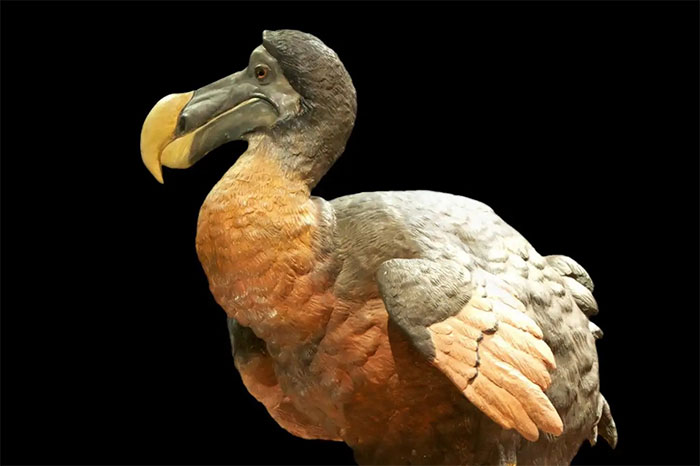
Dodo bird - (Photo: Colossal Biosciences).
In fact, more than 20 years ago, humanity brought an extinct creature back to the modern world in 7 minutes.
The lineage recovered is the Pyrenean ibex (Capra pyrenaica pyrenaica), from the last known member of this subspecies, a female named Celia, who died in 2000.
In 2003, an international team of researchers implanted DNA collected from Celia before her death into a domesticated goat egg cell with its nucleus removed.
However, the animal born from that experiment was stillborn due to a severe lung defect.
Reviving a creature that went extinct thousands of years ago would be much more difficult, but with today's scientific advances, it may not be so far-fetched.