Arriving in Vietnam, a group of international scientists unexpectedly found a type of meat for the sustainable future of both the planet and humanity. What kind of meat is it?
As the climate crisis grows, scientists are urgently looking for sustainable solutions to reduce greenhouse gas emissions on a global scale. They have been pushing for green solutions such as reducing fossil fuel burning, increasing renewable energy production, and finding new manufacturing processes to make things more environmentally friendly.
Shifts are underway on all scales, from plastic straws to grass straws, from coal to solar power, and from gasoline to electric cars. But there is one sector that contributes significantly to the climate problem, but has yet to see a significant shift: livestock.
It is an undeniable fact that the livestock industry is one of the main causes of global warming .
In the journey to find a more environmentally friendly and sustainable meat, a group of international scientists from Macquarie University and the University of Adelaide (Australia), Oxford University (UK) and the University of Adelaide Witwatersrand (South Africa) came to Vietnam.
Here, they think they have found the answer to a meat that could help humanity limit greenhouse gas emissions, reduce the amount of land needed for agriculture, and thereby make room for lush green forests that help slow climate change.
A "green" source of protein
The meat that the international research team found was snake and python meat . In a study published in the journal Science Reports, scientists said they spent more than a year in Vietnam studying the growth process of thousands of snakes and reticulated pythons of the Malayopython reticulatus species .
They are raised on commercial farms in Ho Chi Minh City and An Giang for their skins, which are used in the footwear and high-end fashion industries. But snakes and pythons can also be sold for their meat. And it is a very high-quality meat.
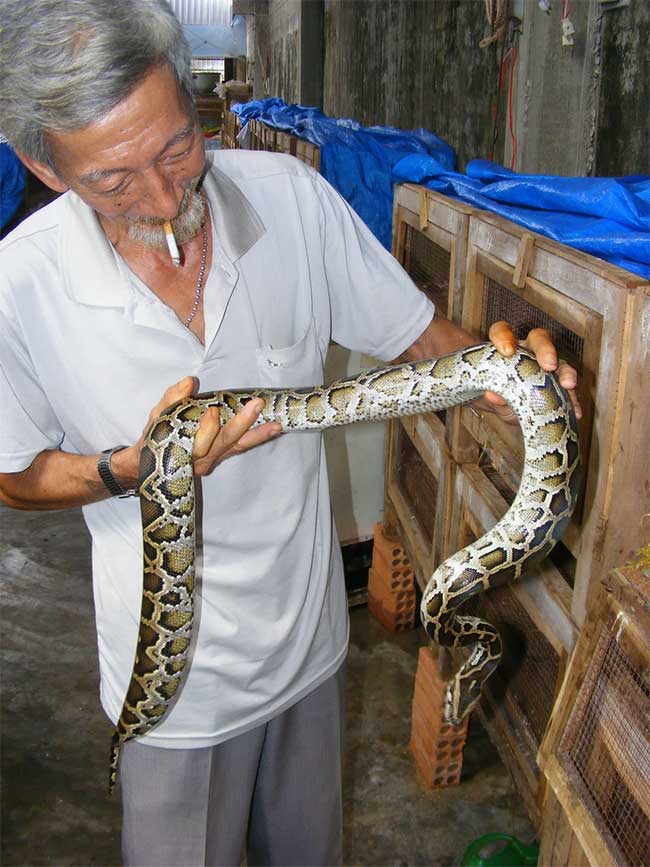
Reticulated pythons belong to the genus Malayopython reticulatus.
Among the reptiles in Vietnam, the reticulated python stands out . They can grow up to 6 meters long, packing in about 150 kg of white meat, which is healthier than red meat from livestock. This meat is converted very efficiently from limited food sources.
Scientists say that pythons raised in Vietnam usually only eat rats, pork by-products, chicken, and fish balls, but they grow very quickly from the first year. Compared to pigs, cows, chickens, and even salmon, pythons need less food to produce each 1 kg of meat, a scientific term called feed conversion ratio.
A python in Vietnam can gain up to half a kilo of meat every day. That's thanks to the python's low feed conversion ratio. It only takes 1.2 kilos of dry protein to produce 1 kilo of meat. That's 1.5 times more when it comes to raising salmon. It's 2.1 times more when it comes to raising crickets, 2.8 times more when it comes to raising poultry, 6 times more when it comes to raising pigs, and 10 times more when it comes to raising cows.
The lower the feed conversion ratio, the better. The same amount of feed to produce 1 pound of beef can produce 8 pounds of python meat.
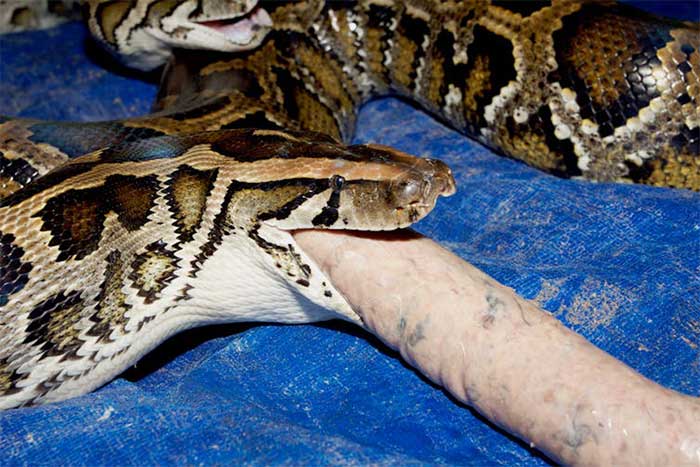
A python eating recycled "sausages" made from pork, chicken and fish by-products.
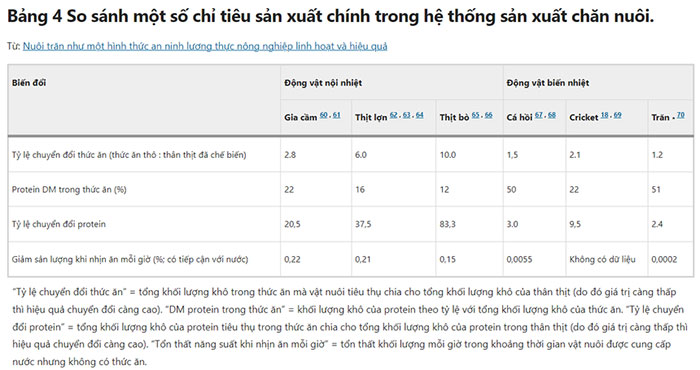
Photo from the study.
'The feed and protein conversion ratio of pythons is superior to any species used in mainstream human agriculture to date,' said lead author Dr Daniel Natusch from Macquarie University. 'Pythons grow very quickly, reaching 'slaughter weight' within the first year of hatching from the egg . '
Environmentally, pythons also have an advantage. Per weight, reptiles like snakes and pythons produce fewer greenhouse gases than mammals. This is because they have a more robust digestive system, are able to digest the bones in their food, and produce virtually no waste. Reptiles produce less manure than mammals like pigs, buffalo, and cows.
Their water consumption is even more impressive. 'Pythons need very little water and can even survive on dew that condenses on their scales in the early morning. Every morning, a python just licks its scales and gets enough water for the whole day,' says Dr Natusch.
This is very beneficial for python farming in areas of the world that are prone to drought due to the effects of climate change. Pythons can live for up to a month without a drop of water.
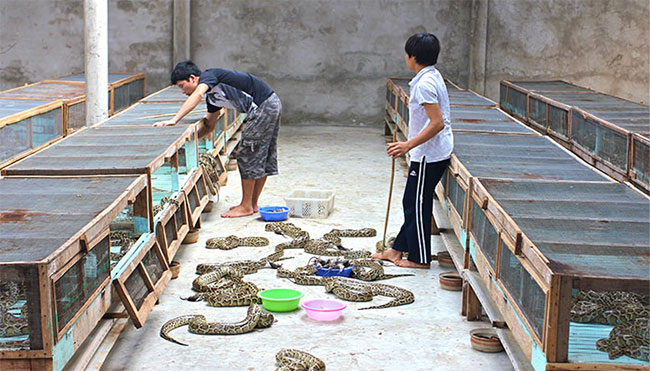
Every morning, a python just licks its skin and that's enough water for the whole day.
Additionally, pythons can fast for long periods of time without losing too much weight. One python in Vietnam was starved for 127 days, but only lost a few percent of its body weight. "Theoretically, you could stop feeding it for a year," said Dr. Natusch.
Snake keepers can stop feeding their animals if conditions don't allow it. Dr. Natusch cited the COVID-19 pandemic as an example, where farmers were unable to sell pigs due to supply chain disruptions. Because it was too expensive to continue feeding pigs, they had to euthanize the animals and turn the meat into fertilizer.
"At that time, I just wished that those farmers raised pythons ," he said.
Replicating the python farming model in Vietnam globally?
Despite the benefits of pythons, their meat is only popular in a few Asian countries such as Thailand, China and Vietnam. In Thailand, people often raise Burmese pythons (Python bivittatus). Meanwhile, in China, pythons are also raised for medicine, food and to provide skin for the high-end fashion industry.
It is estimated that there are more than 4,000 snake and python farms in Vietnam and China, producing millions of snakes each year. Can such farms be replicated globally?
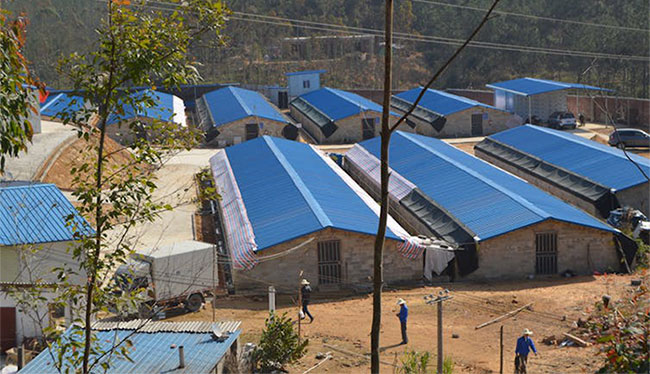
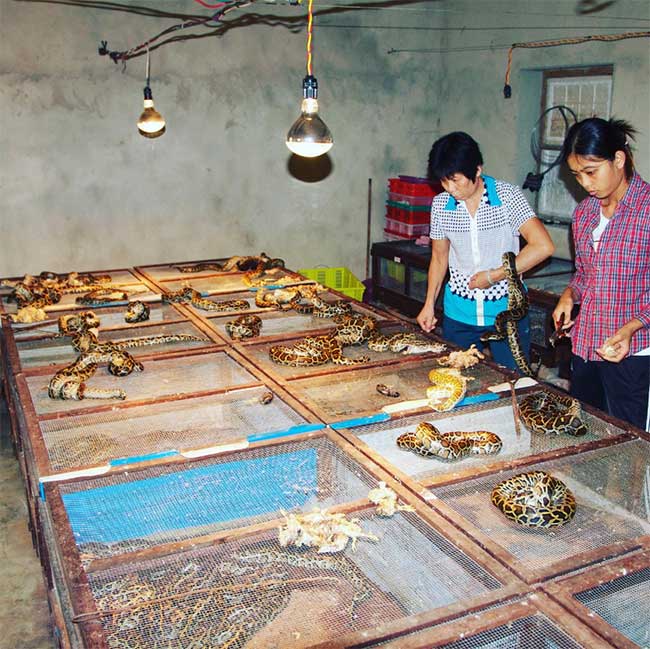
It is estimated that in Vietnam and China there are more than 4,000 snake and python farms, producing millions of snakes each year.
There are advantages to that future, but there are also barriers to overcome, says Dr. Natusch.
In terms of advantages, the python farming industry requires very low investment capital, meaning that the barrier to entry is much lower than other traditional farming industries. Without the need for complex breeding or large-scale barn systems, python farmers in Vietnam can now take advantage of their own backyard or warehouse to convert into a small-scale python farm.
Each python only needs a cage of about 2 square metres for its basic needs. They are sedentary by nature and can live happily with other pythons. "Pythons also exhibit few of the complex animal welfare issues commonly seen in caged birds and mammals ," the researchers said.
Although some conservationists have expressed concern that commercial snake and python farming could lead to illegal poaching of wild populations, Dr Natusch argues that the opposite has happened. The python farming industry provides a financial incentive for local communities to develop, in order to conserve wild snake populations and the habitats they depend on.
In his research in Vietnam, Dr. Natusch found that some farms even hire local people, often retirees, to raise baby pythons for up to a year. They take the pythons home, catch mice to feed them, and then sell them to larger farms. Local people do not need to go out and catch pythons or snakes in the wild to earn extra income.
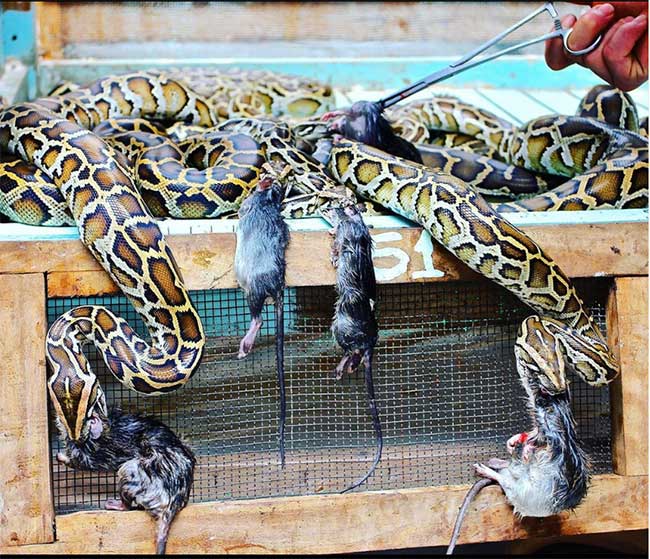
Pythons are fed mice at a farm in An Giang.
With these advantages, scientists think that python farming in Vietnam can be brought to other countries, especially African countries, which are facing food insecurity due to increasing climate disasters and outdated farming techniques.
Imagine farmers in Africa catching mice in their corn fields while feeding them to pythons for a more sustainable, high-quality source of protein.
However, the expansion of the python farming model also faces many barriers. The first is the cultural barrier. In East Asian countries, snakes and pythons have long been considered a valuable medicine, so using them as food is even supported.
Speaking of dishes made from python and snake meat, Dr. Natusch said he tried a variety of dishes from python soup, stir-fried snake, grilled snake, python curry and dried shrimp. "Basically, their meat tastes like chicken, but with a little bit of wild game flavor ," he said.
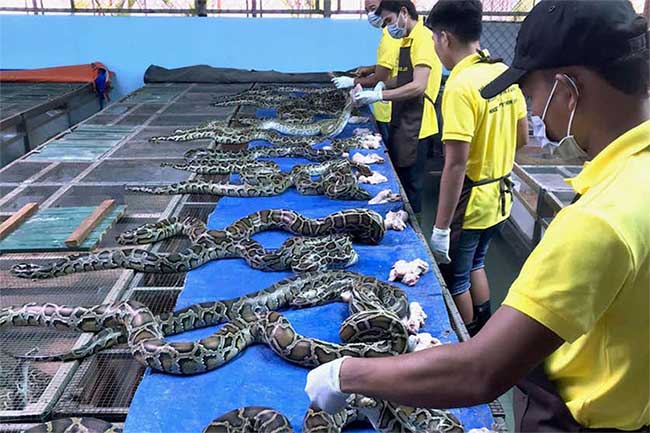
A python slaughter line right at the farm.
Because snakes have no legs, their meat can be trimmed and processed very thoroughly. Very little is wasted during the slaughter process. They are especially easy to fillet. 'You can just run a knife along their spine and you'll have a 4-metre-long piece of meat,' says Dr Natusch.
'Reptile meat is similar to chicken: high in protein, low in saturated fat, and has broad aesthetic and culinary appeal,' the scientists wrote in the paper. Despite this, it has yet to find acceptance in Western markets.
In his homeland, Dr Natusch said Australians often say: "The only good snake is a dead snake. People in our country are quite afraid of them."
Although pythons are not venomous and generally move more slowly than snakes, they have large teeth and can bite people if provoked. There have been many incidents of wild pythons entering human homes and eating pets, cats and dogs.
'I think it will be a long time before you see a python burger served at your favourite local restaurant in Australia ,' Dr Natusch said.
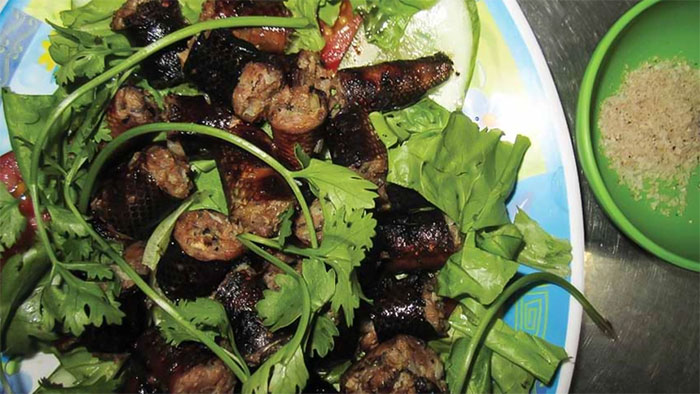
A plate of grilled snake sausage.
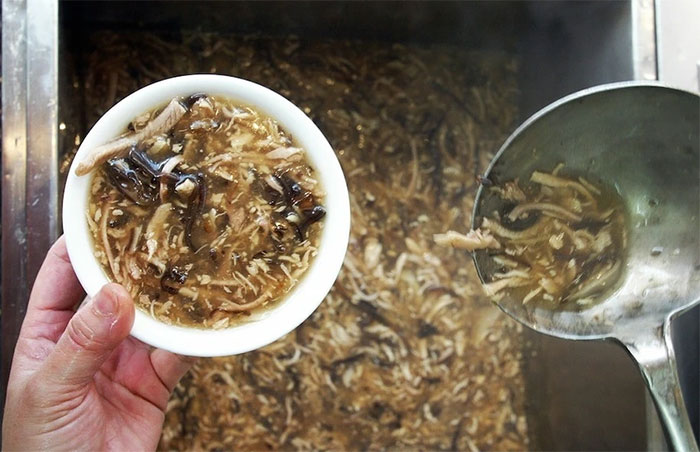
A bowl of python soup.
However, with his new research, Dr. Natusch is looking to change the perception of Western people about python meat.
'Our study confirms previous studies that breeding and rearing pythons in captive production facilities for commercial purposes is biologically and economically feasible ,' he wrote in the paper in the journal Science Reports.
And in a world facing a myriad of problems caused by climate change, python meat in particular and reptiles including snakes in general could become part of a simple solution for all.
Pythons and snakes provide a greener source of protein for humans, eradicate crop-destroying rodents, solve hunger in many countries, and reduce emissions from poultry and livestock farming.
Perhaps it's time we popularize dishes made from snake and python meat on the human menu.