3rd National Conference on Mechatronics - VCM 2006:
RESEARCH AND MECHANICAL TRAINING IN VIETNAM
Currently, the equipment for research and training of universities and postgraduate in the field of mechatronics abroad is paid attention to research, development and innovation regularly and smarter. However, these facilities are often expensive and technology transfer is very expensive and difficult to develop for users. To solve this problem, in the 3rd National Conference on Mechatronics - VCM 2006 took place on October 12, 2006 at the International Conference Center, the reporters in subcommittee 6 took turns a number of Mechatronics research and training projects in Vietnam. We would like to discuss about a research project that many people are interested in.
Robot Kit serves and researches mechatronics
This is the study of the authors Vu Le Binh, Le Xuan Huy, Do Thi Ngoc Oanh, Do Tran Thang, Pham Anh Tuan, Department of Mechatronics, Institute of Mechanics, Vietnam Academy of Science and Technology.
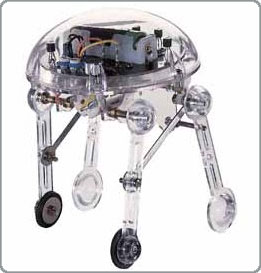 (Artwork: electronic-kits-projects.com) For the purpose of creating an experimental model for research and training in the field of mechatronics, the Robot Kit assembly kit has been designed and manufactured for simulations. According to the five-step free-arm machine, the revolving arm type is a typical mechatronic system that includes a hand-held mounting unit with RC servo actuators, servo controller and dedicated keyboard for hand control. machine from this keyboard. In addition, the Robot Kit is also designed to be able to connect and control from a PC
In order to create a mechatronic model to meet the requirements of approaching the design and manufacture and control of mechatronic systems, the first important thing is to choose a reasonable model structure, must demonstrate the basic characteristics of a mechatronic system that is integrated from many components in many different fields: mechanics, electronics, informatics . So experimental model of mechatronics from Robot Kit has been selected with the structure of two main parts:
- The mechanical part is chosen as a robot assembly based on a five-step free-hand model of a rotary arm that is driven by electric motors as a typical mechatronic model;
- Electronic part is the microprocessor controller that allows to control the robot from the keypad keypad.
This Robot Kit is also designed to be integrated with the robot simulation and control software SACR-SR5 (Simulation And Control of Robot - SR5) to allow orbit design, operation simulation, inspection and control. Control robot monitoring from PC
The five-step free-hand model of a rotary arm consists of six stages corresponding to a fixed price, the shoulders, arms, wrists and hands and at the end has a clamping table to perform two types of movement.
The kinetic and kinetic simulation is done with the alaska multi-engine dynamics simulation program to anticipate the mechanical hand operation from which to analyze the geometric parameters and the details of the hand , dynamic and dynamic parameters to serve the selection of actuators and control. Based on the simulation results with reference to similar structured experimental models already available in the country as well as in the world, the design of the machine arm was given. With the goal of the project is to create models for teaching purposes, the machine is designed so that the clamps can pick and carry objects with a mass of less than 0.2kg. Control system for Robot Kit is responsible for receiving control commands from dedicated Keypad keyboard or PC, processing information, giving signals to control the RC servo actuators in the right position and speed request.
The controller for Robot Kit is designed to be a microprocessor controller with high opening characteristics, capable of simultaneously controlling up to 32 Atmega8 control peripherals. The controller allows the servo to run with a maximum operating range of 0 degrees to 180 degrees, using numerical values corresponding to pulse width in ms.
Robot Kit is a robot structure of a typical mechatronic system, simple, flexible and with a high opening characteristic that allows you to become familiar with the development and control of mechatronic systems so it will be a research tool. and effective training in this area.
Modeling ANTENNA and ACROBOT stations on electronic simulators (MPD)
This is the study of Bui Thi Thanh Quyen, Tran Viet Phong, Vu Sy Thang, Pham Ngoc Minh, Phan Minh Tan, Pham Thuong Cat in the Department of Automation Technology, Information Technology Institute.
MPT equipment is capable of simulating common linear objects and some nonlinear objects such as inverted pendulum, Acrobot robot, self-propelled vehicle . With MPT equipment, we have a flexible electronic model to help For researchers, university students have electronic objects convenient for research, design and testing of controllers using different technologies such as PLC, PC104 . In addition, users can self develop electronic models of their own objects using the accompanying assistive technology.
MPT equipment simulates real-time mechatronic objects that are researched and developed with the aim of helping researchers and university students have electronic objects to study and experiment. On the other hand, they can develop electronic models with their own objects using the accompanying support tools. With MPT, laboratories, research institutes and universities will not be equipped with many models that are both limited in function and costly. The device that simulates MPT control objects is a flexible electronic model that is good for research, design and testing of controllers using different technologies. Different from simulations with software on MATLAB, the MPT device is a more realistic electronic object , helping to design and test control systems in many aspects from algorithms, signaling, control amplification to avoid saturation, use signal interference and test digital filters .
The simulation device was designed and designed on the basis of Dual Process Control of KendRidge Instrument Sigapore. Compared with Singapore equipment, the simulation device uses more advanced PC / 104 technology and programming ability for linear objects such as motors, heat furnaces . and extends to complex objects, with Non-linearity is easier such as Acrobot, 2-level storage tank . Users can easily observe the response of signals on graphs or on animation animation. The cost of equipment is only half of the imported equipment. Hopefully, this device with some useful object simulation features for those who study automation technology, study time, test methods of control and practical implementation will be shorter and effective. more economic.
Application of technology CNN (Cellular Neural Network) in rapid railway inspection
This is the study of Pham Duc Long, Pham Thuong Cat, Faculty of Information Technology of Thai Nguyen University, Institute of Information Technology, Vietnam Academy of Science and Technology.
Neural cell network technology is a new technology (1998) in the world. Processing chips with neural network structure with tens of thousands of CPUs allowed to create universal computers similar to logic CNN-UM has super strong computing power; especially in the field of image processing, solving partial derivative differential equations, real-time multi-objective observation. This work introduces the experimental ability to use CNN Bi-iV2 camera equipment for fast rail inspection.
Currently, the inspection of the recording system, the transit areas, the signaling devices in the station are checked daily by people. On the long railway, the inspection is assigned to each section called the road patrol. Every day, 4 people check each piece to see if the helmets are missing, whether the rails are broken and the road is subsided. This test on railroads hundreds and thousands of kilometers is obviously very labor intensive. From this fact and based on the capabilities of CNN technology and the Bi-I system, we can build a fast automatic rail inspection system . The system consists of Bi-I equipment mounted on the train head (it may be necessary to use 2 or 4 cameras) with an industrial computer on top of the ship at the appropriate location. Damages and damaged locations are reported on the screen, stored in memory and can incorporate warning signals
The Bi-IV2 device is a smart camera that received the Stugat - Germany award in 2003 . This device uses ACE 16k chip. This processor is composed of a 128x128 processor matrix. In ACE16k, there are multi-layered CNN cells combined with sensors that have a similar structure to the biological structure of the human retina. The chip consists of 16348 cell processors working in parallel. The entire calculation process of the chip provides 128x128 image processing capability up to 10.1000fps including output.
Preliminary calculations with the ability of Bi-i see: assuming the train runs at 80km / h ie 22.2m / s. Each photo frame takes 20cm. One meter needs to collect 5 photo frames. In one second, 111 frames are collected. The Bi-I's 10,000fps acquisition and processing capability is much larger than the job requirement.
To test the applicability of CNN in road test, the team tried to build a model that included a rotating disk at 3000 rpm or 50 rounds on Bi-iV2 wires and cameras. We attached 4 photos on the disk. When the camera lens is projected onto an image, the life time of the image before the lens is ¼ compared to an image or in other words, the equivalent speed is 200 rounds / second> 111, enough to satisfy the actual requirement.
The team has experimented with the parameters: the disk rotated 3000 rpm. 500fps image capture speed, black-and-white model image, normal light on him with 100W lamp at 30cm distance. Bi-IV2 camera uses 25 1: 1.4 lens. The program is implemented in Code Compose Studio 3.1 programming language provided by Texas. The program has detected images of screw caps as required.
Through analysis of the features of the image processing equipment using CNN Bi-iV2 technology combined with practical needs, the test system built including hardware and software has all been shown to be applicable. CNN technology into railway inspection while the train runs. This is just one of the areas where the use of CNN technology allows to solve the problems that cannot be solved when using sequential command-processing computers. In the coming period, the research and application of this technology in Vietnam is very necessary and very significant, especially in the fields of industry, defense and security.
Vu Minh Tien - Automation today
Email: vuminhtien11@yahoo.com