In this scorching summer, you are probably thinking of different ways to cool down. But have you ever wondered why we often see people feeding ice cubes to beluga whales? This seemingly simple act hides a shocking truth!
Why feed beluga whales ice cubes?
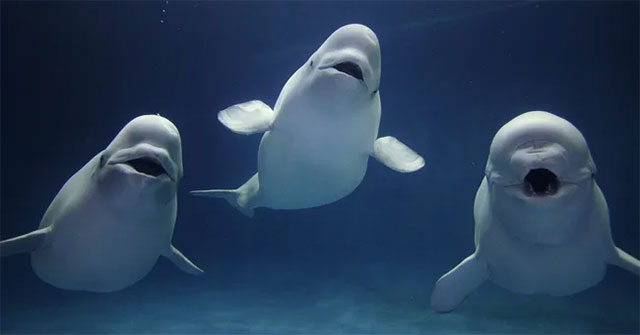
Beluga whales are giant ocean fish that live in the icy waters of the polar regions. In order for beluga whales to live healthier and more comfortably in an artificial environment, many marine parks and aquariums have adopted a special feeding method - feeding ice cubes and frozen food. Feeding in this way not only simulates the ocean environment but also provides beluga whales with psychological stimulation to maintain their physical and mental health.
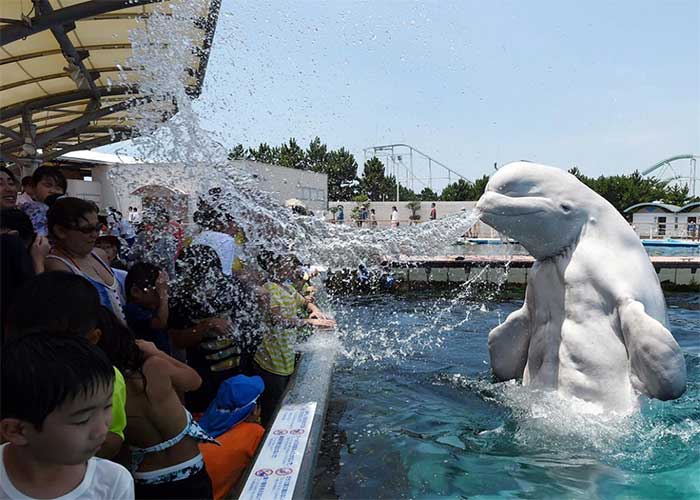
Zoos and aquariums are important places for people to learn about and interact with wild animals. Among these efforts, the application of ice feeding is gaining increasing attention. Ice feeding not only provides a new feeding method but also has a positive impact on animal behavior and health. (Photo: CNN)
Feeding in this way can simulate the free-living environment of beluga whales in the wild ocean. In the wild, beluga whales often encounter ice of various shapes and sizes due to their living environment. By feeding beluga whales ice cubes in aquariums or marine parks, we can let them feel the "atmosphere" of the natural ocean and restore their life in the wild as much as possible. Such environmental simulations can help beluga whales adapt better to the artificial environment.
In the wild, beluga whales often chase ice and engage in play that is important for their physical and mental health. However, in aquariums or marine parks, beluga whales often face limited space and monotonous environments.
Beluga whales can play among ice blocks, chase them, and jump out of the water to show their grace. These activities can not only increase the amount of exercise of beluga whales and improve their physical fitness, but also stimulate their curiosity and desire to learn, and improve their intelligence and adaptability.

In the wild, animals often spend their time foraging for food and challenging different environmental conditions, such as cold weather or frozen water. However, in captivity, animals often face the problem of excess material and lack of challenges. (Photo: Zhihu).
When beluga whales see ice, they start thinking about how they can use their abilities and skills to break through or exploit it. This thinking and operating process contributes to the intelligence of beluga whales, keeping them alert and energetic.
The method of feeding ice cubes to beluga whales has been widely used in many marine parks and aquariums. By simulating the ocean environment and providing activities and psychological stimulation to beluga whales, ice feeding helps beluga whales better adapt to the artificial environment and maintain their physical and mental health.

Food in ice can be a long-term way to absorb nutrients. Animals spend more time licking or chewing ice cubes than when they eat large amounts of food directly, which allows them to control the amount of food they eat. This method helps prevent animals from overeating, reduces the burden on the digestive tract, and prevents obesity and related diseases. (Photo: ZME)
The effect of ice on beluga whales
Beluga whales are mammals that feed primarily on fish and other marine life. However, in cold oceans, belugas often face food shortages. To solve this problem, belugas often put their food on ice to preserve it for longer. The low temperature of the ice can slow down the rate at which food decomposes, allowing the belugas to enjoy their food for a longer period of time and improving their chances of survival.
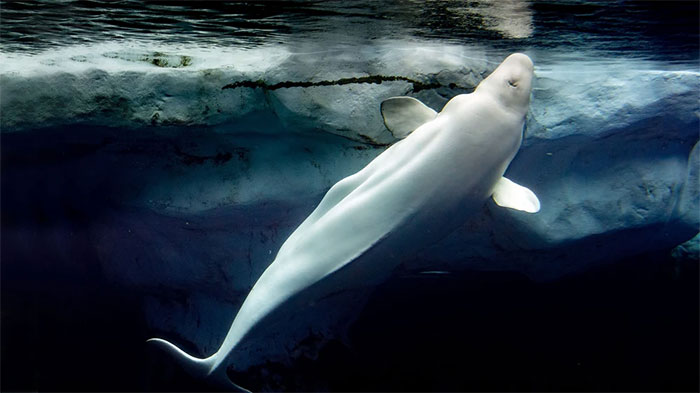
As a new and effective feeding method, frozen food feeding has been applied in other zoos and aquariums with remarkable results. Feeding in this way not only improves the welfare of animals by promoting their behavior and enhancing their health, but also brings deeper interaction between the audience and the animals. (Photo: Zhihu).
Beluga whales live in extremely cold ocean environments, with water temperatures lower than their body temperature. To maintain a normal body temperature, the beluga's body needs to continuously generate heat. As a heat exchange medium, ice can dissipate heat. Beluga whales will approach the ice and put their bodies in contact with the ice to dissipate excess body heat and maintain body temperature balance. This ability allows beluga whales to live in extremely cold waters and adapt to changes in the environment.
When performing underwater activities, the resistance of the water will exert a certain load on the muscles of the beluga whale, similar to humans lifting weights to exercise their muscles in the gym. Ice creates more resistance for the beluga whale, requiring more strength to swim when in contact with the ice. Such exercises can increase the muscle strength of the beluga whale and improve their survival ability.
Ice plays an important role for beluga whales . It can not only delay the spoilage of food and extend the food supply, but also lower body temperature and help beluga whales live in cold waters.
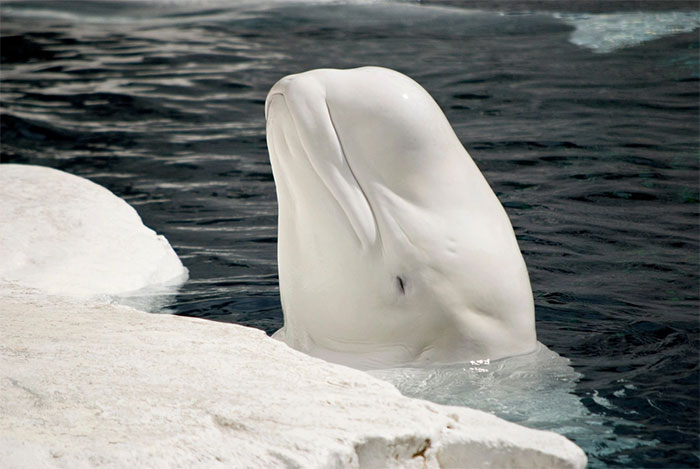
Ice plays an important role for beluga whales. (Illustration: ZME).
Ice can also provide the beluga with the opportunity to exercise its muscles, increasing its physical strength and resilience to risk. These adaptations allow the beluga whale to survive and reproduce in the ocean and continue to thrive in its homeland. We should cherish and protect these beautiful and majestic creatures, and together protect the ecological balance of our oceans.