According to Science Alert, scientists from the University of Tubingen, the State Museum of Prehistory in Halle (Germany) and the University of Strasbourg (France) have analyzed complex chemical properties of Neanderthal artifacts to decode one of the most controversial mysteries.
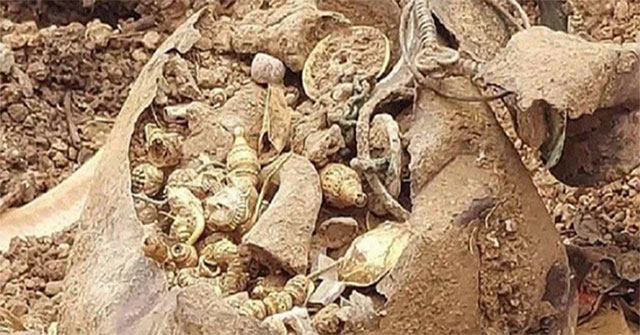
A shocking array of archaeological evidence suggests that extinct humans of a different species once mastered the technique of producing pitch .
These are artifacts containing birch pitch , which humanity has long believed to be a product of modern humans Homo sapiens (Human Intelligence) in the last few thousand years.

Wax statue depicting a person other than Neanderthals - (Photo: NEANDERTHAL MUSEUM).
When tar artifacts first appeared, it caused much controversy, especially since it seemed to be used purely for its adhesive, waterproofing, and antibacterial properties.
The prevailing view was that Neanderthals came across the tar by chance, simply scraping it off while burning birch bark. But the new analysis has confirmed the presence of underground tar-producing furnaces.
The chemical composition of ancient birch pitch suggests it was deprived of oxygen during its formation – which tests indicate could only have been formed through the deliberate burial of rolled birch bark with a fire.
"The findings suggest that Neanderthal tar was not the random result of unintentional processes during open fires, but rather a complex, carefully planned underground technique, as it was impossible to monitor after bark burial, " the researchers wrote in a paper published in Archaeology and Anthropological Science.
Such a complex setup would require a specific formula and plan, similar to the way we produce industrial-style synthetics today.

Graphic illustration of Neanderthal tar pits - (Photo: ARCHAEOLOGY AND ANTHROPOLOGICAL SCIENCES).
Ancient artifacts also show that these other species not only invented but also improved technology, independently of Homo sapiens. It seems that they passed this technology on to our ancestors, not the other way around.
With the first synthetic materials prepared on Earth, along with many evidences of very early textile techniques, superior jewelry making, well-organized kitchens., the other species Neanderthals gradually demonstrated more clearly their unbelievable level of development, even surpassing ours.
Neanderthals were a "brother species" of Homo sapines, belonging to the same genus Homo, which became extinct about 30,000 years ago and frequently interbred with our species, leaving traces in the DNA of many modern people, especially the inhabitants of the Northern European region.