Vietnam is famous for its rich ecosystem with many rare bird species. In particular, some species are known by very unique names.
The bird is called "Thirsty"
Among them, we must mention a bird with a very strange and little-known name, the thirsty bird. According to the IUCN Red List of Threatened Species, the thirsty bird (scientific name: Clamator coromandus ) is a bird in the Cuculidae family.
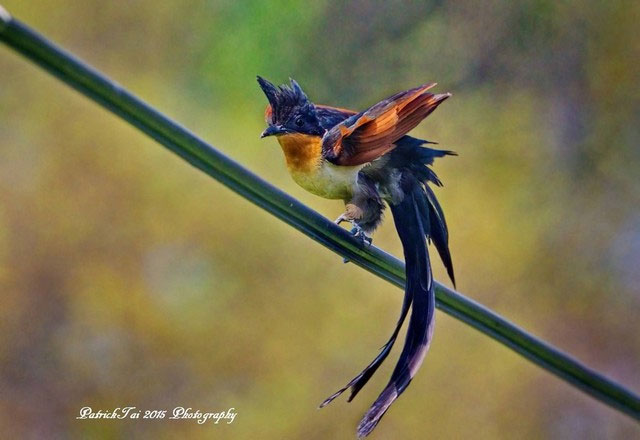
Image of a bird with the unique name "Thirsty". (Photo: Patrick Tai)
The species was first given the double name by Linnaeus in 1766. His description of what he called Cuculus coromandus was based on a note by Brisson, who described the bird as "Le coucou hupрé de Coromandel" collected on the Coromandel coast of India. Buffon noticed the close relationship to the Jacobin cuckoo and called it "le Jacobin huppé de Coromande" . The species was later placed under the genus Coccystes, Oxylophus before being placed in Clamator.
When fully grown, both males and females reach an average size of 42 – 46cm (including tail feathers), a wingspan of 15 – 17cm and a weight of 100 – 120g. Their tail feathers are quite impressive, reaching a size of 20 – 23cm, their legs are quite short, only 2 – 3cm long and their sharp black beak is about 2 – 3cm long.
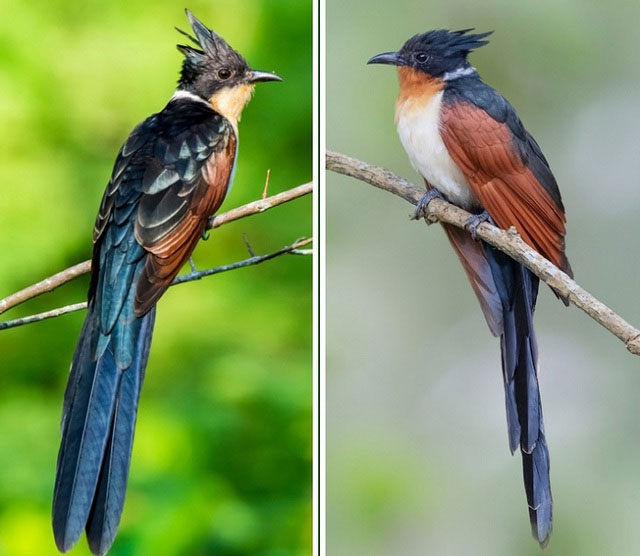
In Vietnam, thirsty birds are mainly distributed in the provinces of the North, Central and mountainous regions. (Photo: Wild Forest)
The waterthrush is found in Southeast Asia and parts of South Asia. They breed along the Himalayas and migrate south in winter to Sri Lanka, southern India and tropical Southeast Asia including parts of Indonesia, Thailand and the Philippines.
In Vietnam, the waterthrush is mainly distributed in the provinces of the North, Central and mountainous regions. The favorite habitat of this bird is mountainous areas, plains, places with many bushes, rivers and streams.
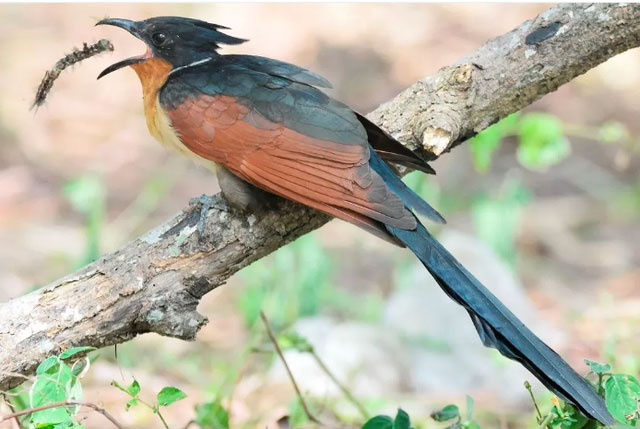
The thirsty bird can be easily mistaken for a lapwing at first glance. (Photo: Animals)
According to the Vietnam Ornamental Plants Association , the water bird has a brown back, wide-edged wing feathers. A white belly. Light reddish-brown eyes. Black beak, slightly yellowish at the base of the lower beak, pink beak edges. Lead-gray or gray-brown legs.
According to Bird Watching Vietnam , the thirsty bird behind is black, has a white nape, long, easily recognizable feathers, and brown wings. At first glance, it can be easily mistaken for a lapwing. Their call is usually two whistles 'bi-i bi-i.bi-i bi-i' lasting monotonously for about half a second each and repeating after a few seconds.
The food of thirsty birds is mainly small insects such as grasshoppers, locusts, butterflies, worms, spiders, ants, pupae, ant eggs, crickets, bees, flies, earthworms. In addition, they also eat ripe fruits such as figs, mangoes, bananas, dragon fruit.
Birds with strange habits
This bird is quite shy, they often find a way to hide quickly when they feel danger or strange noises appear. Thirsty birds live alone , they only pair up during the breeding season.
The breeding season of the waterthrush usually takes place in early summer , when the environmental temperature is high, helping their eggs hatch faster. When the breeding season comes, the male will sing and dance for a long time, in order to attract the female to come and mate and reproduce.
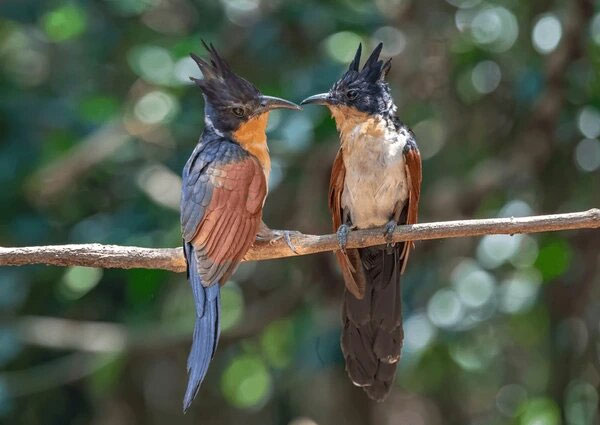
Like the cuckoo, the waterbird does not build a nest but instead lays its parasitic eggs in the nests of other birds. (Photo: Shutter Stock)
Like the cuckoo , the waterthrush does not build nests but lays its parasitic eggs in the nests of other birds. It mainly lays its parasitic eggs in the nests of babblers, including the lesser-necked babbler (Garrulax monileger), which accounts for 45% of recorded cases. In addition, many other species such as the common magpie, fork-tailed drongo, oriental magpie, white-browed thrush, blue whistling thrush, orange-headed thrush, black-breasted thrush, white-crowned babbler (Turdoides leucocephala), rusty-cheeked scimitar babbler and long-tailed shrike (Schachwürger) are also hosts.
The eggs are pale green and usually unpolished, with more than one usually laid in a nest. Egg size ranges from 25.4 to 29.9 mm in length and 20.3 to 24.4 mm in width. The young have not been described in detail and data on them are limited.
Currently, the thirsty bird does not face global threat status and is classified as "Least Concern" by BirdLife International.